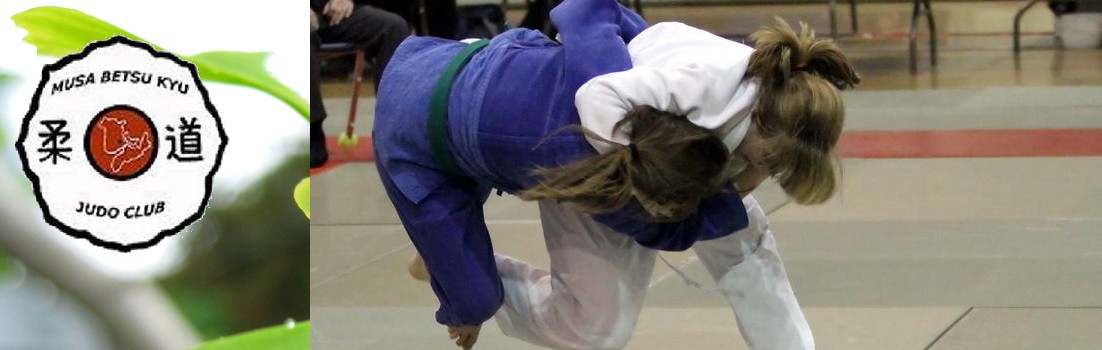
What are the official Judo rules?
This is a common question amongst students, and up until recently, the answer has been “I don’t know, it changes every other year!” (see: history of Judo rules)
Well the International Judo Federation (IJF) has finally agreed on competition rules for the next three years forward so we now know that at the very least, starting from January 1st, 2026 until December 31st, 2028 we will have the same set of rules for Judo competitions.
Here’s the abberviated (or “Coles Notes”) summary of the rules for quick reference, while the new full rules follow below:
- Both contestants must wear an appropriate Judo “Gi” (uniform) and “Obi” (belt)
- Ideally to differentiate the competitors, one wears a white Gi and one a blue Gi (alternatively, a colored band or belt could be warn)
- Competitors must “Ritsu-rei” (Standing Bow) to the officials, then to each other
- Match Referee yells “Hajime” (begin) and competitors approach one another to begin executing techniques
- Stay within the allotted competition space on the Judo Mats
- No stalling, excessive defensive posture, or unsportsmanlike behaviour
- No striking of any kind permitted (punches, kicks, elbows, knees, headbutts, etc)
- No grabbing of the pants or any body part below the belt when performing Tachi Waza (throws & takedowns)
- Certain throws and takedowns are prohibited depending on age/belt/weight-level or competition
- Once you’ve taken a grip, you have a limited time to perform a technique depending on age/belt/weight-level or competition (penalty or reset may apply)
- “Katame Waza” (grappling techniques) may almost always only be applied during “Ne Waza” (ground grappling)
- “Shime Waza” (strangling/choking techniques) are prohibited in junior age/belt levels, may be limited for senior levels depending on competition
- “Kansetsu Waza” (joint-locking techniques) are prohibited in junior age/belt levels, may be limited for senior levels depending on competition
- “Ashi Kansetsu Waza” (leg/ankle/toe-locking techniques) are always prohibited
- “Te Kansetsu Waza” (finger/wrist-locking techniques) are always prohibited
- “Kubi Kansetsu Waza” (neck/spine-locking techniques) are always prohibited
- “Ippon” (match point) is called if a permitted throw/takedown results in a competitor landing on their back
- “Ippon” (match point) is called if a permitted pin/hold-down is obtained with one competitor on top and the other unable to escape from their back for 25 seconds
- “Ippon” (match point) is called if a competitor says “Maitta” (give up), Taps out 2 or more times on the mat, themselves or their competitor using hands/feet, or referee stoppage due to application of a permitted strangling/choking technique, joint-locking technique or pin/hold-down (see table for permitted techniques)
- If a throw is performed and “Ippon” not declared, it is a “Waza Ari” (point awarded), “Yuko” (partial point awarded), or “Koka” (no points awarded) and match resumes with “Ne Waza” (ground grappling) until “Ippon” (match point) is scored or the referee stands the competitors back up (typically within 30-90 seconds, depending on competition)
- Always listen to the referee’s direction, stopping immediately during calls of “Matte” (stop fighting)
- After “Matte” (stop fighting) called, a reset occurs as competitors lineup at start positions awaiting “Hajime” (begin)
- Fix your Gi (uniform) and Obi (belt) whenever a reset/restart happens
- In the event of a draw, depending on tournament rules, a tie-breaker Golden Score overtime could be held
In general all techniques are to be performed in the spirit of Jita Kyouei (pure intentions of mutual benefit and improvement between Uke and Tori; never to injure, embarrass or take revenge). The following is a simple table which summarizes legal and illegal techniques (by type):
REFERENCES:
- Kodokan Judo – (Official) Classification of Waza Names: http://kodokanjudoinstitute.org/en/waza/list/
- “Kodokan Judo: The Essential Guide to Judo” by Jigoro Kano – Kodokan Judo founder; Kodansha International (June 1986): http://www.goodreads.com/book/show/1207038.Kodokan_Judo
- “The Canon of Judo: Classic Teachings on Principles and techniques” by Kyuzo Mifune; Seibundo-Shinkosa Publishing Co., Tokyo (1956): http://www.goodreads.com/book/show/1483234.Canon_of_Judo
- “The A to Z of Judo” by Syd Hoare; Ippon Books (October 1993): http://www.goodreads.com/book/show/2914587-the-a-z-of-judo
- “Budo: Teachings of the Founder of Aikido” by Morihei Ueshiba; Kodansha International (July 1996): http://www.goodreads.com/book/show/336890.Budo
- “Masterclass Judo series” by Katsuhiko Kashiwazaki, Neil Adams & various authors; Ippon Books (1990-1999): http://www.amazon.com/Masterclass-Judo-Best-Books-Martial/lm/R1V79SXX8HTVQD
- “Masahiko Kimura’s Oni No Judo” by Kanei Iwatsuri; Budo International (2004): http://www.cdjapan.co.jp/product/SPD-3511
- “Gracie Jiu-Jitsu: The Master Text” by Helio Gracie; Black Belt Communications (May 2006): http://www.goodreads.com/book/show/971910.Gracie_Jiu_Jitsu
- “Encyclopedia of Brazilian Jiu-Jitsu” by Rigan Machado & Jose M. Fraguas; Unique Publications (July 2004): (VOLUME 1, VOLUME 2, VOLUME 3)
- “Mastering Jiu-Jitsu series” by Eddie Bravo; Victory Belt Publishing (2006-2011): Rubber Guard, Advanced Rubber Guard & Twister
JUDO FULL CONTEST RULES
Two resources can help for understanding the new 2026-2028 IJF rule changes:
- IJF 2026 Competition Rules: https://78884ca60822a34fb0e6-082b8fd5551e97bc65e327988b444396.ssl.cf3.rackcdn.com/up/2026/01/IJF_Sport_and_Organisation_Rul-1769443746.pdf
- IJ 2026 Competition Rules update summary: https://www.youtube.com/watch?v=FLj5S7HEnGg
1. COMPETITION AREA
Entire Field: 14m x14m (46’X46′) to 16m x 16m (52’X52′) Even smooth surface.
No cracks or spaces. Firm under foot. Resilient floor or platform.
Contest Area: 8m x8m (26’x26′) to 10m x 10m (33’x33′) [Smaller for regional contest.]
Danger Zone: 1 meter wide (39.37″ ) .The red border of the contest area.
Safety Area: 3 meters. (10 feet). Mats outside danger zone. 4m (13 ft) adjoining safety area.
Blue/White tape: 10cm x 50cm (4″x20″) 4 meters (13′) apart. Start Marks.
(Each color indicate a contestant)
Free Zone: 50 cm (20 inches) past the safety area. No Tables, Chairs or Signage.

2. OTHER EQUIPMENT
a. Chairs and Flags
Two sturdy lightweight judges’ chairs placed in opposite corners of each competition area.
Judges flags (one blue, one white) in a holster attached to the chair.
Referee’s flags on table or rear chairs.
b. Table: For Scoreboard and Timekeepers, Recorders (Scoreboard Operators)
and List writers (Score sheets).

c. Scoreboards: Electronic preferred. Manual on hand in the event the electronic failure.
With an Electronic (mechanical hardware) or Digital (computer software) Scoreboard, simply pushing buttons or clicking on a mouse in the appropriate field can update and tally the correct score automatically, and since it is often prominently displayed rather than on paper in front of judges or referee table, then there is much less likelihood for human error to go unnoticed.

Manual Scorecard (paper backup to Electronic/Digital Scoreboards)
Same basic idea but Ippons are left out, and you can mark Shido fouls/infringements with a large X through each Shido column under the appropriate competitor section.
|
WHITE |
BLUE | ||||
|
WAZA-ARI |
YUKO | KOKA | WAZA-ARI | YUKO | KOKA |
| 0 | 1 | 0 | 0 | 0 | 1 |
| Shido 1 |
Shido 2 | Shido 3 | Shido 1 |
Shido 2 | Shido 3 |
In this example scorecard, WHITE has earned a Yuko while BLUE trails with only a single Koka. If the time expired, WHITE would win by points. Even if BLUE got another Koka, WHITE would still win on points as time expired. If BLUE got a Yuko then the time expired, then BLUE would win by points. If either competitor got a Waza-Ari and time expired, then the opponent who earned the Waza-Ari would win on points.
Simplified/Compact Manual Scorecard:
Separated by Blue and White, with four boxes (top grey area for Shidos, 4=Hansoku Make, loss by disqualification), each abbreviated as I=Ippon (full point/win), W=Waza Ari (half point), Y=Yuko (partial point), K=Koka (advantage taken but no point). You would use roman-numeral and/or tick-marks to identify scores and fouls.

In this example Manual Scorecard: BLUE wins by two Waza-Ari, but received two Shido infringements resulting in a Yuko point for White before the win.
d. Time Clocks:
1 clock for Contest time. 1 clock for White Osaekomi (pin). 1 clock for Blue Osaekomi (pin).
1 extra clock for back up. Must be used on conjunction with electronic clock. (redundant).
e. Flags: Yellow for Contest Time (up when time stopped). Green for Osaekomi (pin)
(up when time running.) Flags are used when manual scoreboards are in operation.
f. Audible Device: Loud and different for each competition area.
g. Medical indicators: 2 markers- 1 cross and 2 crosses for each competitor to indicate
medical exams. (U.S.)
* Spectators shall not be closer than 3 meters to the edge of the Competition Area.
3. UNIFORM

Unsoiled without rent or tear. Soft cotton and not too thick. Lapel 1cm thick max. 5cm wide.
Jacket- Sleeves to wrist or (5cm) 2″ above. (10-15cm) 4-6″ of space from wrist to
armpit. Bottom of jacket reaches closed fist (covers buttocks). Crosses 20cm in front.
Pants- Cuffs to ankle or (5cm) 2″ above. (10-15cm) 4-6″ of space from ankle to buttock.
Belt- 5cm (2″) wide, twice around, square knot, (20-30cm) 8-12 inches free ends.
Markings- Left chest patch -100cm² (4″x4″) , Back patch 30cm x 30cm(12″x12″),
Name (on belt, top pants and bottom of jacket. 3cm(1¼“) x 10cm(4”)
and back of jacket 7cm (2¾“) x 30cm (12″).
Shoulder epaulets 5cm (2″) x 25cm (10”),
Manufacturer’s logo 25cm² (2″x2″)
White tee shirt or white leotard- (female) No printing or design.
Jewelry- Must be removed. No taping earrings or rings.
First contestant called wear’s the Blue Judogi, the second the White Judogi.
HYGIENE: Hands & feet clean, Nails cut, Judogi clean, no foul smells & no tears. Long hair tied back. (One free tie back 2nd time shido.) Contestant does not comply, give kiken gachi.
REFEREES and OFFICIALS
One referee & two judges assisted by timekeepers and recorders.
REFEREEING RULES
POSITION and FUNCTION of the REFEREE: Stay within the Contest Area. Check the area and equipment before the start of the contests. He shall conduct the contest and administer the judgment.
REFEREE SIGNAL GESTURES:

Hold gestures for 3-5 seconds. 90 degree turn on all score calls, so signal can be seen by all.
POSITION and FUNCTION of the JUDGES: Sit in chairs in opposite corners, signal on scores, outside, Osaekomi (pin), penalties, (every decision) when disagreeing with referee. When judges agree maintain gesture, stand after 5 seconds. All three different, if both below stand (middle score), if both above stand, if one above and one below drop signals fast. Watch scoreboard, bring mistakes to the attention of the referee. Stand if the judge sees something the others do not. Do not preempt the referee’s calls. Accompany player if s/he leaves during a contest.* Remove chairs when players come close (2 meters) or when Area closed. * A female contestant must be accompanied by a female official, a male contestant by a male official.
-

Judge normal position
-

Jonai (inside)
-

Jogai (outside)
-

Stand up / Mate in Newaza
-

Judge cancelling not valid
-

Judge opinion differs
-

Hantei situation (ending a “Golden Score” contest)


LOCATION: Tachi-waza (Standing)-When one foot touches out, its out. Throw out -tori starts throw in, remains in until the effect of the technique is clearly apparent. (Can touch out during kake (flight phase) of the throw. [Uke’s feet off the ground.] Sutemi more than half out invalid.
Ne-waza (Groundwork) and Osaekomi (pin) -When no part of either player is in, it does not count.
CONTEST DURATION: 5 minutes for men and women (seniors) Variations allowed for Juniors.
TIME SIGNAL: Loud audible device. Varying sounds for multiple competition areas.
OSAEKOMI (pin) TIME: 1- 9 seconds = Kinsa, 10-14.9 seconds = Koka, 15-19.9
seconds = Yuko, 20-24.9 seconds = Waza-ari, 25 seconds = Ippon
TECHNIQUE COINCIDING WITH THE TIME SIGNAL: Throw must start before or at bell.
START OF THE CONTEST
Referee and Judges must be in position before the contestants arrive. Referee must ensure the competitors walk to the blue and white marks and bow properly at those marks and step forward from the mark to the ready position. At the end, ensure the competitors
bow out properly.
TIME OUT: Time between Matte (stop), and Hajime (start), and Sonomama (freeze), and Yoshi (shall not count).
ENTRY INTO Ne-waza (Groundwork)
a. A contestant may go to the ground after a throw.
b. If one contestant falls, the other may take advantage and go to the ground.
c. One contestant obtains some considerable effect with shime or kansetsu waza from the
standing position may be taken to the ground.
d. One contestant applies a skillful takedown, they may go to the ground.
e. When ever one contestant falls down not covered by the proceeding subsections.
APPLICATION OF MATT
a. When one or both contestants go outside.
b. When one or both contestants perform a prohibited act.
c. When one or both contestants are injured or taken ill.
d. When a contestant must adjust their judogi.
e. When during Ne-waza (Groundwork) there is no apparent progress.
f. One contestant regains a standing or semi-standing position from Ne-waza
(Groundwork) bearing his opponent on his back.
g. When one contest from Ne-waza (Groundwork) lifts his opponent who is on his back with
his legs around any part of the standing contestant , clear of the mat.
h. When a contestant performs or attempts to perform kansetsu or shime waza from the
standing position and the result is not sufficiently apparent.
i. When the referee and judges or Referee Commission (Jury) wishes to confer.
SONOMAMA and YOSHI Sonomama = Freeze position.
Only used in Ne-waza (Groundwork). Yoshi = continue.
END OF THE CONTEST
“Soremade” (End of Contest) is announced when Ippon, Waza-ari awasete Ippon,
Sogo gachi, Fusen and Kiken gachi and Hansoku make are attained.
Scoreboard – Ippon beats waza-ari. One waza-ari beats any number of yuko’s, one yuko
beats any number of koka’s. One koka beats no recorded scores.
*At the end of the regulation contest if the scores are even, a Golden Score
(Sudden Death Overtime)
GOLDEN SCORE (or ‘TIME’) Contest will be held. It will be held immediately after the regulation contest. The duration shall be the same as the regulation contest. The first called score or penalty determines the winner. If there are no scores or it is even at the end. Hantei will be called and the flags used to determine the winner. (Only the action during the Golden Score period will be taken into account.) Osaekomi (pin) goes to 25 seconds. If tori has Osaekomi (pin) for 11-24 seconds and commits a prohibited act himself, he loses by the penalty. HANTEI No score after Golden Score contest. Decision made on Kinsa (Advantages-Attacks) (quality vs quantity). Ensure proper execution of the Bow out Procedure (step back to line, bow).
EXPLANATION OF SCORES
IPPON – (4 ways to Ippon) Throws with “control”, “largely on the back” with “force” and “speed”.
Hold (pin) for 25 seconds.
Contestant up (taps twice or more or says “Maitta”.) from Osaekomi (pin),
Shime or Kansetsu waza or is incapacitated by Shime or Kansetsu waza. Uke “bridging” score counts.
In ne-waza, If ‘Matte’ (stop) called in error; place players in original ne-waza (groundwork) position (majority rule).
Equivalent Scoring: Blue gets Hansoku Make, White Ippon
WAZA-ARI AWASETE IPPON – Two waza-ari equal one ippon.
SOGO GACHI – Compound win (E.G. – Blue gets waza-ari, White gets 3 shido
Referee says “Sogo gachi” when indicating the winner.
WAZA-ARI – (Almost Ippon) partially lacking 1 of the 4 elements. (Incl. – Osaekomi (pin) for 20-24.9 seconds.)
Equivalent Scoring Technique: Blue gets third shido, white immediately is given Waza-ari. (Yuko is removed.)
YUKO– (Almost Waza-ari) partially lacking 2 of the 4 elements. Landing on side. (Incl. – Osaekomi (pin) for 15-19.9 seconds. Equivalent Scoring Technique: Blue gets second shido, white immediately is given Yuko. (Koka is removed.)
KOKA – Thrown to the buttocks, back of the thigh or top of the shoulder. Osaekomi (pin) for 10-14.9 seconds.
Equivalent Scoring Technique: Blue gets first shido, white immediately is given Koka.
OSAEKOMI (pin) When in the opinion of the referee, one player holds the other with control and;
1. Uke’s back (one or both shoulders) is/are on the mat.
2. Tori is free of uke’s legs (controlled).
3. Tori is pressing down on uke.
4. The hold is inside the contest area.
5. Tori is in the kesa or shiho position.
6. Tori’s trunk (some part) must be on (Control is from the side, rear or top.) top of uke’s trunk (some part).
PROHIBITED ACTS and PENALTIES: There are 34 Prohibited Acts. There are two types of penalties.
SHIDO – Slight Infringement (Equivalent to koka in some events)
1. Avoid taking hold.(3-5 seconds)
2. Defensive Posture. (3-5 seconds)
3. False Attack.
4. 5 seconds in Danger Zone.
5. Hold sleeve ends. (3-5 seconds)
6. Fingers interlocked. (3-5 seconds)
7. Disarrange own gi.
8. Pull down into Ne-waza (Groundwork). (Hikkomi)
9. Finger in opponent’s sleeve or cuff or screw up.
10. To take any grip other than normal without attacking for 3-5 seconds.
(Belt, 2 hands same side, one handed, cross back grip, etc.)
11. Non-combativity. (Approximately 25 seconds)
12. Pistol Grip. (Immediately)
13. Pocket Grip AKA. Cat’s Paw Grip. (Immediately).
14. Leg grabbing from the standing position. (simult.)
15. Encircle the belt around an arm, etc.
16. To take the Judogi in the mouth.
17. To put a hand, arm, foot or leg directly on the opponent’s face.
18. To put a foot or leg in the opponent’s belt, gi.
19. To apply shime waza (choke) using the belt, bottom of the jacket or using the fingers.
20. Go outside -or- Push outside.
21. To apply leg scissors to head, neck or trunk.
22. Kick to release a grip. (Kote tataki)
23. To bend back the opponent’s fingers.
When the first shido is called, “Shido” is announced, the penalty is marked in the Shido box on the Scoreboard. When the second shido penalty is called “Shido” is announced, the penalty is marked in the Shido 2 box on the Scoreboard. When the third shido is called “Shido” is announced, the penalty is marked in the Shido 3 box. When the fourth shido is called by the referee (conference). If the referee and one judge agree (no conference). If the judges call the fourth shido (no conference). Handled with Indirect Hansoku Make procedure. Direct Hansoku Make out of the Competition. Indirect Hansoku Make (build up) (4 shido) just out of the contest..
HANSOKU MAKE – Grave Infringement (Instant loss of match)
1. Kawazu gake (entwine leg, kick forward, fall back)
2. Kansetsu anywhere other than the elbow.
3. To lift off and then drive back into the mat.
4. To reap the opponent’s supporting leg from the inside during harai goshi, etc. (Kusabe Gari)
5. To disregard the referee’s instructions.
6. To make unnecessary calls remarks or gestures to the opponent or referees.
7. Any action which may injure, especially spine and/or Any action against the spirit of Judo.
8. Standing waki gatame (direct) (armpit one arm)
9. Tori dives onto his own head. (Tori is responsible to fall correctly)
10. Fall back upon opponent (Kata guruma, etc.)
11. Hard or metallic object. Jewelry or any other item.
A conference is required for a direct Hansoku Make.
Only one penalty for each contestant may be displayed at any time.
DEFAULT AND WITHDRAWAL Default (Fusen gachi) Not showing up. (Out of the competition.)
Withdrawal: (Kiken gachi) Withdrawing from contest due to injury or other reason.
(Out of the contest.) When awarding the winner, announce “Fusen gachi” or “Kiken gachi”.
INJURY, ILLNESS, OR ACCIDENT RULINGS (U.S.)
Injury: Injured contestant’s fault, injured contestant loses.
Uninjured contestant’s fault uninjured contestant loses.
It is impossible to determine fault, injured contestant loses.
Sickness: If a contestant becomes sick, they lose the contest. (vomit, etc.)
Accident: Injury caused by an outside influence (lamp falling off the ceiling, etc.) call
hiki wake. Re-fight if injured contestant can within a reasonable timeframe. If injured
contestant cannot, s/he loses.
a.Minor injury Bloody nose, ripped nail, groin injury, bleeding wound.
Covered as Medical Examination.
b. Examination 1 & 2; Can player continue to play? No manipulation.
Third Exam competitor loses.
c. Treatment (Free examination)
Cause of injury, other player. May bandage or tape, nothing else.
SITUATIONS NOT COVERED BY THE RULES Consult Referee Commission (Jury)
SPECIAL RULES – Age 13 & up Shime waza (Choking techniques)
Age 17 and up or Senior Sankyu and up Kansetsu waza (Arm lock techniques)
NOTES:
- There is a Judo Ontario commentary page on the new rules.
- Here are the US Judo Federation clarifications on these rules.
- Finally, here is the IJF’s official announcement/justification video: http://www.youtube.com/watch?v=Iz5kw_sN5hQ
- For the time being, that also meant that this special clarification of the 2010 rule changes from Neil Adams were no longer valid (leg grabbing techniques/counters were prohibited in all instances 2011-2024): http://www.youtube.com/watch?v=YV8sTMfM5fQ
- IJF Competition Rule (2008-2010): https://78884ca60822a34fb0e6-082b8fd5551e97bc65e327988b444396.ssl.cf3.rackcdn.com/up/2020/06/IJF_Sport_and_Organisation_Rul-1592329624.pdf
- IJF Competition Rules (2011-2013), the year “Leg Grabs” were completely banned: https://www.judolink.club/2010-2016-IJF-no-leg-grab-rules.html
- FULL OFFICIAL 2014-2016 IJF COMPETITION Rules: https://www.judo.sk/old/sites/default/files/download/ijf_refereeing_rules_booklet.pdf
- IJF Competition Rules (2023): https://78884ca60822a34fb0e6-082b8fd5551e97bc65e327988b444396.ssl.cf3.rackcdn.com/up/2023/05/Explanatory_Guide_Judo_Referee-1685033041.pdf | https://rules.ijf.org/
- IJF Refereeing Rules update – Olympic cycle 2022-2024: https://78884ca60822a34fb0e6-082b8fd5551e97bc65e327988b444396.ssl.cf3.rackcdn.com/up/2022/01/IJF_Refereeing_Rules_update_20-1641892153.pdf
- IJF Document Archive: https://www.ijf.org/ijf/documents/5
- Judo Presents the New Rules (2024-12-13): https://www.ijf.org/news/show/judo-presents-the-new-rules
- New Rules – What to Remember (2024-12-17): https://www.ijf.org/news/show/new-rules-what-to-remember
- REVERSE SEOI-NAGE: How to Land & Avoid Penalty [IJF 2025] by Saro Balagezyan: https://www.youtube.com/watch?v=0wWmLGd1WYM&list=PLc4TW581wJXZpv3GqQ7abWsJEz95lt4cz&index=4
- Rules Confirmed Ahead of a New Season: https://www.ijf.org/news/show/rules-confirmed-ahead-of-a-new-season
- IJF announces judo rule updates ahead of LA 2028 Olympic cycle: https://www.olympics.com/en/news/ijf-announces-judo-rule-updates-la2028-cycle
- Complete Guide to the 2026 IJF Judo Rule Updates: https://www.youtube.com/watch?v=0Yu4lpwx_mk

 Musa Betsu Kyu Judo club