This post is meant to clear up some confusion around gripping in Judo, and also to act as a reference for the grips most commonly seen in Judo. Let’s start with some other relevant terms that would be helpful to know:
- Ai Yotsu – same grips used by both persons (traditional grip)
- Eri – Collar (lapel) of gi
- Gi – uniform typically with long-sleeves and sown lapels (collars)
- Hansoku Make – disqualification from current match
- Happo no Kuzushi – Unbalancing in 8 directions
- Jigotai – defensive position
- Kenka Yotsu – opposite grips used by each person, one right/one left
- Kinshi Waza – techniques prohibited in athletic Judo competitions (typically based on IJF rules)
- Kumi Kata – gripping strategy & fighting and/or hand-fighting
- Hikite – pulling hand, usually the hand gripping a sleeve but could be gripping elsewhere
- Shido – penalty in current match
- Sode – sleeve of gi
- Tachi Waza – standing technique
- Tori – attacker, or, person performing a technique
- Tsurite – lifting hand, usually the hand gripping a collar but could be gripping elsewhere
- Uke – defender, or, opponent receiving a technique
- Waki – arm pit region between arm/back/torso (underneath the shoulder joint)
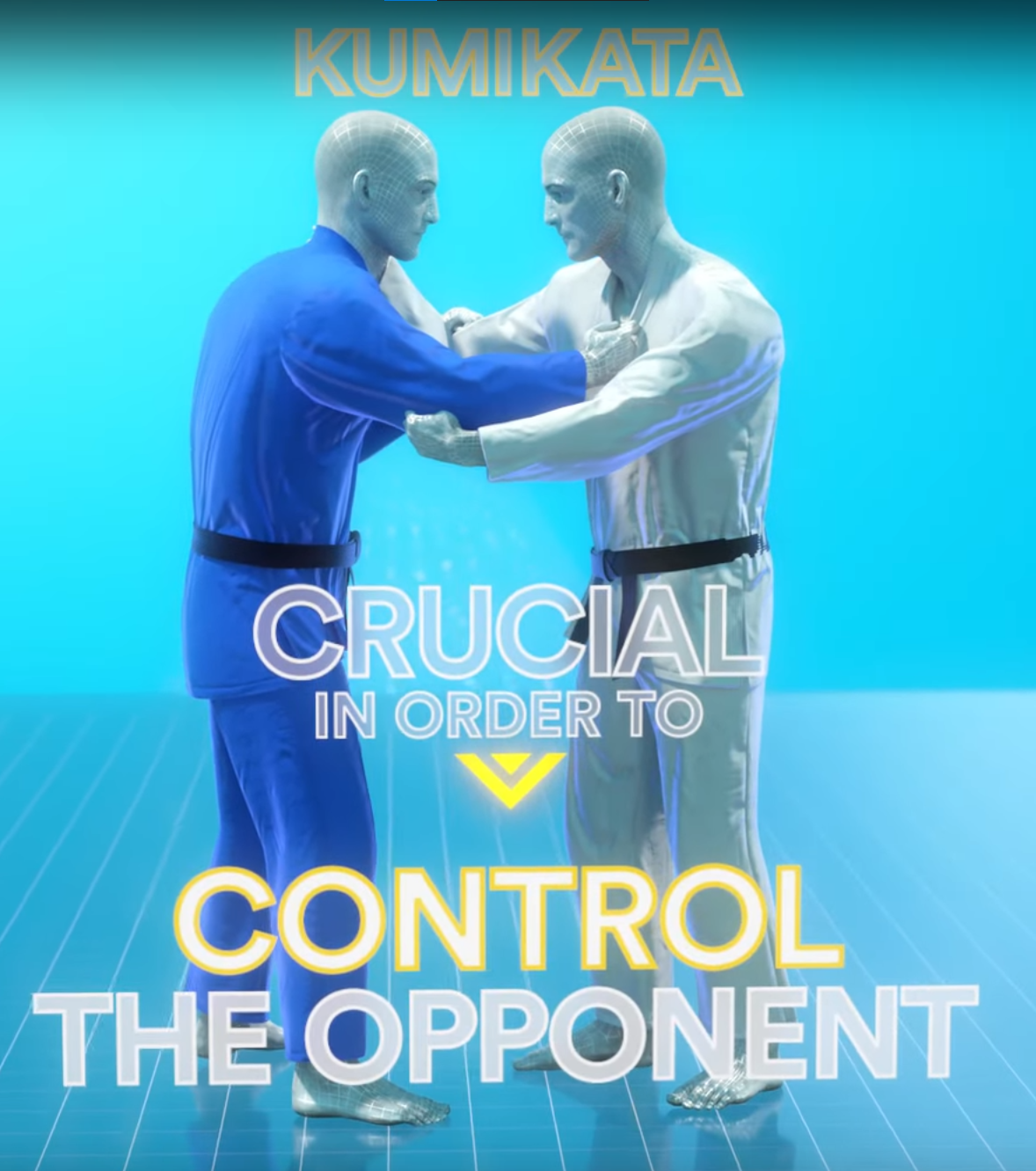
The importance of Kumi Kata (grip fighting) is often overlooked in Judo. It forms the basis of just about any attack. Not to mention, moving in aggressively without solid grips in place for control first should be considered reckless for the vast majority of Tachi Waza, and that itself can often even be penalized under failing to protect Uke. The following video does a great job at concisely summarizing Kumi Kata:
The remaining sections offer a description along with close-up photo example of all the main types of grips, grouped by “Standard” (traditional grips), “Modern” (accepted grips that require immediate throw attempts) or “Prohibited” (grips typically disallowed and/or frowned upon as unsportsmanlike in competition).
Standard Grips
- Traditional grip (Ai Yotsu) – each have a high lead-hand lapel grip, and a mid-range rear-hand sleeve grip; note also the symmetric foot position (either left or right could be the lead, but the symmetry of the position is what makes it “Ai Yotsu“)
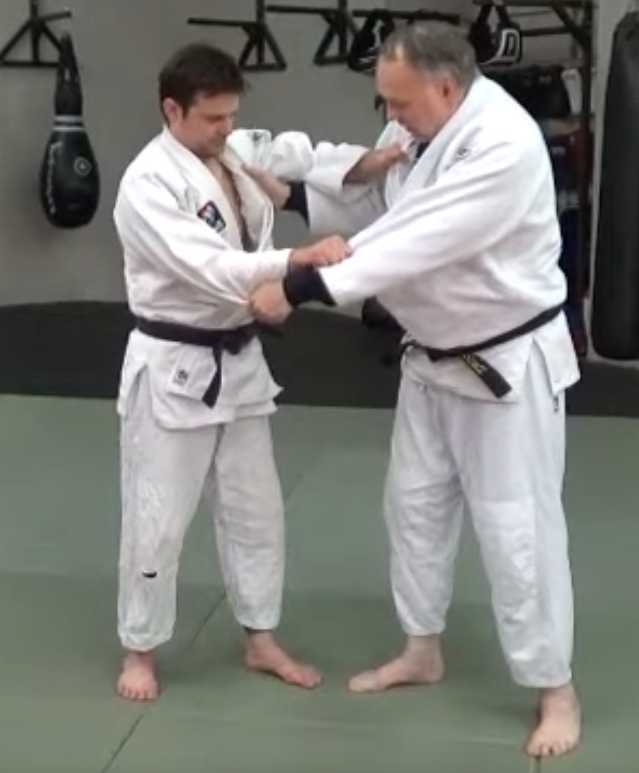
- Traditional grip (Kenka Yotsu) – each have an opposite high lead-hand lapel grip, and opposite mid-range left-hand sleeve grip; note the asymmetric position of the feet (so per example below if the attacker has their left hand on top gripping the opponent’s lapel as lead Tsurite they also have their left leg forward, and right hand on their opponent’s sleeve as rear Hikite their right leg is back as supporting leg; or vice-versa)
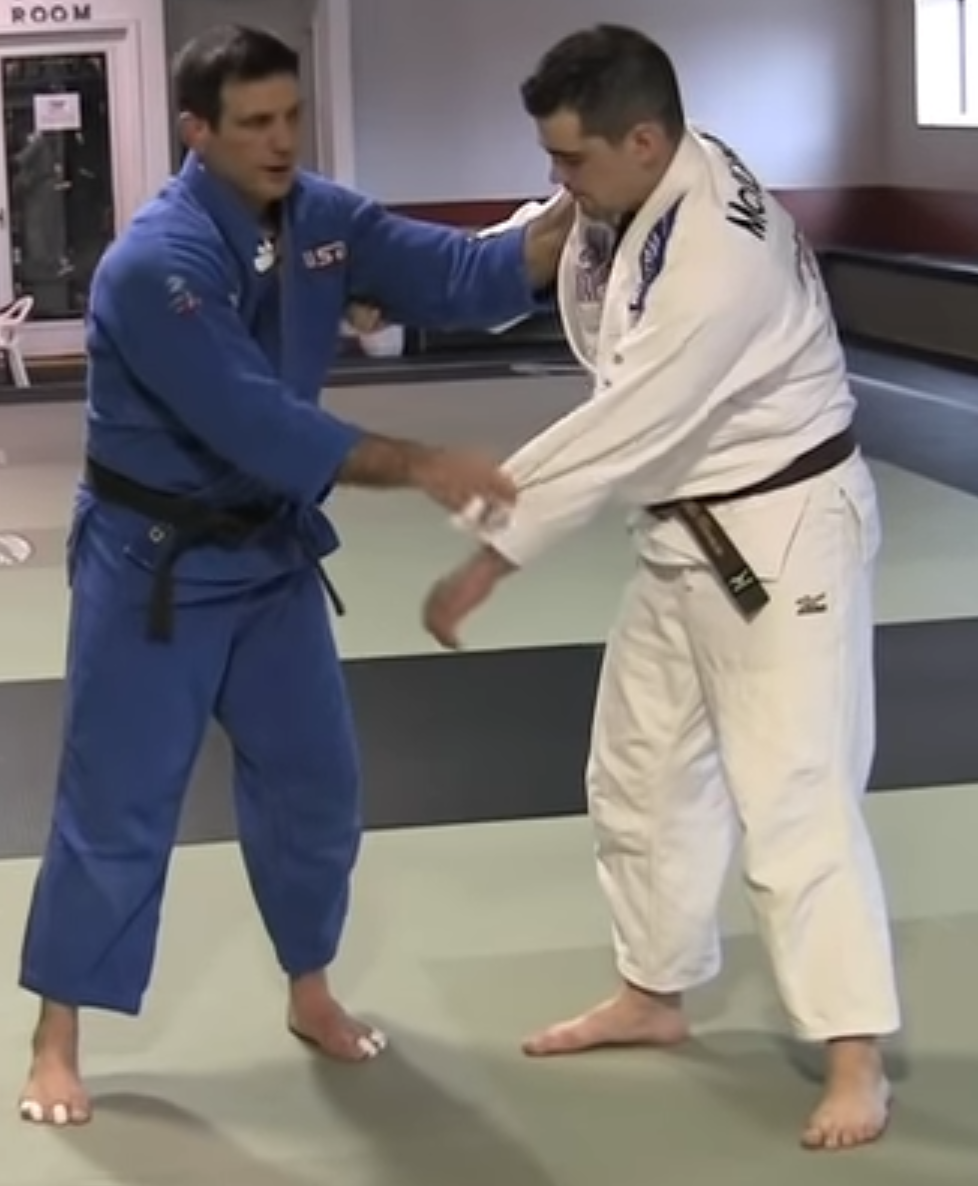
- 80/20 grip (Kenka Yotsu) – similar to “Traditional grip (Kenka Yotsu)” above, but this time the attacker has both inside positions in the gripping (Tsurite inside and Hikite inside and/or on to), which tips the struggle for leverage in their favour
- 50/50 (neutral) sleeve grip – each have a hold of one another’s sleeves; probably the third most common hand position to get stuck in after the basic “Traditional grip (Ai Yotsu)” and “Traditional grip (Kenka Yotsu)“
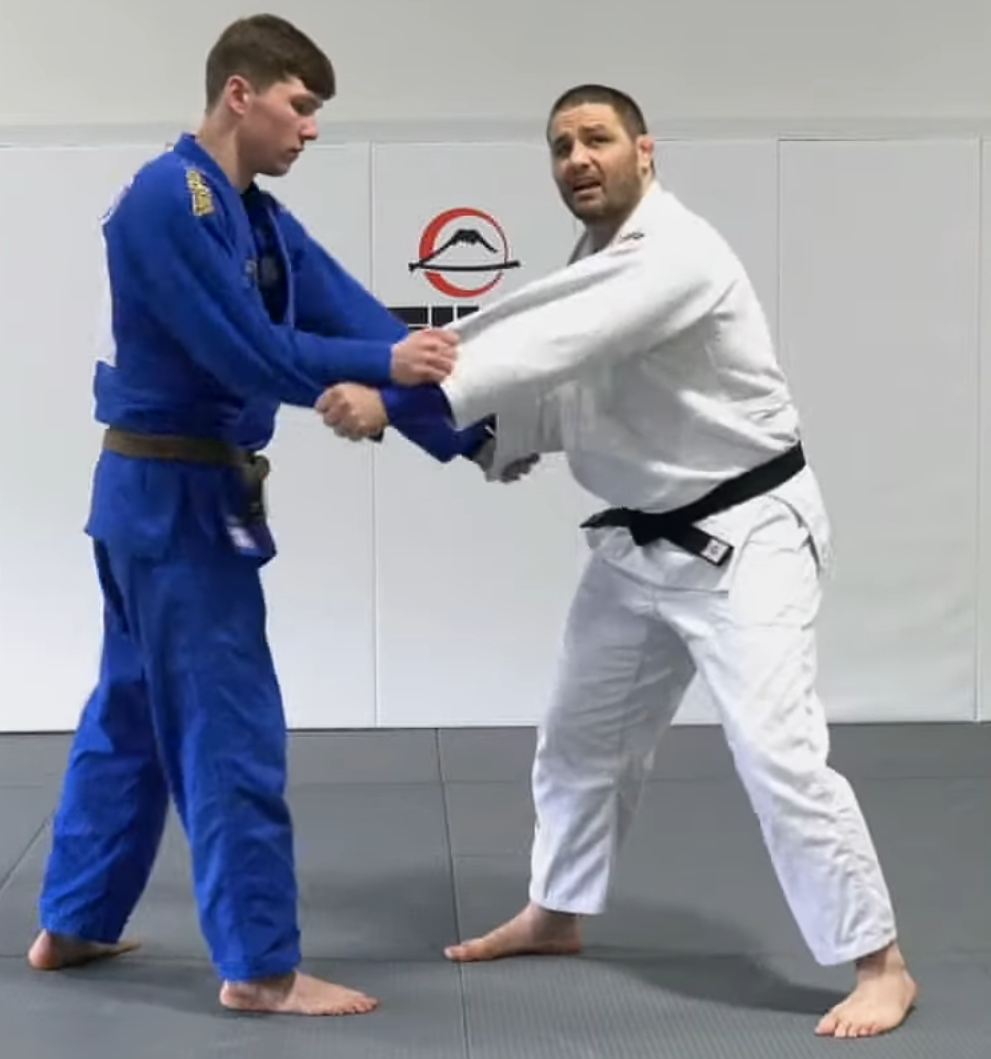
- 50/50 (over) lapel grip – each have a single high lapel grip, this is a key position obtained in almost every Judo match, whereby the next step of the gripping can easily determine the outcome of the match or at least the positional dominance that will need Kumi Kata to recover from if you’re on the receiving end
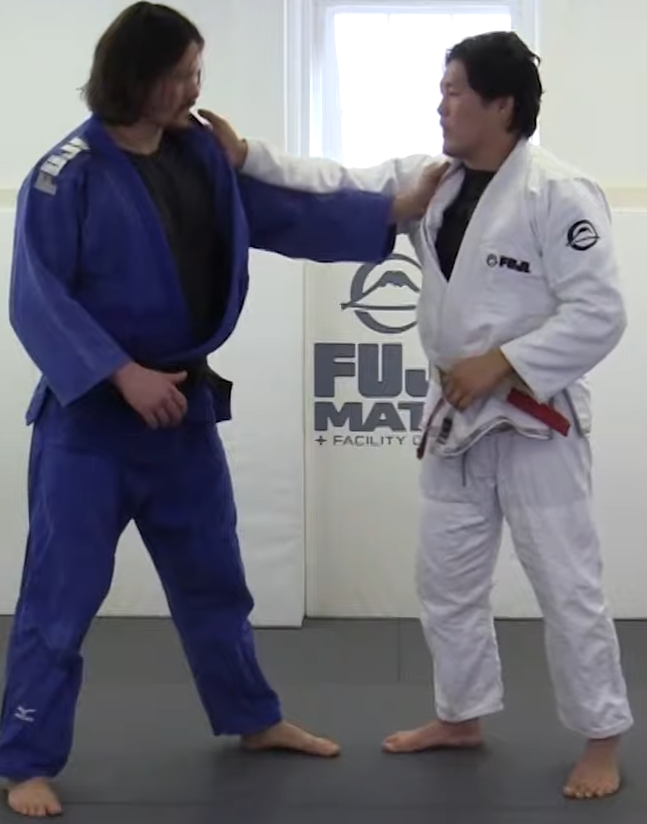
- 50/50 (under) lapel grip – same as above but this time the attacks has the under-hand position (each variation offers different opportunities for both further Kumi Kata advancement and/or throws)
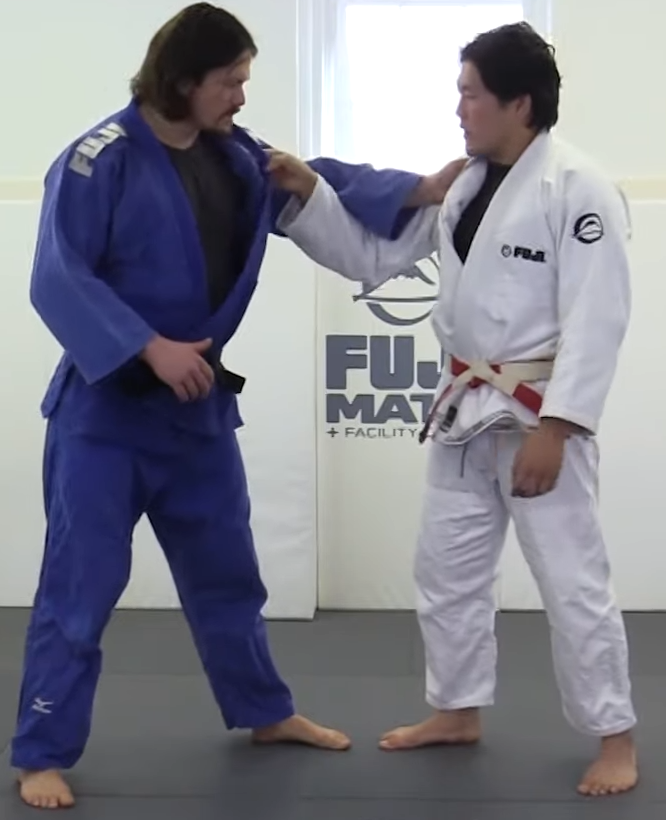
- Inside sleeve grip – reach inside the arm grabbing the gi sleeve’s material above and near the bicep and/or hooking with the hand around/into the bicep itself
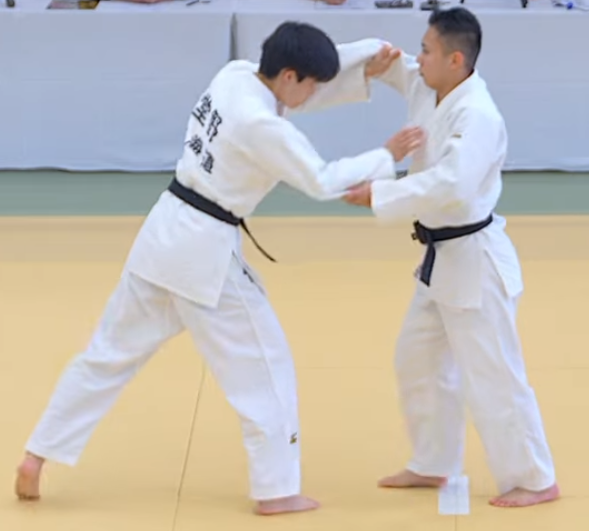
- Armpit grip – gather the gi material near or directly under the armpit of your opponent and either scrunch it together into a make-shift handle, or, push it upwards into their arm, which can partially pin or delay movements of the arm on that side
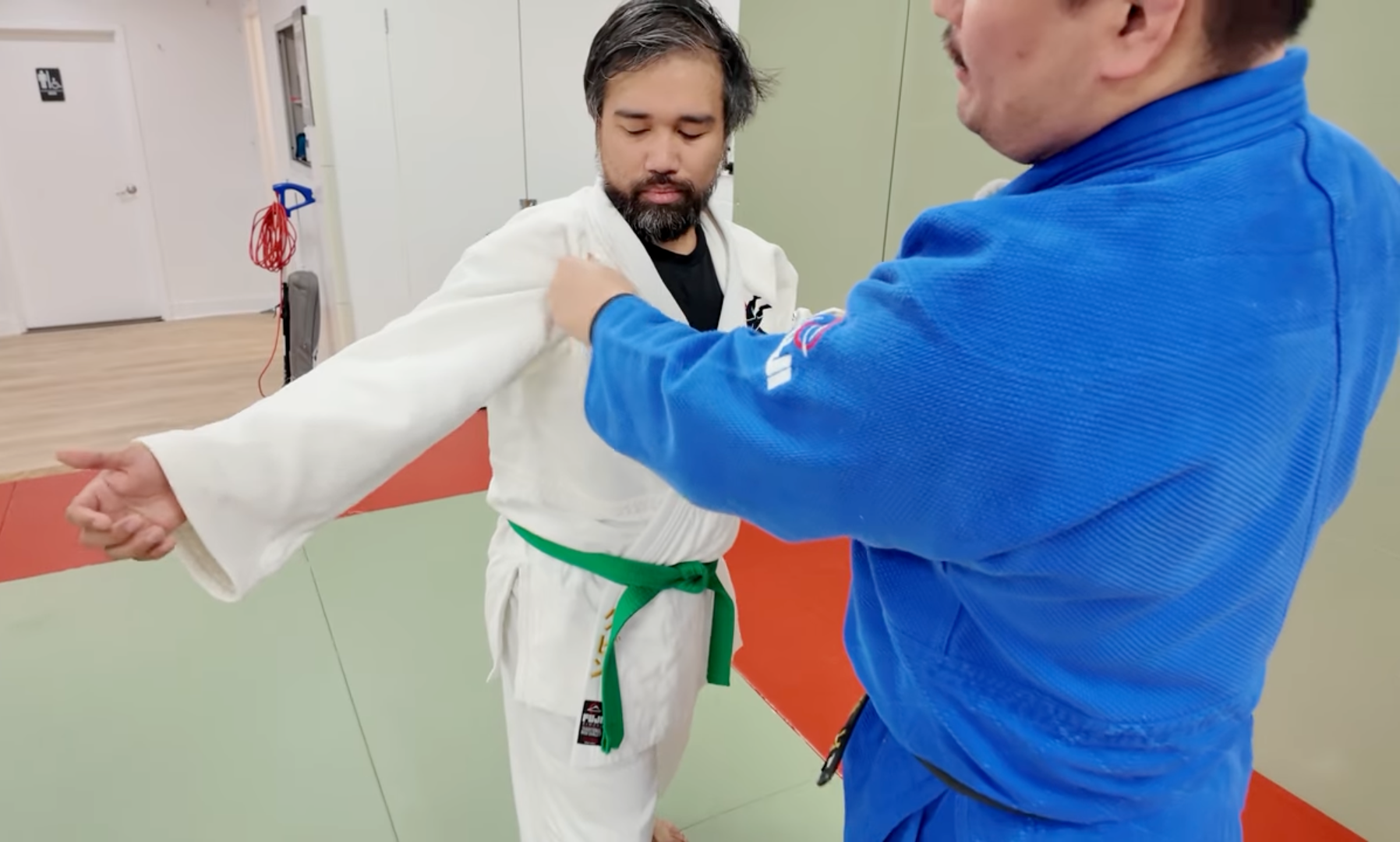
- Same-side sleeve grip – in standard Ai Yotsu body positioning the attacker’s lead hand could reach for the rear sleeve of the opponent; likewise, the rear hand of the attacker could reach for the lead hand of the opponent
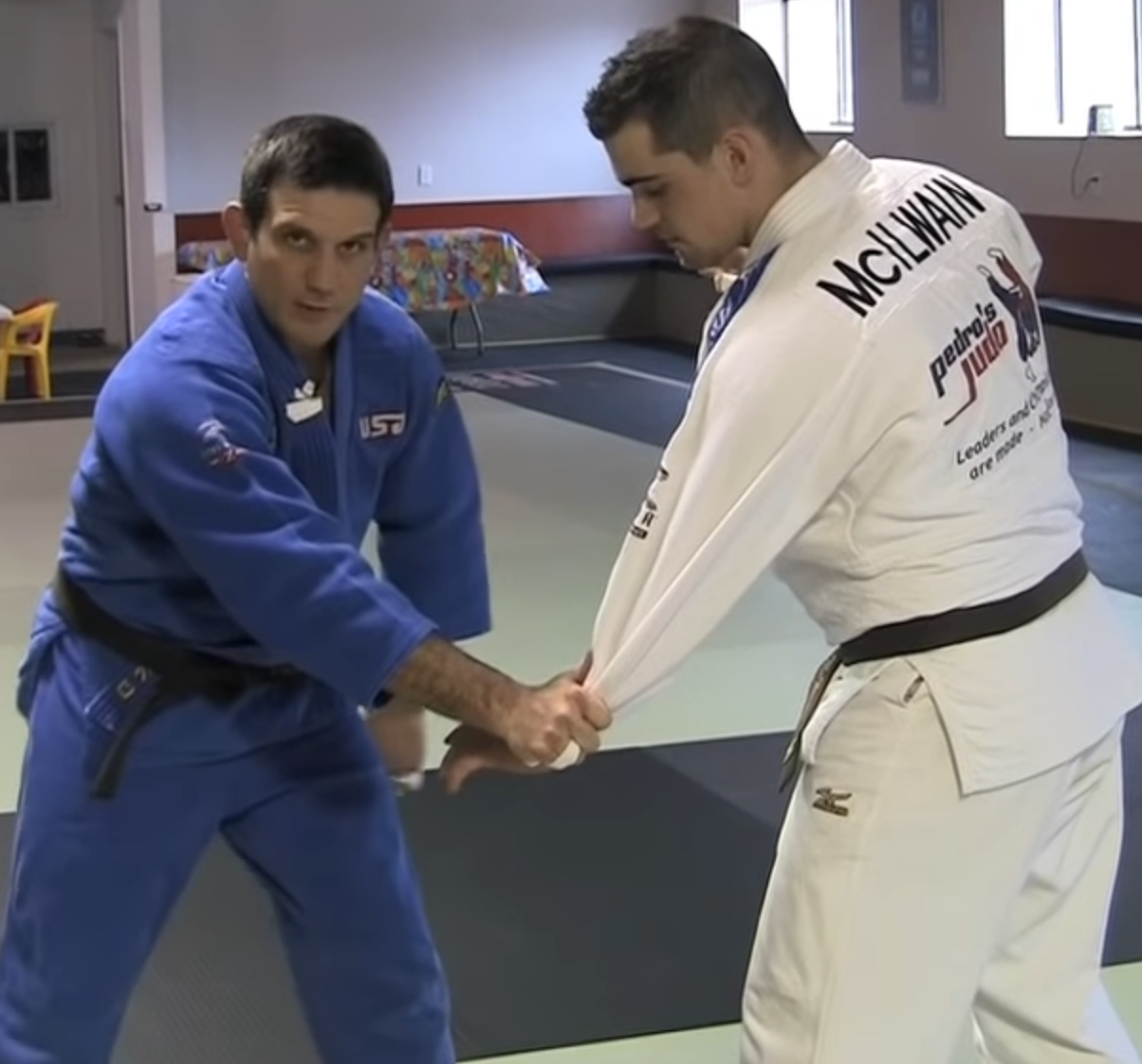
- Reverse same-side sleeve grip – seizing the sleeve or arm of opponent with an overhand grip (attacker’s right to opponent’s left, or vice-versa)
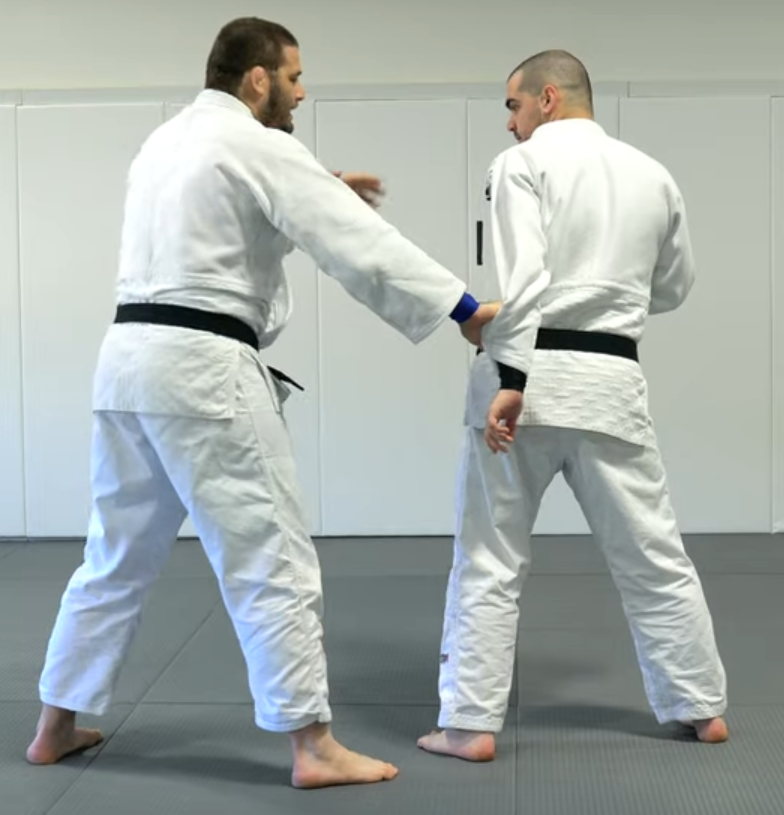
- Reverse Cross-sleeve grip – reaching across opponent’s body to secure their sleeve
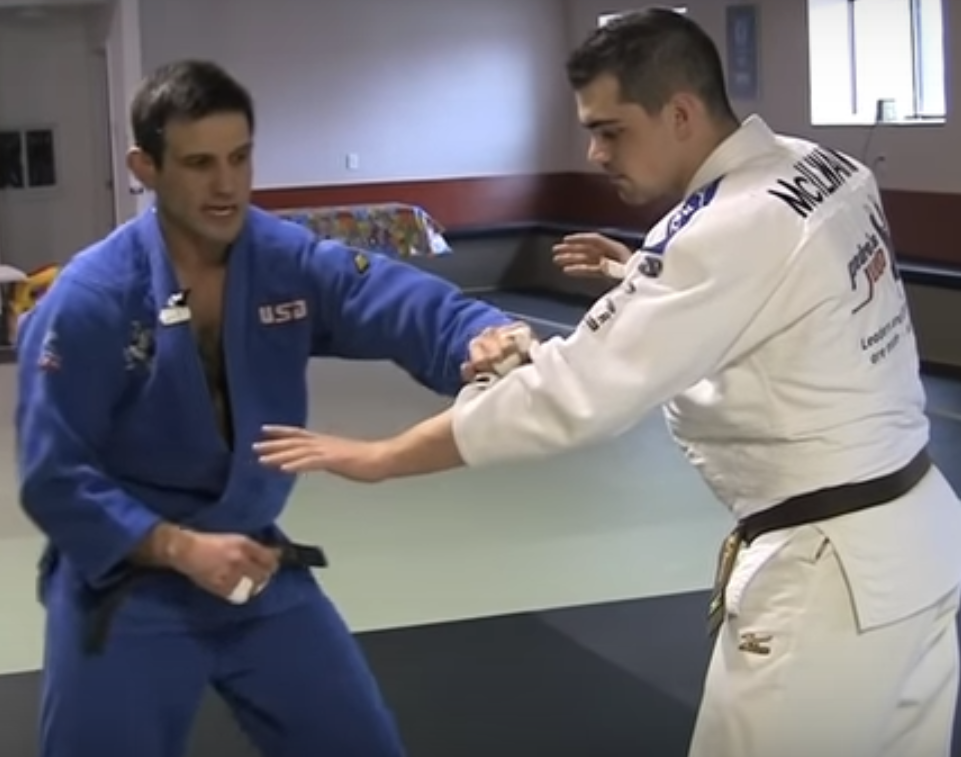
- Cross-wrist grip – same as above but a little stronger position (and works equally well for no-gi); just be careful for wrist lock counters as this grip is basically an Aikido-ka’s dream come true
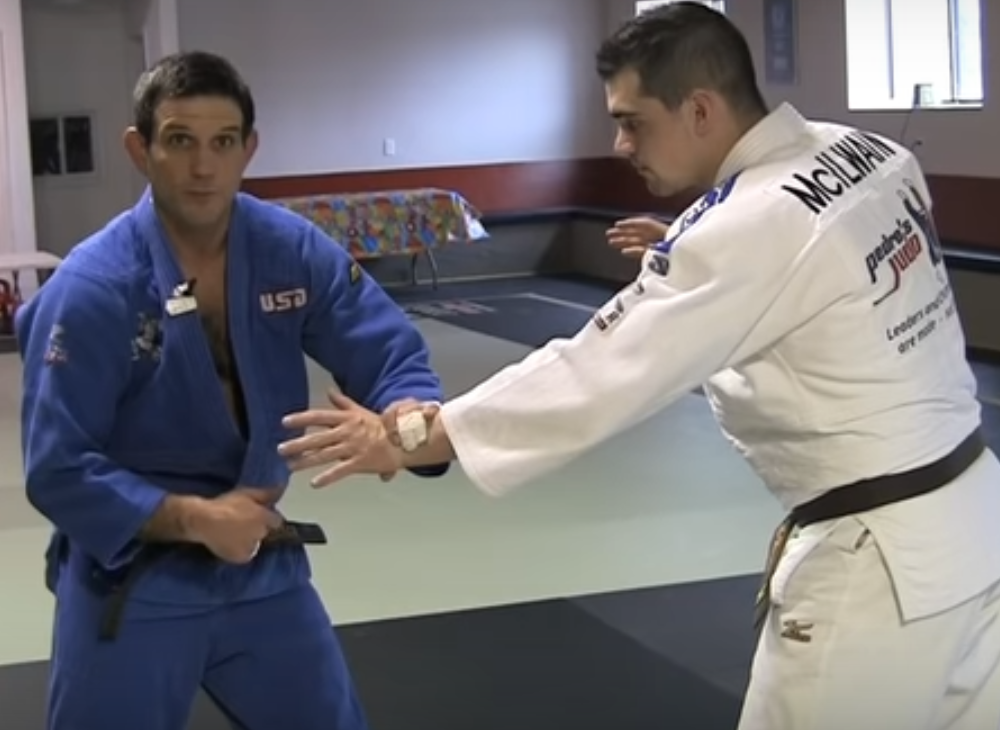
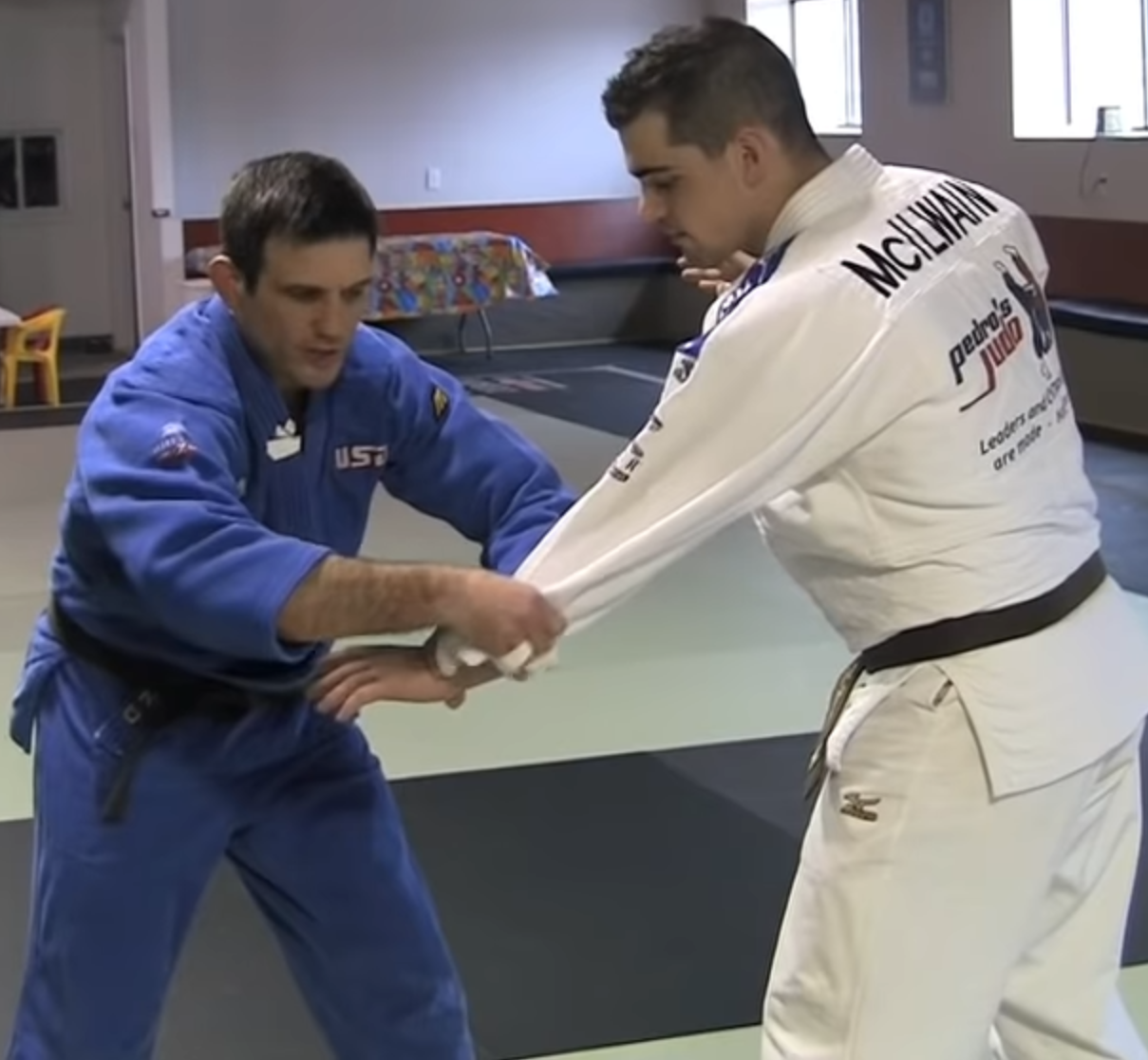
- Cross 2-on-1 sleeve grip – both hands grab the sleeve in a cross-fashion where the lead arm of the attacker reaches across while gripping the opponent’s same side
Modern Grips
The following grips are considered unconvential or “modern but legal” Kumi Kata positions. These are in a scoring group that requires immediate throw execution (within 3-5 seconds from taking the hold), or else the attacker having said hold is at risk of a “Shido” being called against them.
- Belt grip – attacker obtains a belt grip on the opponent (either over or under their arm)
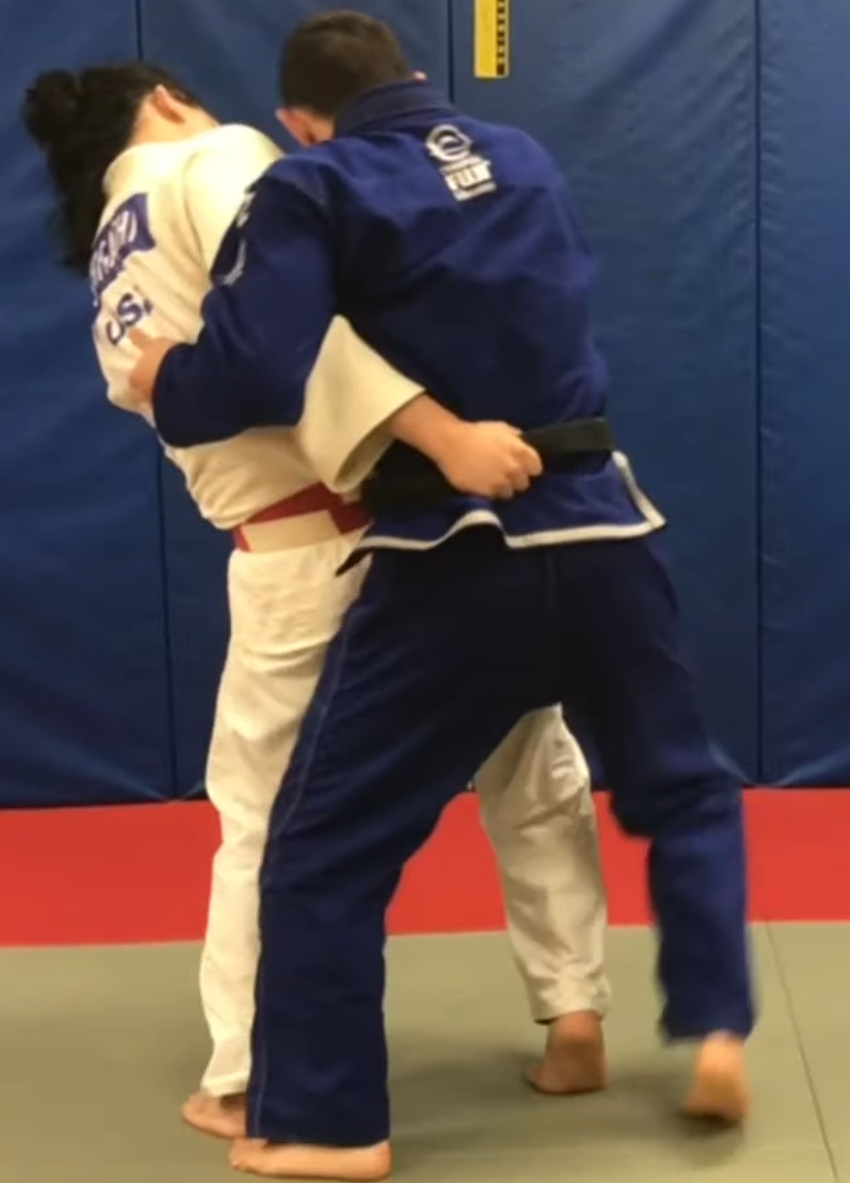
- Two-handed Belt grip – attacker gets both hands on opponent’s belt (could be either an over-over, over-under, or under-under grip); typically used to setup rotational takedowns and/or hip throws
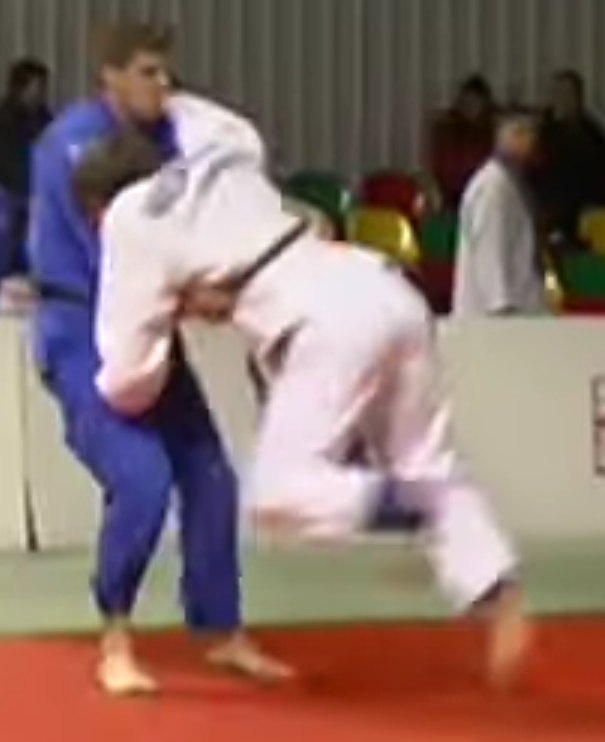
- Front Belt grip – a variation of the basic “Belt grip” where you grip the belt from the front with an underhand grip
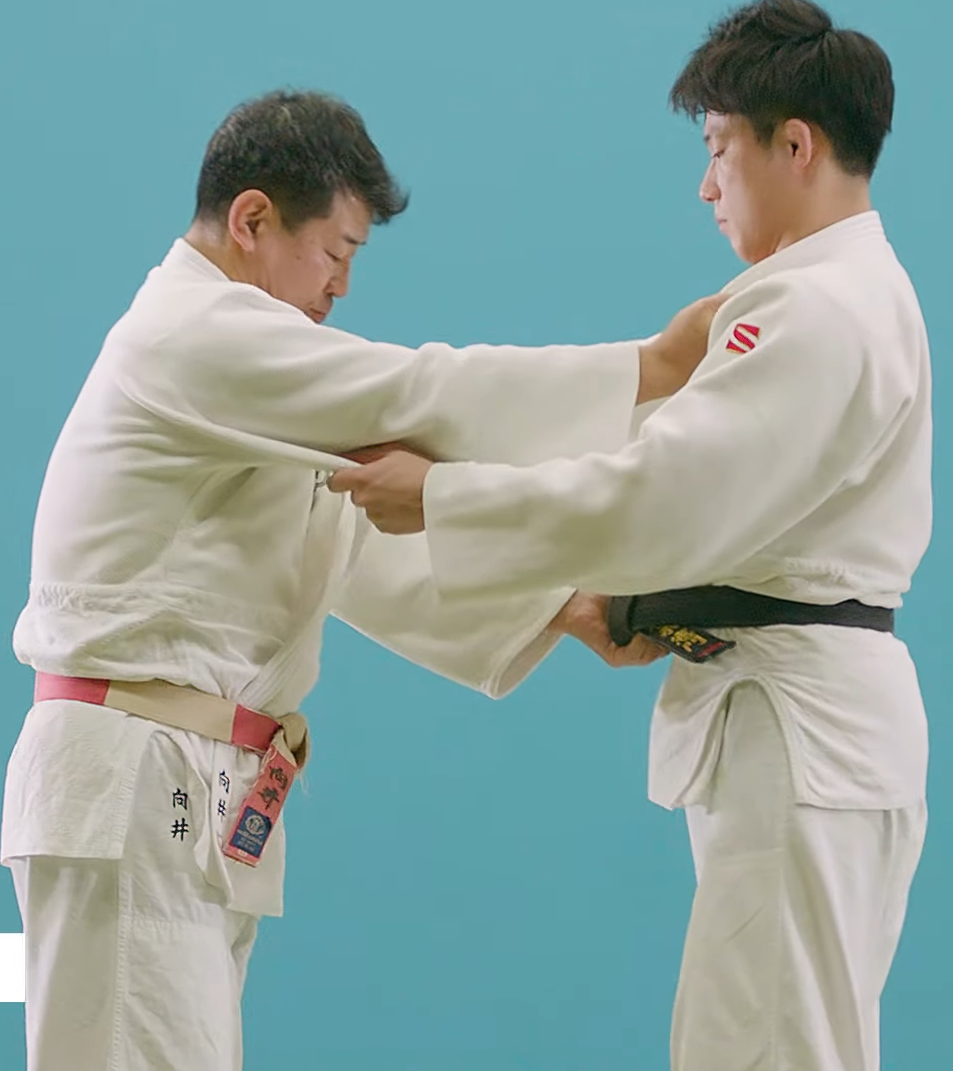
- Reverse Front Belt grip – another variation of the basic “Belt grip” but this time you seize their belt from the front with an overhand grip; typically used to setup quick hip throws like “Tsuri Goshi” (but can be leveraged for variations of many other throws too including “Sukui Nage“)
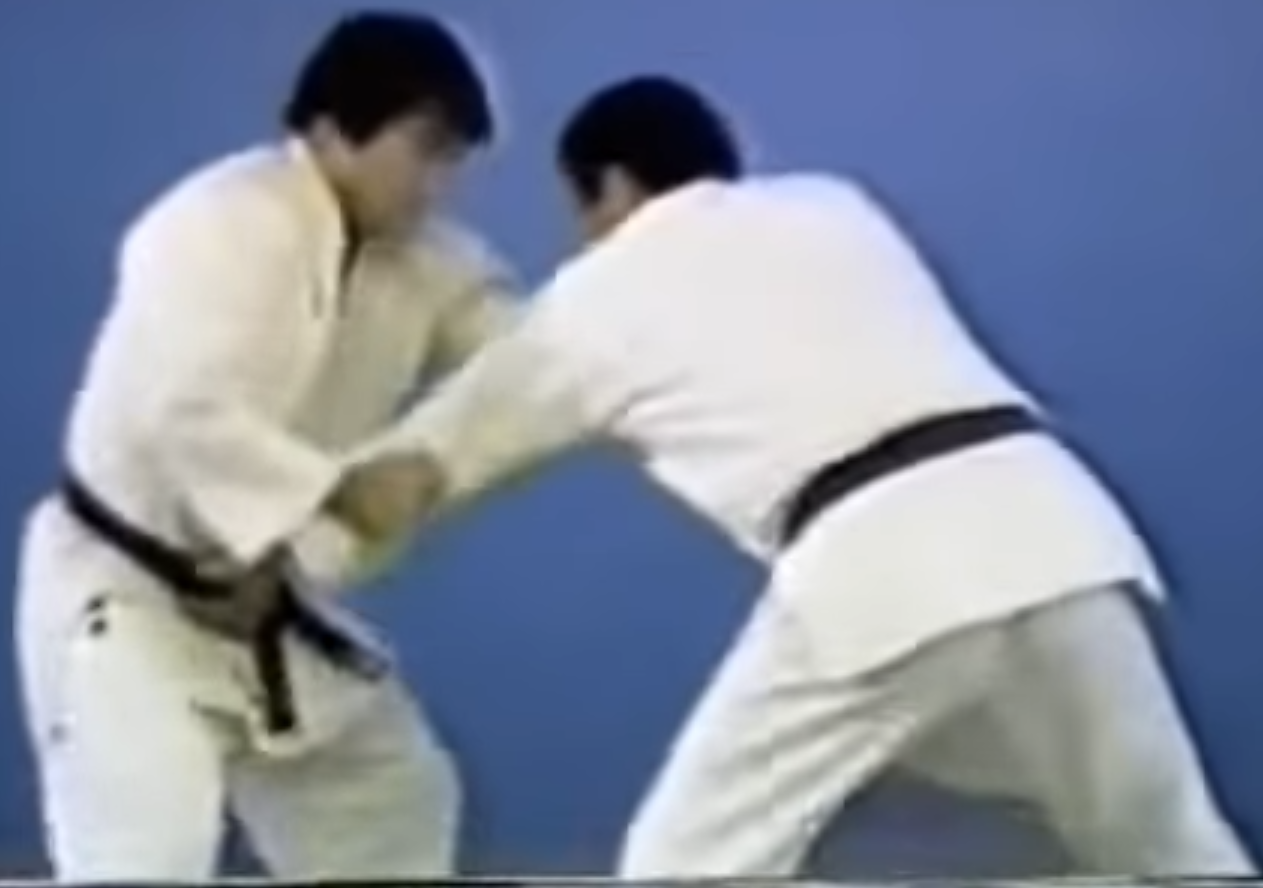
- Same-sided grip – grabbing both the lapel and sleeve on the same side (NOTE: you can not hold this grip for an extended period of time and must attack immediately)
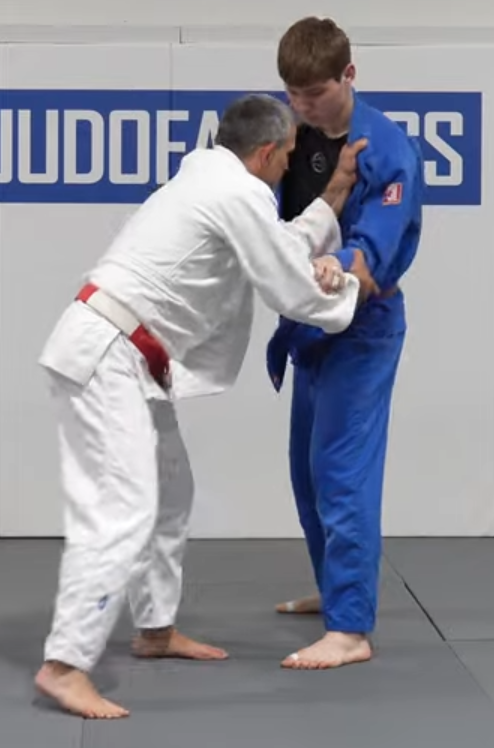
- Two-lapel grip – grabbing each of the opponent’s two seprate lapels (hands could be same-height or one higher than the other)
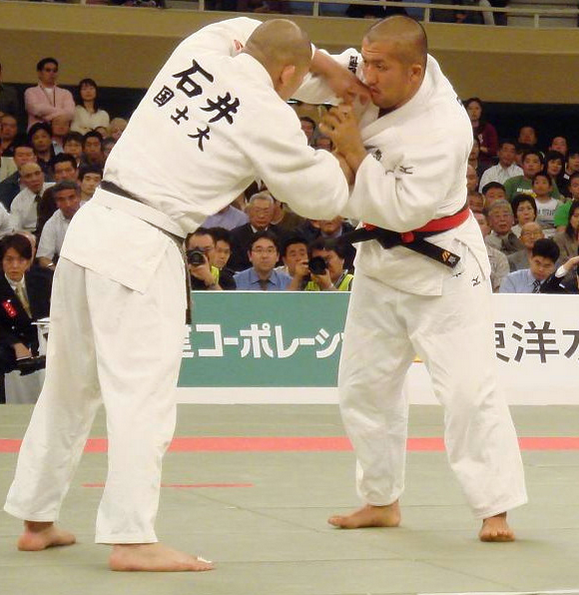
- Two-on-1 lapel grip – variation of the above where both hands grip the same lapel on the opponent (this can be done over-over, under-under, or over-under as pictured below)
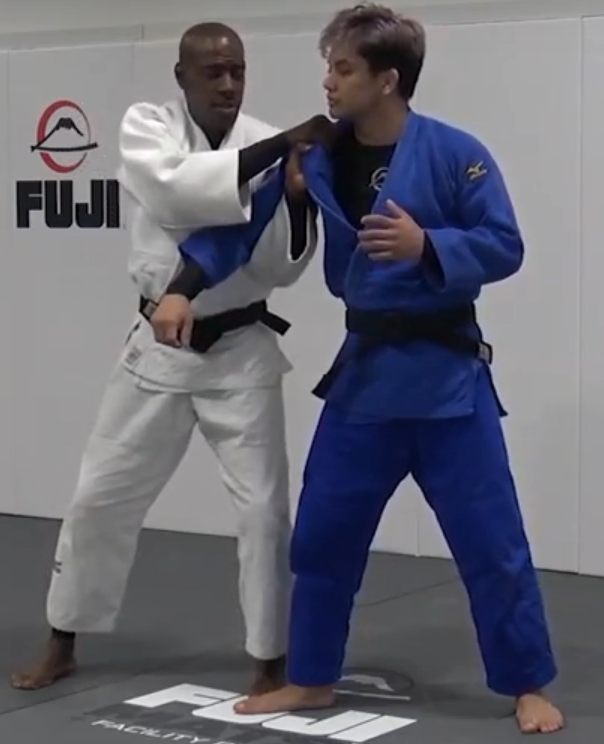
- Cross-lapel grip – gripping the opponent’s opposite side lapel with your lead hand (attacker’s right hand to opponent’s right lapel, which is of course the left side from the attacker’s perspective)
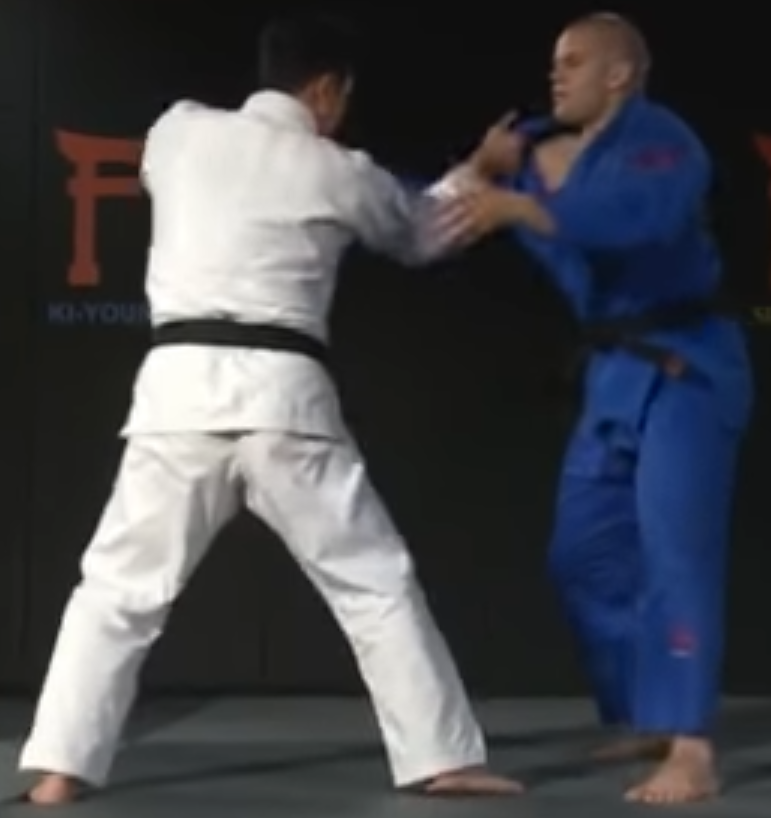
- 2-on-1 sleeve grip – both hands grip the same sleeve of the opponent (often times one of the grips ends up being high on the shoulder)
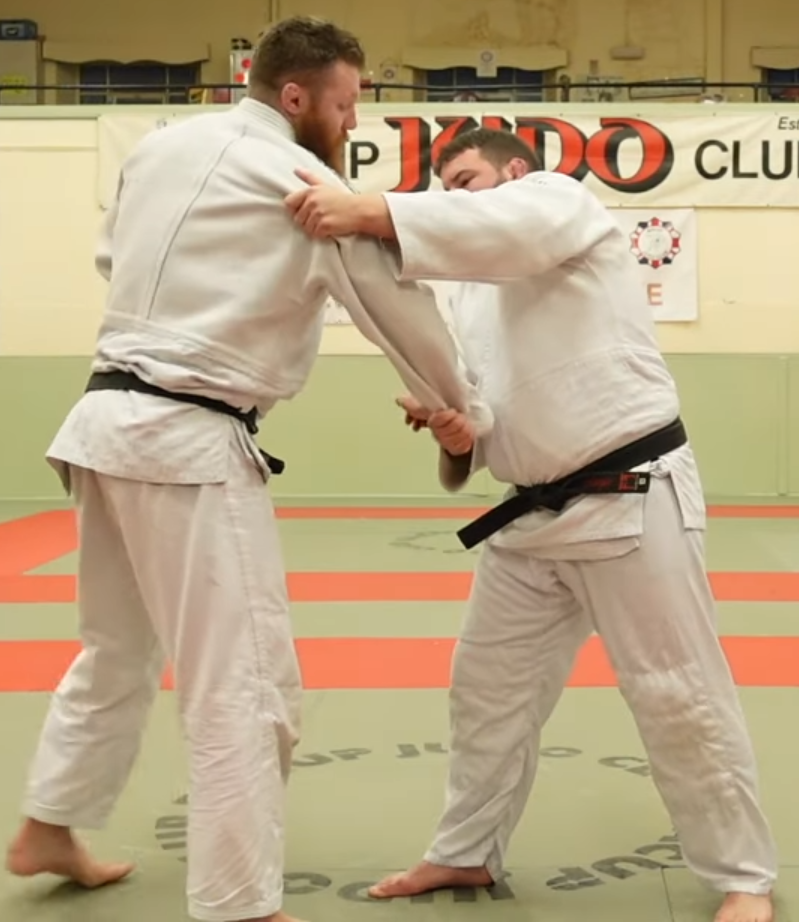
- Overhook Back grip – standard back grip where one arm reaches over and grips the belt or gi material (in no-gi you can flat hand press on the small of the back, or even pinch clothing/skin in self-defense scenarios); this one is also both very common to present itself, and, for it to come up during grip fighting, even if just for a split-second
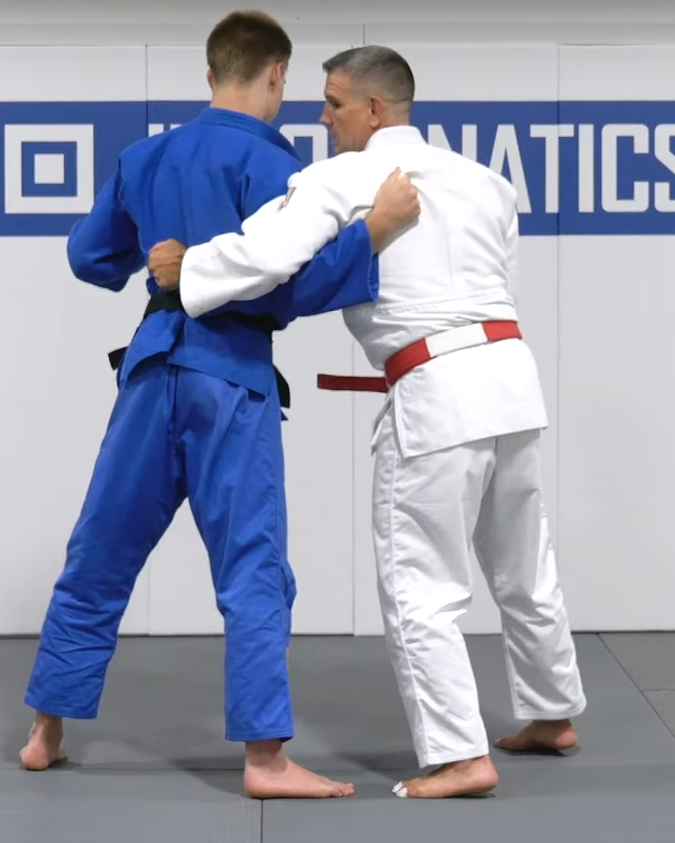
- Underhook Back grip – standard back grip where one arm reaches under and grips the belt or gi material (in no-gi you can flat hand press on the small of the back, or even pinch clothing/skin in self-defense scenarios); this is most commonly used to setup hip throws but can also be combined into variations of other throws
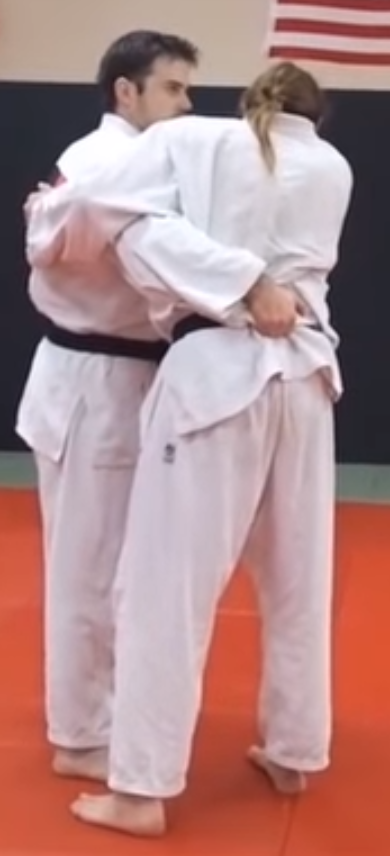
- Rear/Side Hip grip – can grab either their opposite hip bone, belt above the hip, or gi material in the same area (pants as well in self-defense scenarios but not competitions); typically used to setup reversals like “Utsuri Goshi“
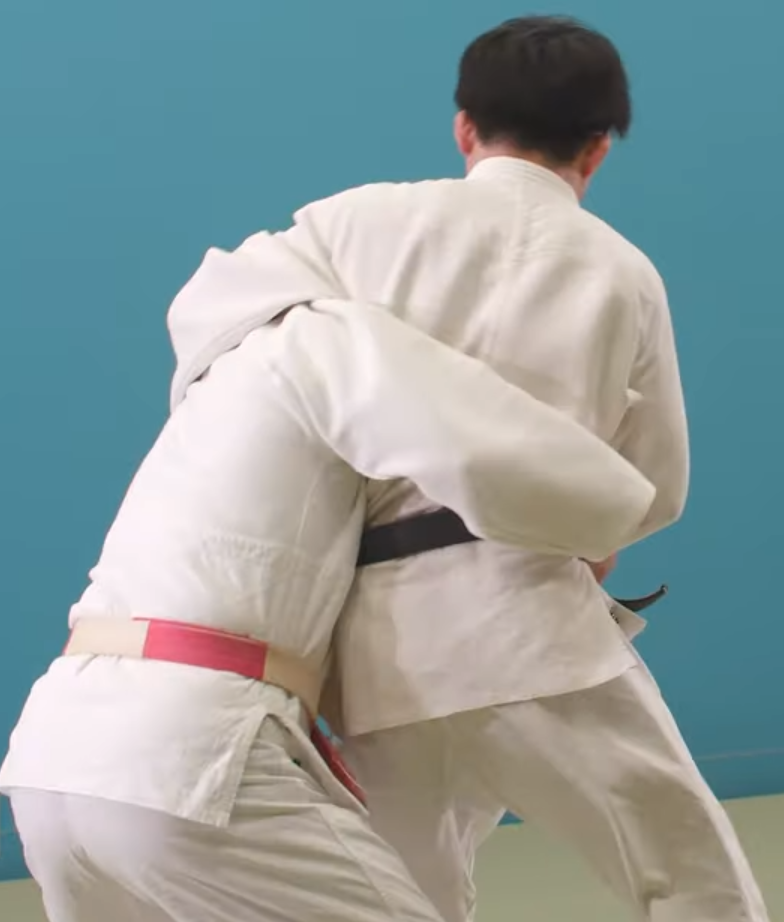
- Duck-Under grip – this could be done by dropping to one or both knees, or, simply by lowering your center of gravity and rising back up again once you’ve passed under the opponent’s arm, with your head/neck firmly wedged in their Waki; from here you can setup many other techniques such as “Sutemi Waza” (Sacrifice Throw) or “Makikomi” (Entangled/Wrapped Throw)
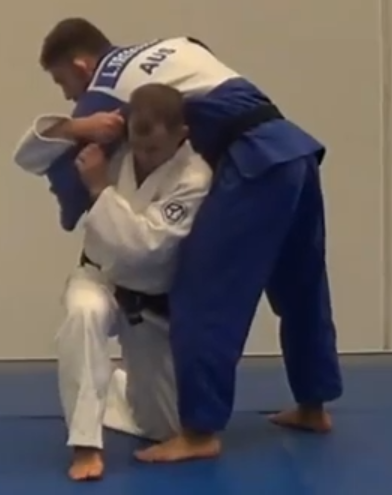
- Makikomi grip – entangle/wrap opponent’s arm on one side (this is the foundation of most Makikomi Tachi Waza techniques)
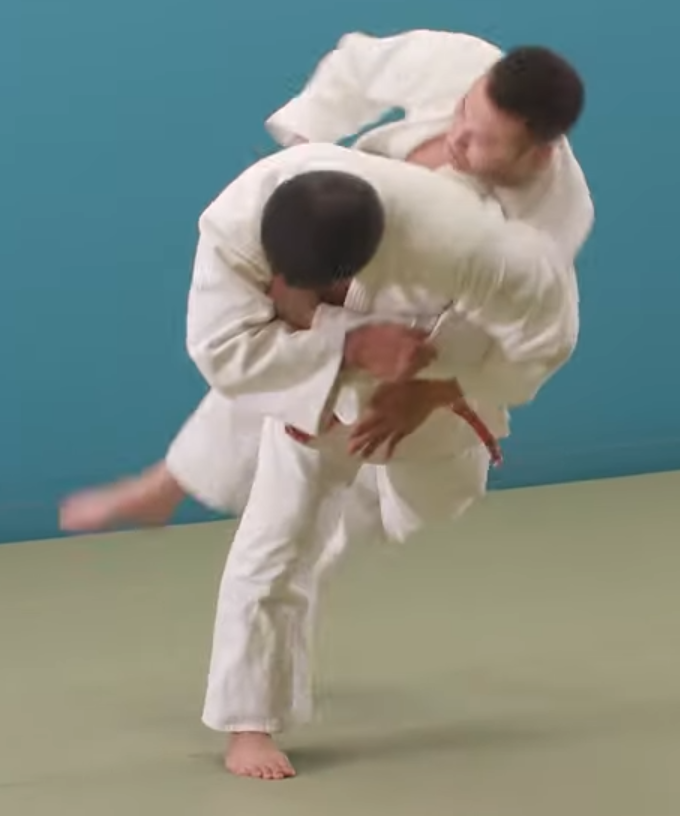
- Reverse Makikomi grip – attacker wraps opponent’s arm from the outside and over the top (NOTE: hands must not interlock and can only float freely or grab your own gi to keep in place, otherwise it is considered an “Ude Garami” potential joint-lock position, see “Kimura trap” in Prohibited grips section)
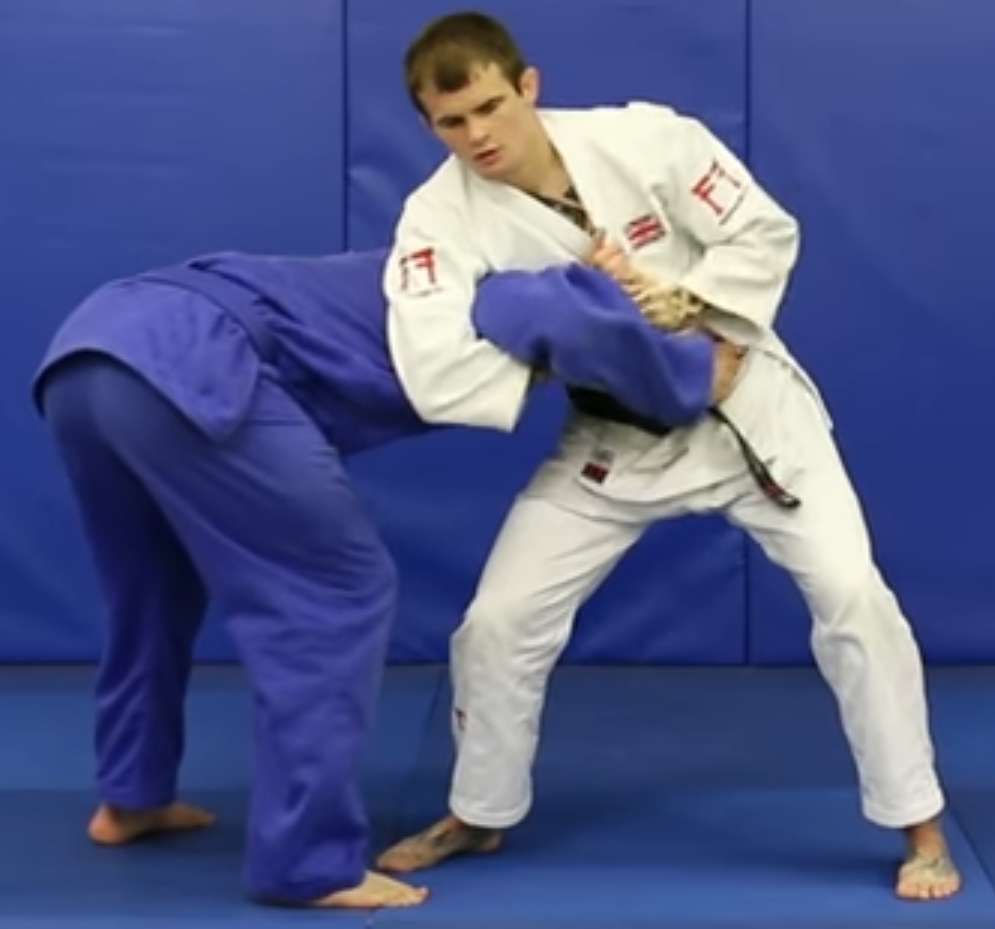
- High Elbow back grip – this position is great against excessively defensive opponents who shift their hips way back to avoid being thrown, as the attacker gets a high grip on the lapel (possibly even directly behind the opponent’s head) and the high-elbow allows for a wider range of driving their head in a circular motion and/or downwards
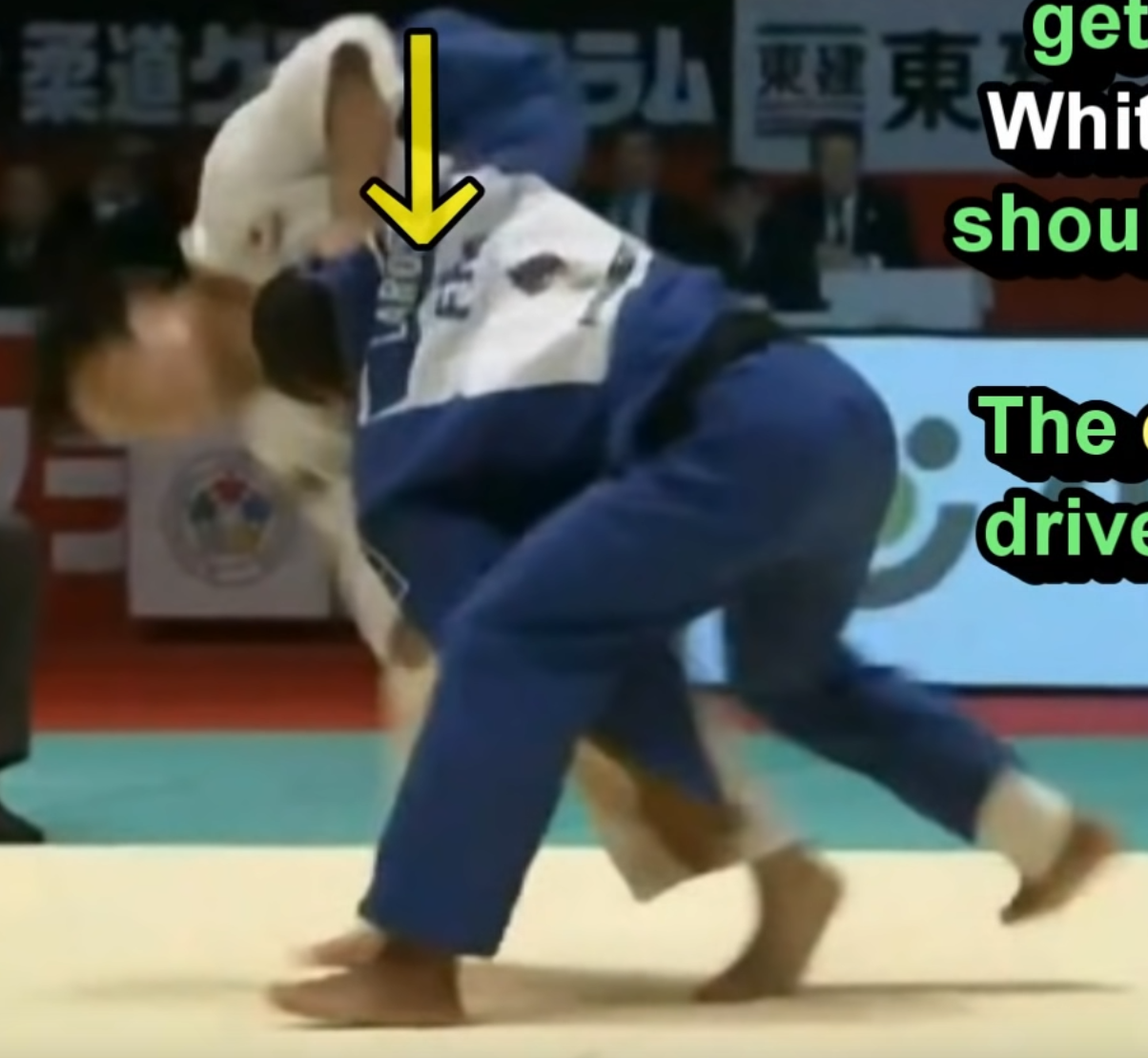
- Loose body-lock (over-under) grip – a loose body lock where one hand is under-hooked (ideally grabbing the belt or back area of the gi), the other is over-hooked (ideally trapping the opponent’s arm tightly); the attacker’s hands must not be interlocked in Judo competitions (however that would be allowed in most Wrestling competitions, see “Bear Hug” below in prohibited grips)
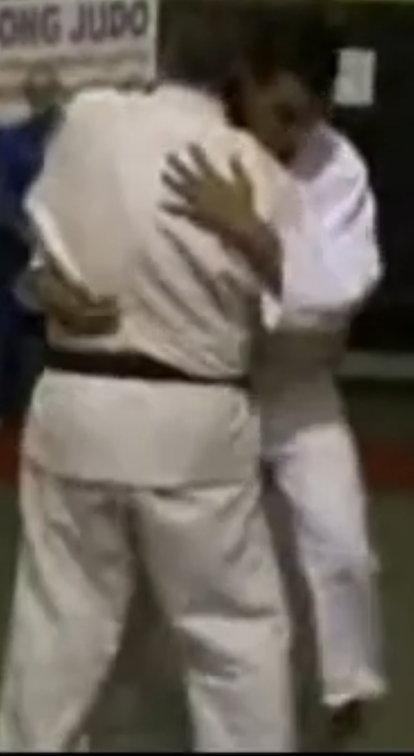
- Tight Bodylock (over-under) grip – a variation of the above with more control (note, that although the hands were brought closer together to tighten the hold, they still can’t interlock under Judo rules; for wrestling interlocked variations see “Bear Hug” in Prohibited section)
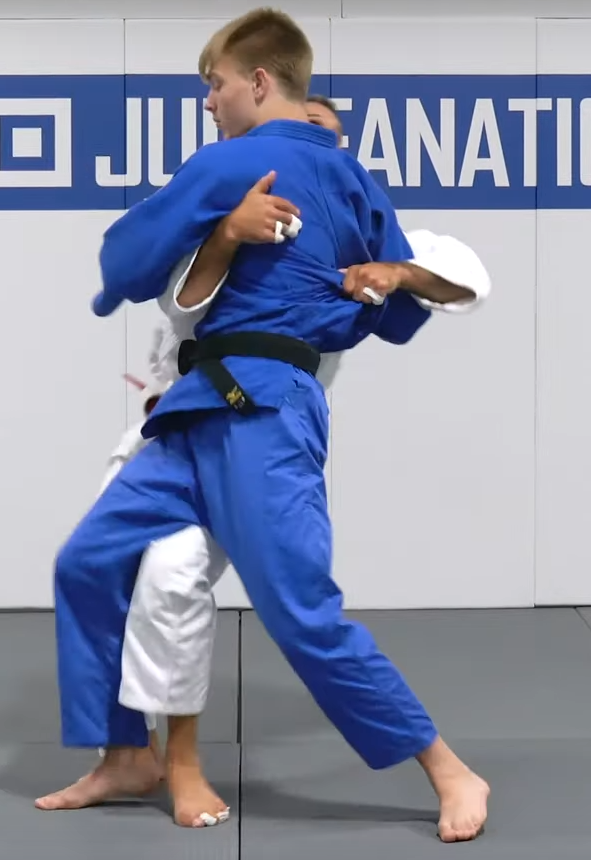
- Double Overhook grip – trap/encircle both of the opponent’s arms from the outside and over top, typically at or above the elbow but could also be down lower at the forearm, wrist or hands with each giving a progressively weaker position (also known as “double-whizzer”); this is easier if the opponent has already taken a “Double Underhook grip” on you, but you can also force/trick/catch them into this position
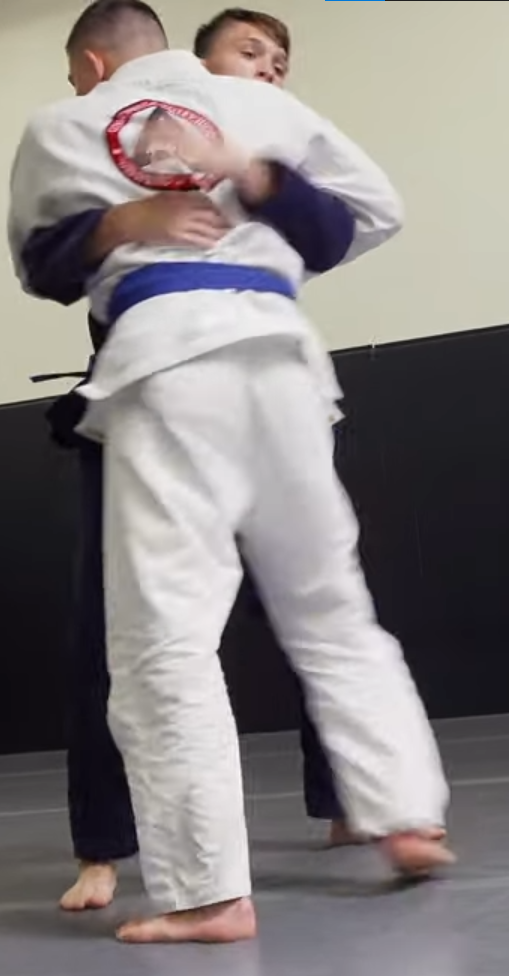
- Double Underhook grip – non interlocked hands with a cupped grip over the shoulder and/or gi material grip where attacker has the under-hook position on the opponent
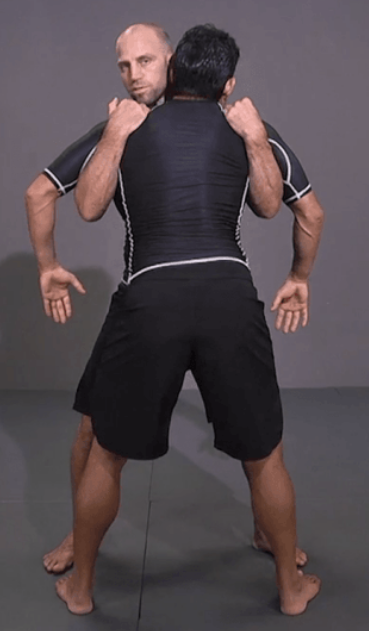
- Mongolian grip – attacker grabs high up on opponent’s back (over-hooked) or high up on their lapel on one side, and under-hooks the arm gripping high again on the other side behind their shoulder’s sleeve material or high up on their back grabbing gi material or cupping/hooking hand (with origins in Mongolian Bokh folkstyle Wrestling which uses a half-jacket, this combination over-under hook shoulder grip gives high levels of control if it can be properly secured)
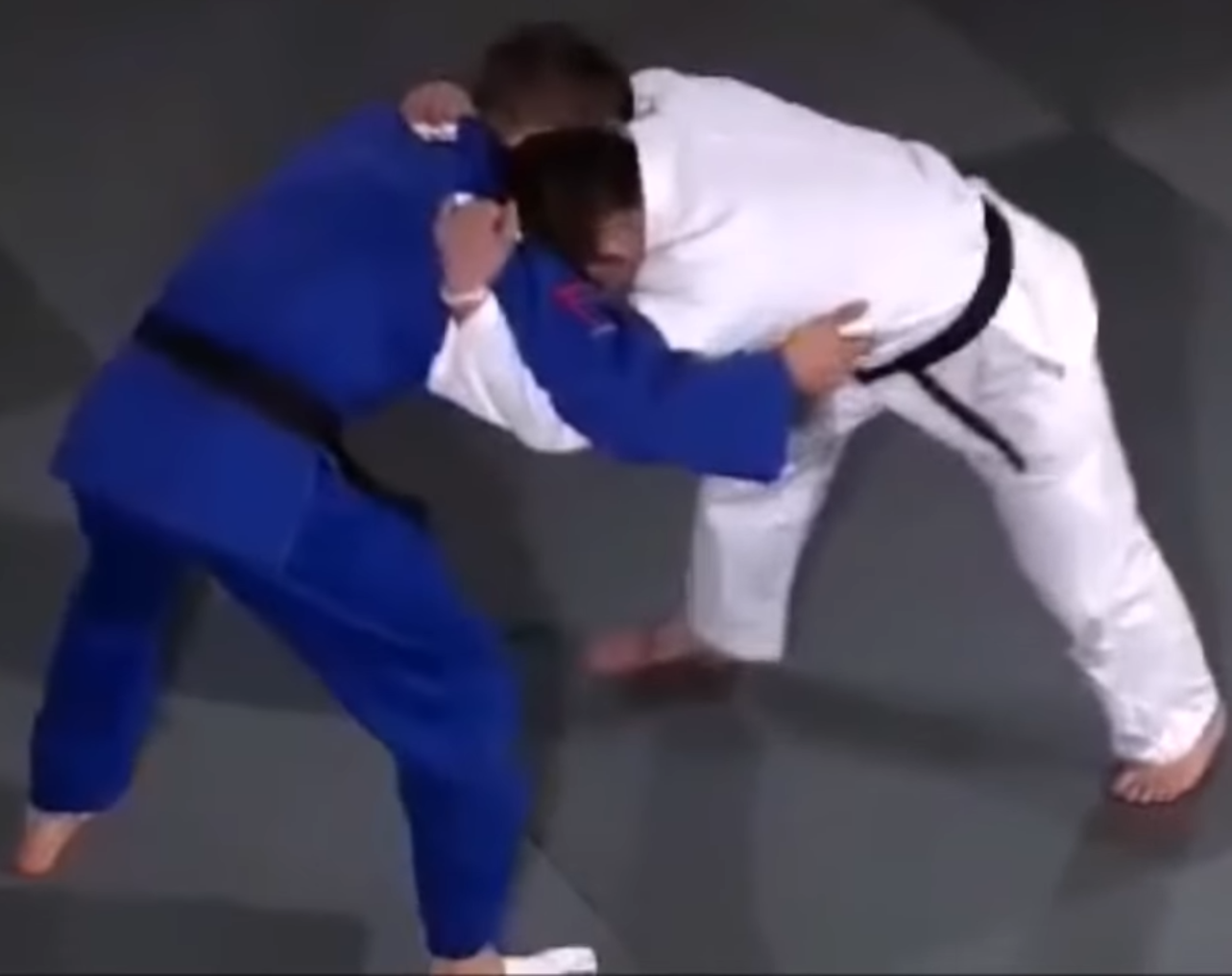
- 2-on-1 (inside) grip – two hands gripping opponent’s sleeves from the inside body position (a very strong grip most commonly used together with Ashi Waza Makikomi leg throwing variations, but be careful of getting your back taken upon landing or while executing this technique)
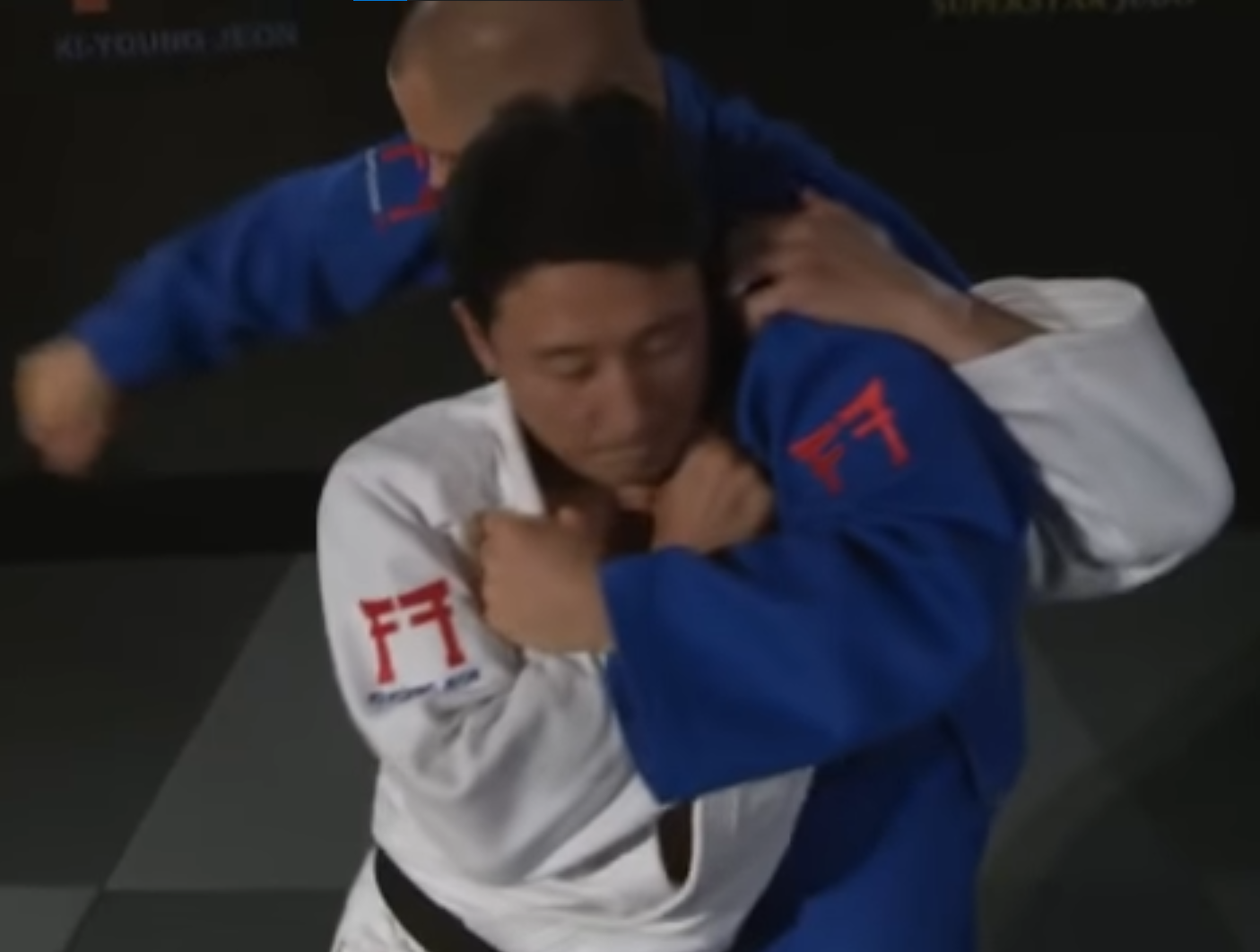
- 2-on-1 (same side) outer grip – attacker takes the opponent’s near-side lapel from the outside inwards (whether in a top or bottom position), along with a cross-grip on their sleeve
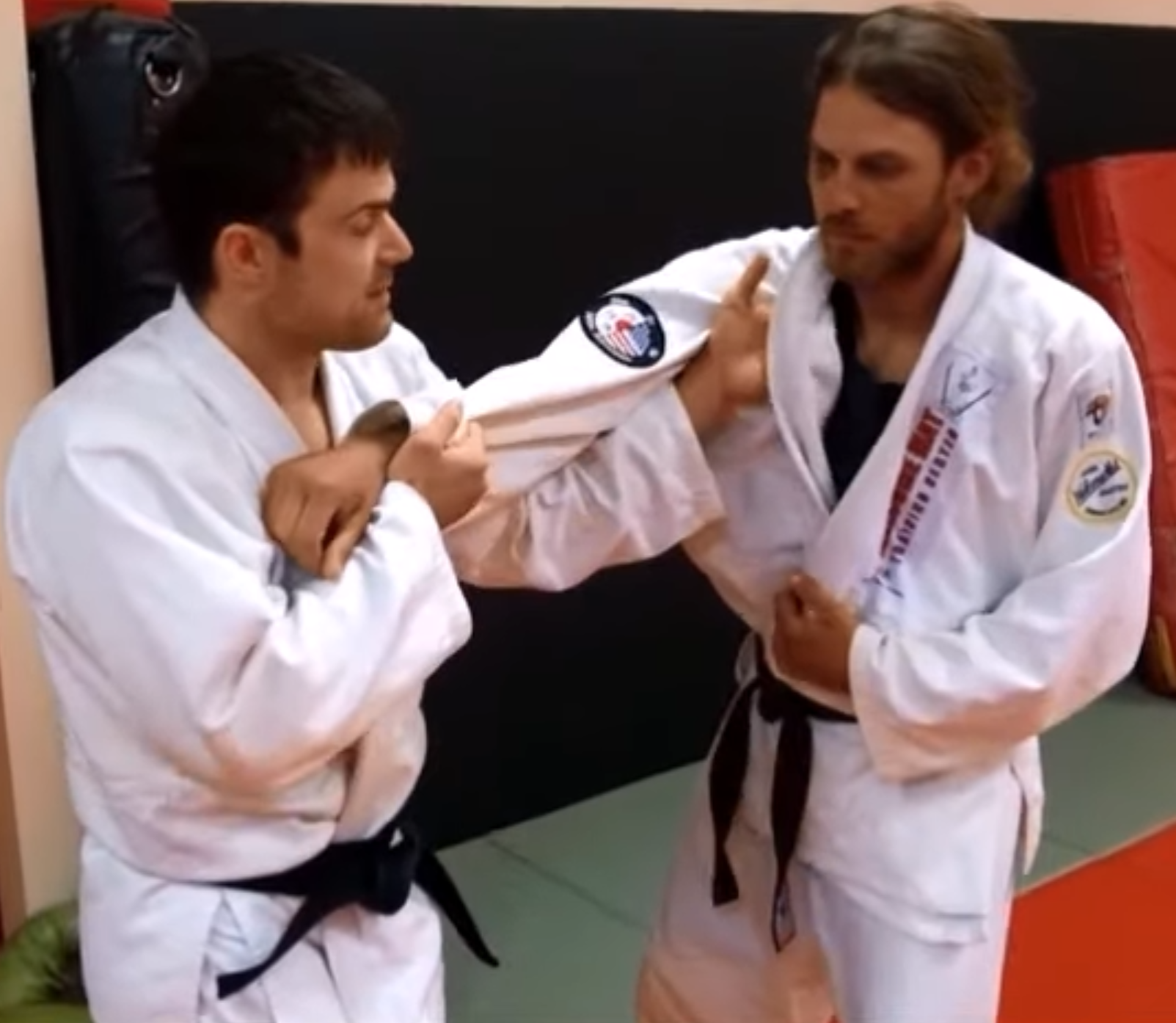
- 2-on-1 (cross-lapel) outer grip – an unconventional but potentially powerful grip sequence where the attacker cross-grips the opponent’s sleeve, then under-hooks their far-side lapel
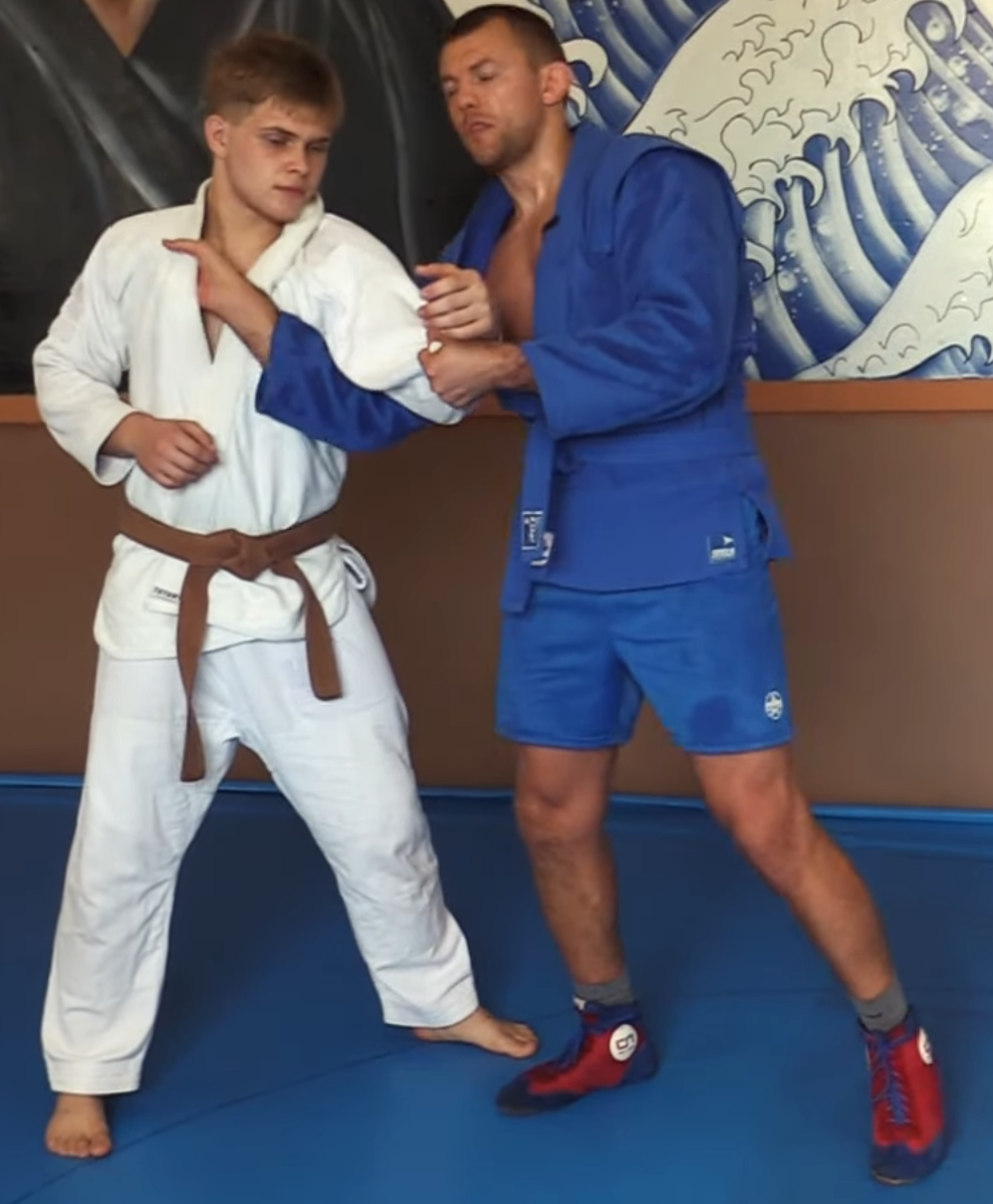
- 2-on-1 (outside) grip – two hands gripping opponent’s arm on one side from the outside, typically with downward and/or inward pressure on the arm/shoulder; however excessive pressure could be considered a joint-lock and given “shido” (also known as the “Russian Tie” or “Russian Wrestling grip”, it may not be used as a takedown itself within the rules, but can be used to setup other throws or positions)
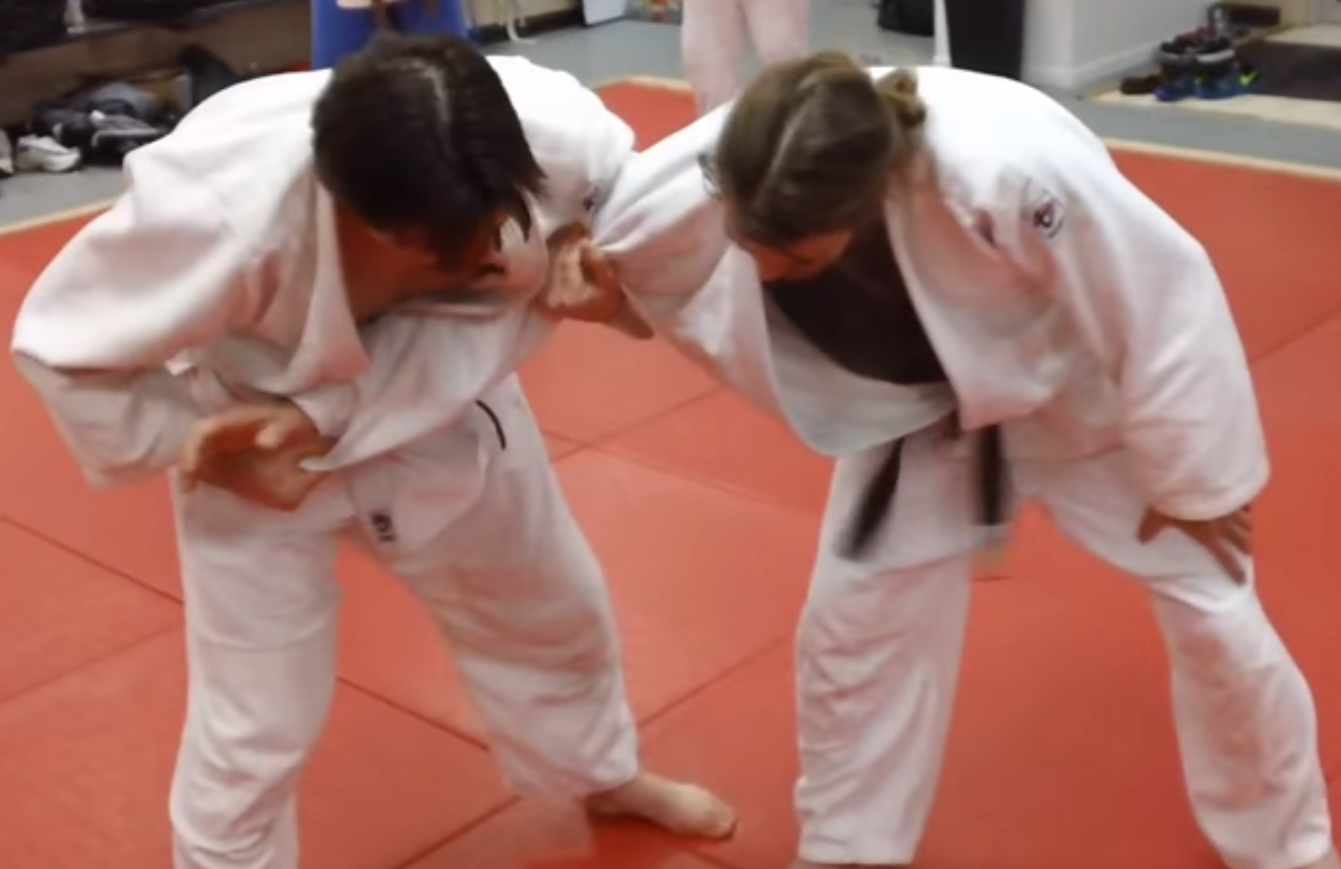
- Russian grip – a common transition from the “2-on-1 (outside) grip” described above, one arm reaches around the opponent’s back to grip their lat, belt, or gi material while the other hand maintains an outside grip on their sleeve or elsewhere on their arm (this is sometimes referred to as the “Sambo grip”, “Outside Russian grip” or even more descriptive “Side sleeve & back (outside) grip”)
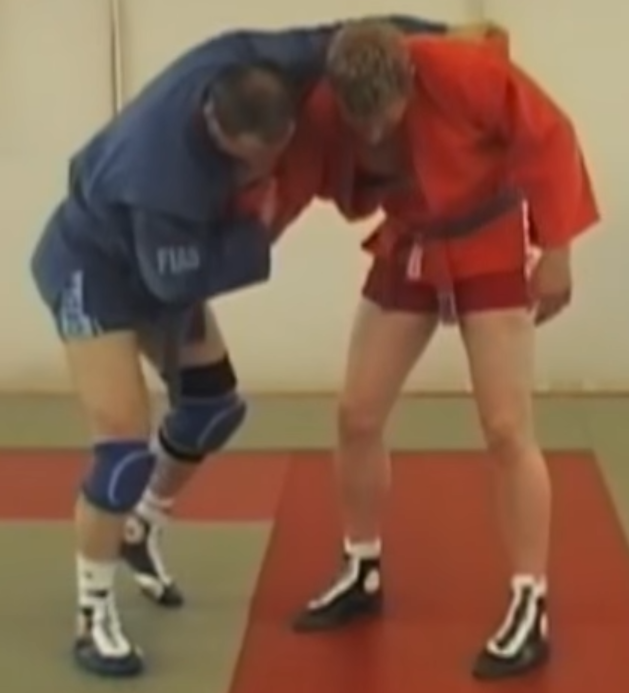
- Modified Russian grip – straight over the back, opposite hand belt and/or gi gripping variation where you trap the opponent’s head/neck underneath attacker’s Waki (arm pit), and have a collar grip on that same side (also commonly known as “Inside Russian grip”)
![[IMG]](https://i90.photobucket.com/albums/k262/YeahBee/29.jpg "Click this image to show the full-size version.")
- Modified Georgian grip – same as the “Modified Russian grip” above but is done with an under-grip of the trapped side’s arm and/or sleeve and/or jacker
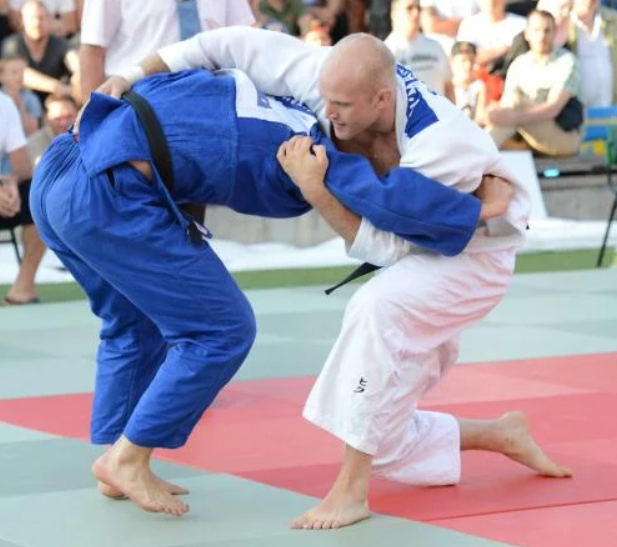
- Georgian belt grip – same as the “Georgian grip” above, but with an “over the back & under the arm” with both hands aiming to get a hold of the opponent’s Belt
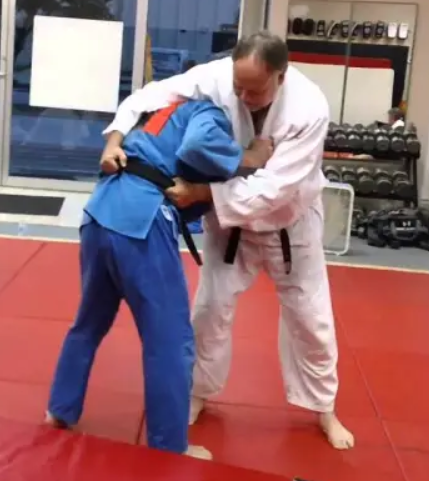
- Modified Obi Tori Gaeshi grip – similar to the “Georgian grip” and a modified version of the now illegal “Obi Tori Gaeshi grip”, but this time the under-gripping hand reaches for the opponent’s belt, and the other hand simply reaches over the back; this was pioneered by Shota Khabarelli after leg grabs were banned in order to keep his preferred attacks relevant (also known as the “Modified Khabarelli grip”, although that throw can also be done from multiple other grips this offers the strongest setups)
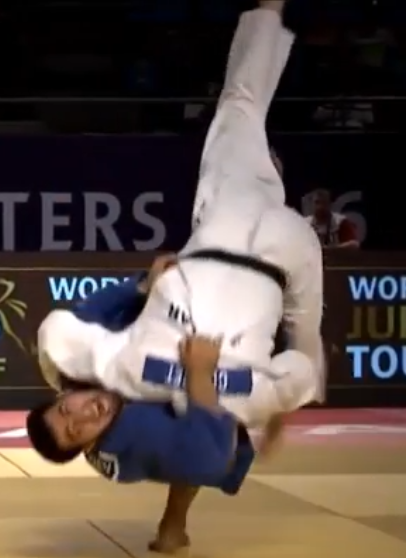
- Korean lapel grip – a “two-lapel grip” where one hand takes a high collar, the other takes a low collar on the other side
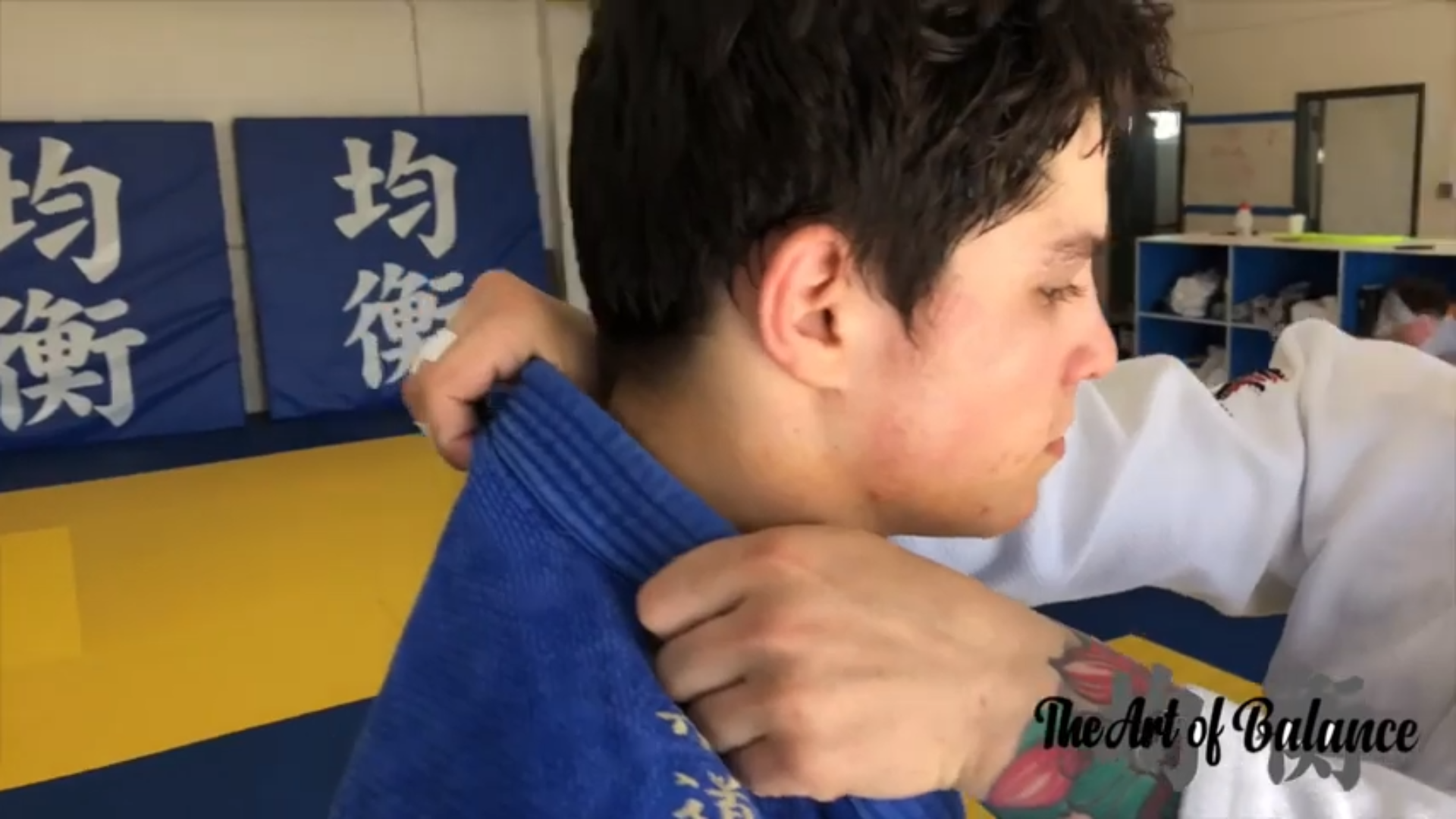
- Headlock grip – trap the opponent’s head and arm (commonly used to setup hip throws & leg throws)
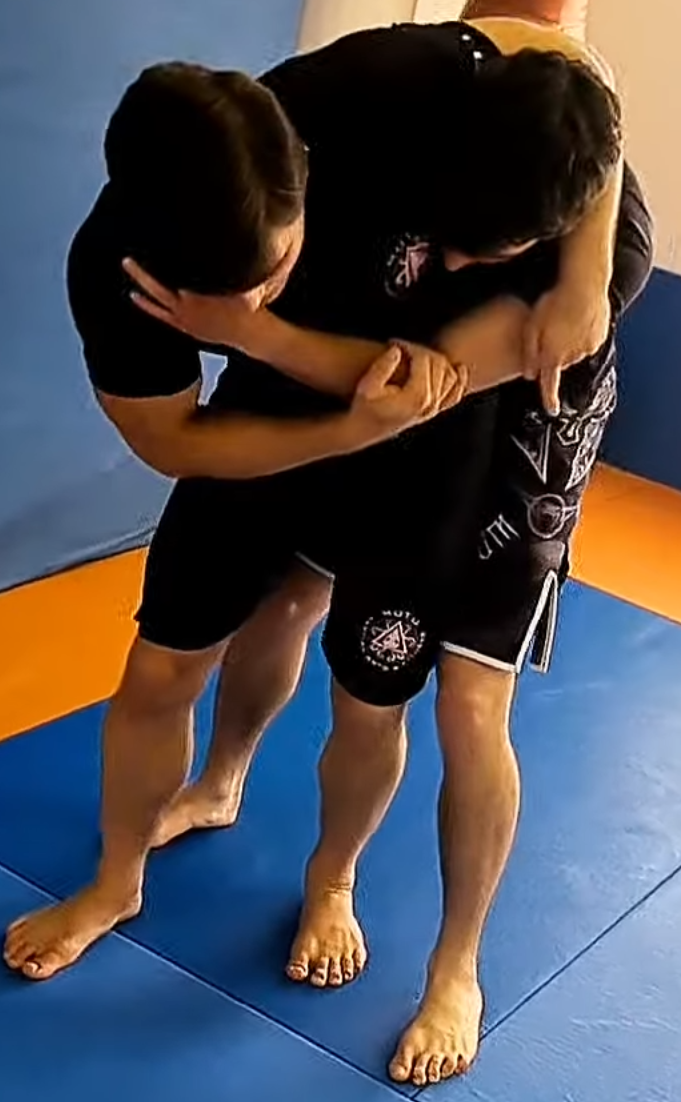
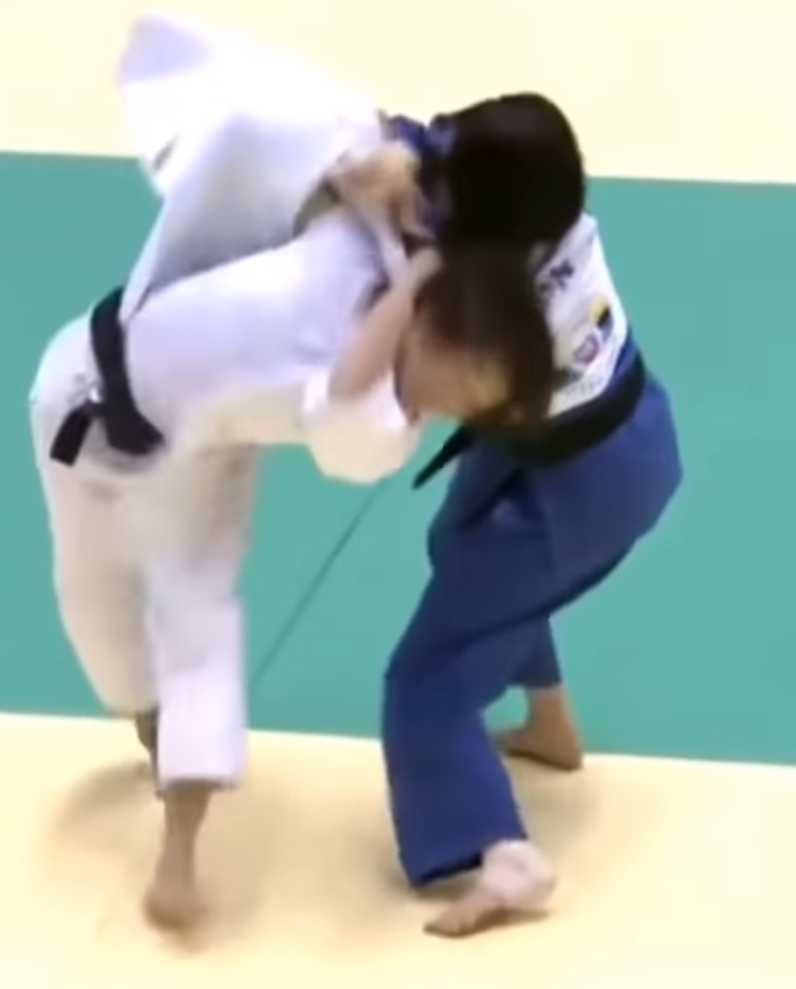
- Reverse double-collar grip – attacker places both grips on a single-side lapel of opponent then rotates around the outside of their opponent’s arm on that side, entangling and/or trapping and/or blocking their arm on that side from defending (also commonly known as the “Reverse Seoi Nage” or “Korean Seoi” grip & body position); although an increasingly popular and notably powerful position, as of the 2022-2024 IJF rules, this is no longer allowed in Judo competition due to risks of the outer entanglement leading to shoulder/wrist twisting during the throwing motion or head/neck impacts during Uke‘s landing
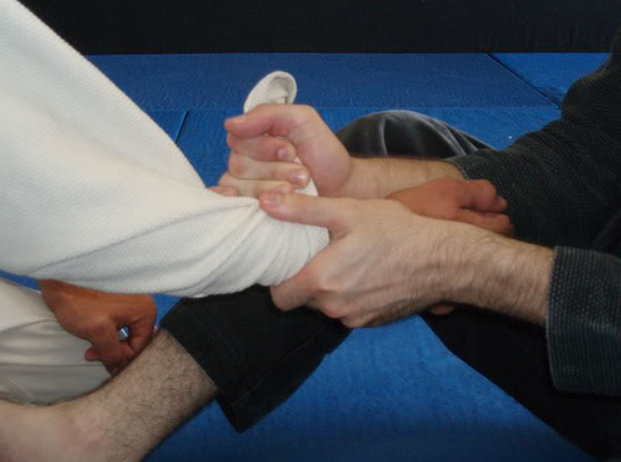
- Pistol grip – attacker bunches up or rolls the opponent’s sleeve within their grip (NOTE: whether single or double, this grip was not typically allowed in Judo competition; however with the latest rules it may be done a little higher up on the sleeve as long as your thumb is not inside the sleeve and you haven’t double-folded the sleeve around any of your fingers while gripping as low as is pictured below)
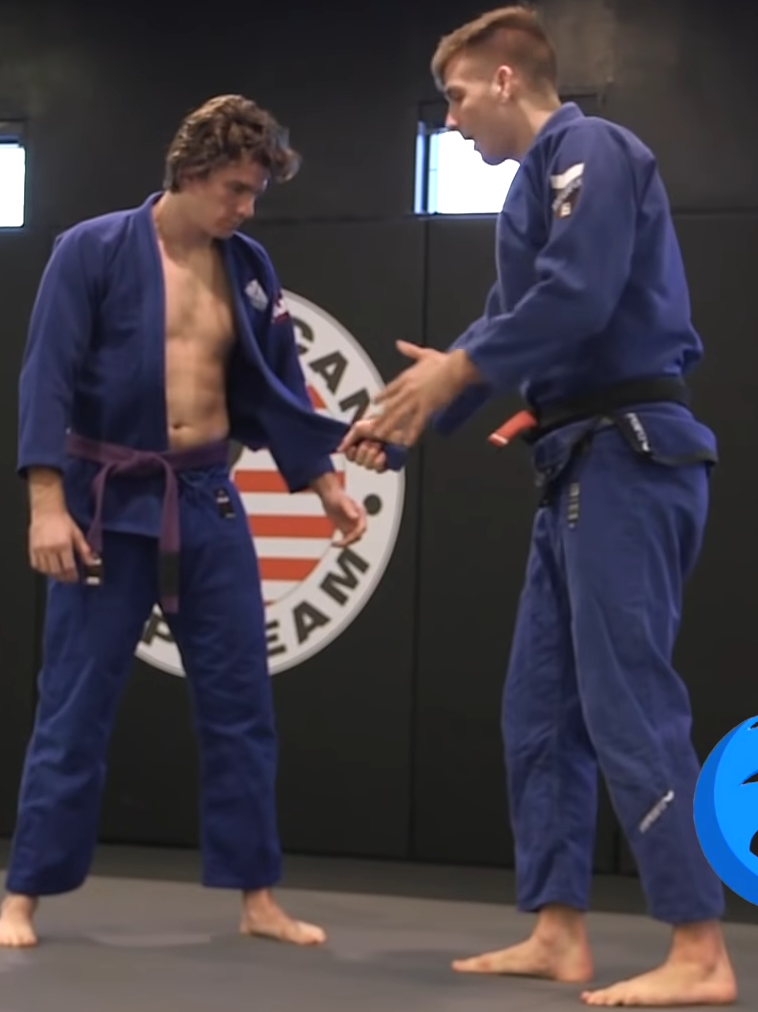
- Lower Lapel grip – bunch up and/or wrap the lower part of the lapel twice or more times around your grip (also known as “Worm lapel grip” commonly used in “Word Guard” position, which may be acceptable in Ne Waza but not likely to pass during Tachi Waza at most Judo competitions)
Prohibited Grips (during Tachi Waza)
The following grips are disallowed in most Judo competitions, and quite likely to result in a Shido and/or possible even Hansoku Make to be called against you should you take the grip intentionally, particularly for an extended period of time or in a manner which puts you at a strategic advantage to execute a throw.
- Fingers in-sleeve grip – this is a stalling grip and can be dangerous for both competitors as it can lead to broken fingers/wrists, so is not allowed in Judo competition
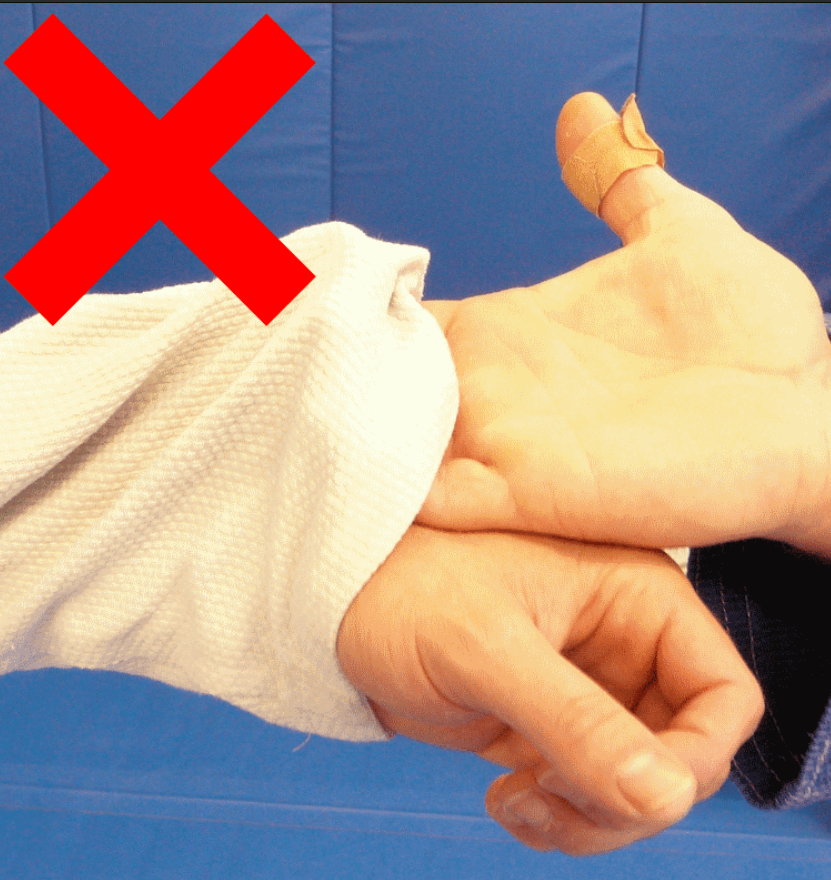
- Gi bottom grip – not allowed to pass the bottom of the opponent’s gi over their head, around their neck or arms, etc during Tachi Waza
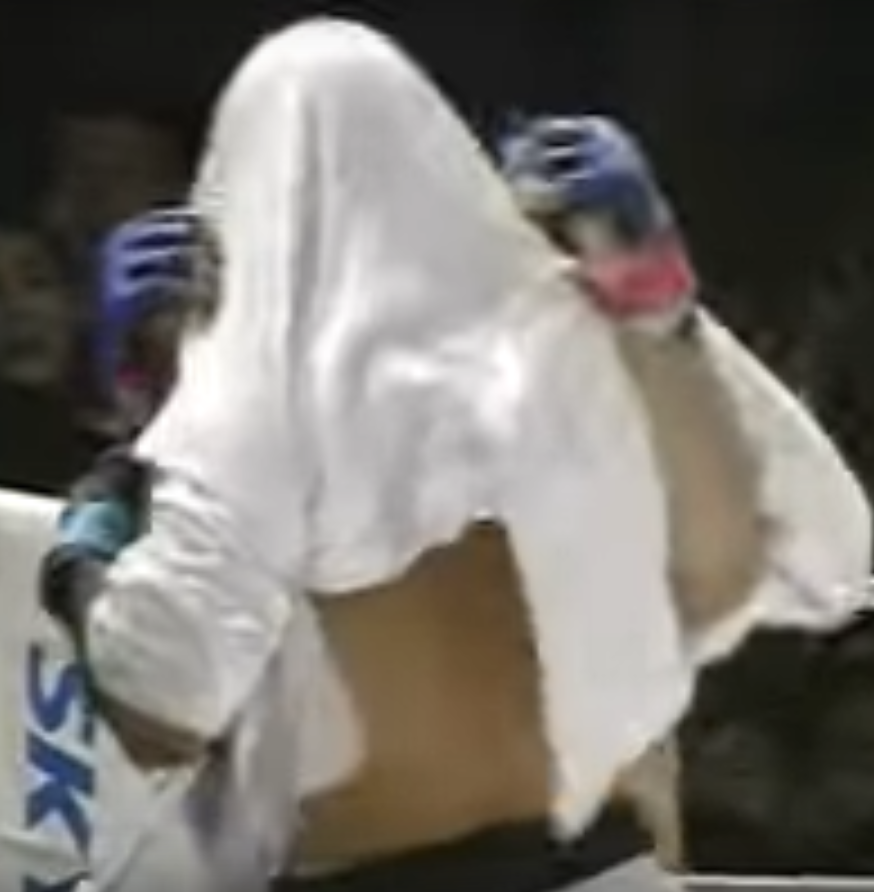
- Wrestling grip – the standard original grip in both folk and collegiate wrestling styles (Greco-Roman, Catch-as-Catch Can, Freestyle, etc; also known as the “S-Grip”); although not permitted during Tachi Waza, this grip is permitted with some restrictions and limitations on where it can be applied during Ne Waza
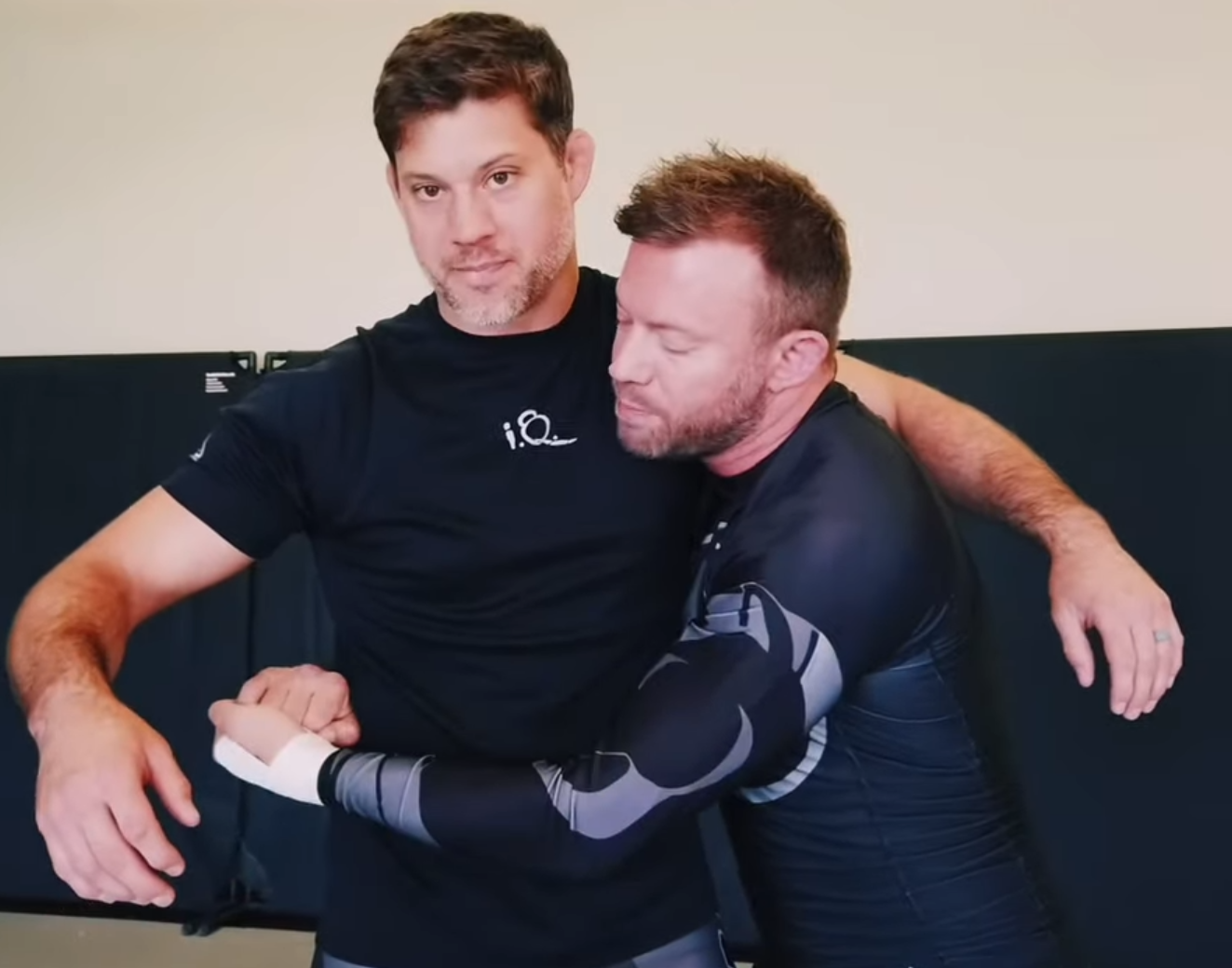
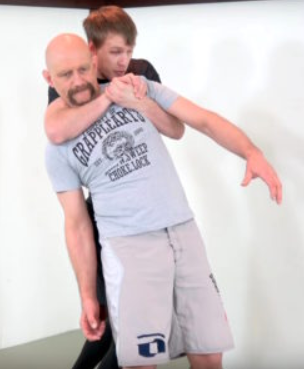
- Guillotine grip – whether from the front, back, side and on the body, arms, legs, head/neck or anywhere in between (also known as a common “MMA grip” or “No Gi grip”); this grip is not permitted during Tachi Waza but is permitted with some restrictions during Ne Waza
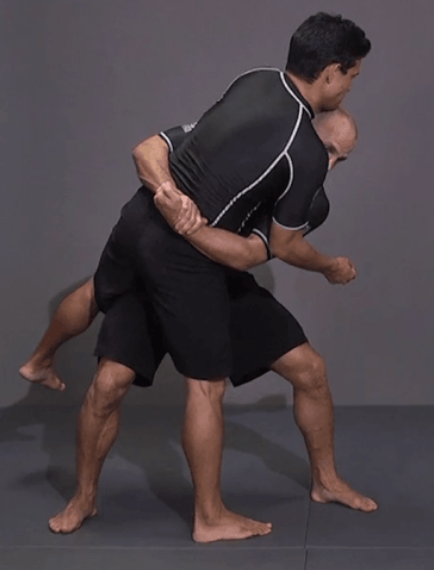
- Gable grip – pioneered by Dan Gable, this is a variation of the “Wrestling grip” above where hands interlock and overwrap the thumb in the process; this grip is not permitted during Tachi Waza but is permitted with some restrictions during Ne Waza
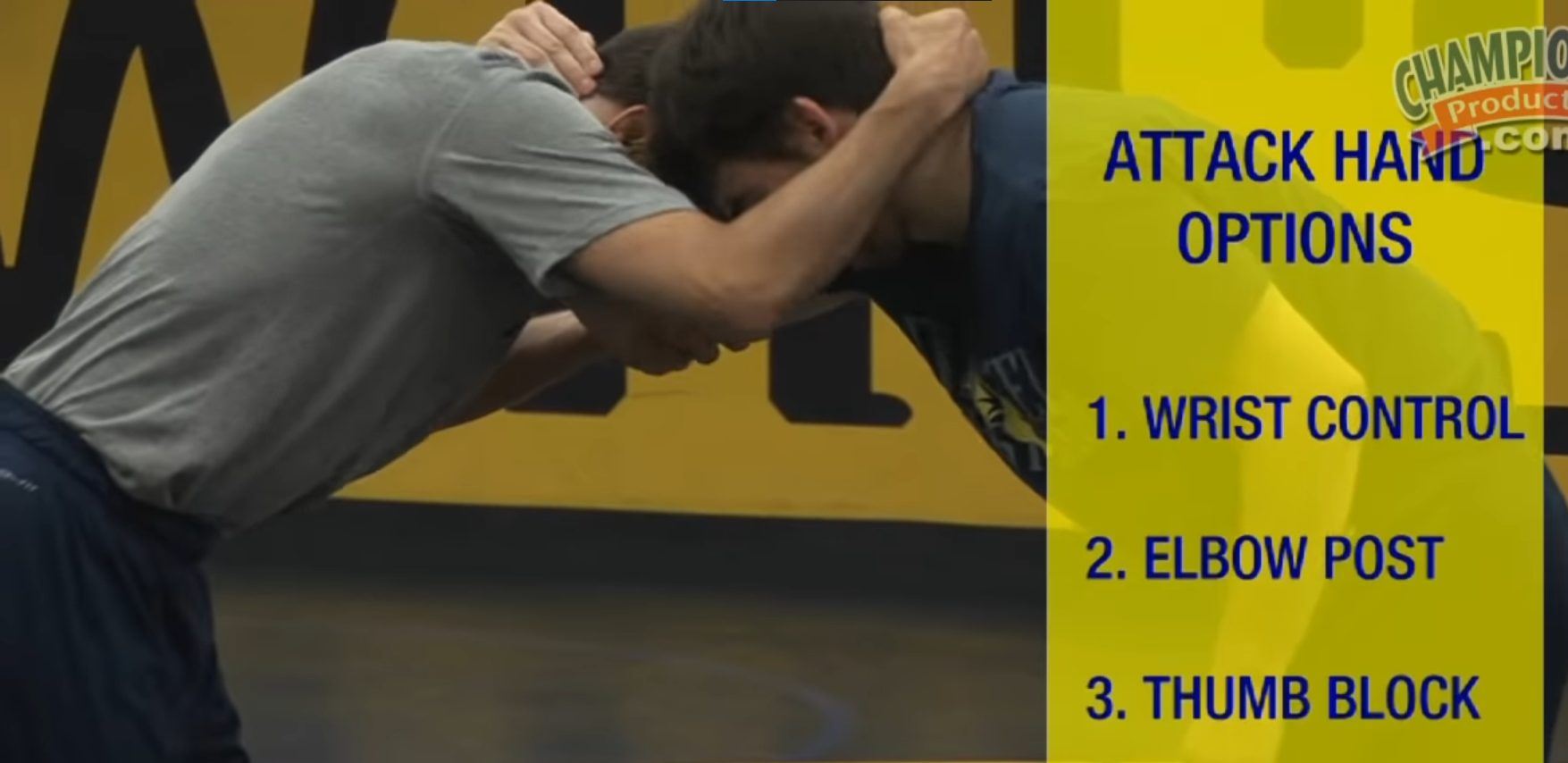
- Collar tie grip – the most common position in pretty much all styles of competitive Wrestling (but would be considered a stalling position in Judo competition)
- Body Lock grip – locking hands together from the front and/or side (also known as a “Bear hug” position, in this case double-overhooks with both arms trapped, but other variations such as over-under and double-underhooks also not allowed if locking grip)
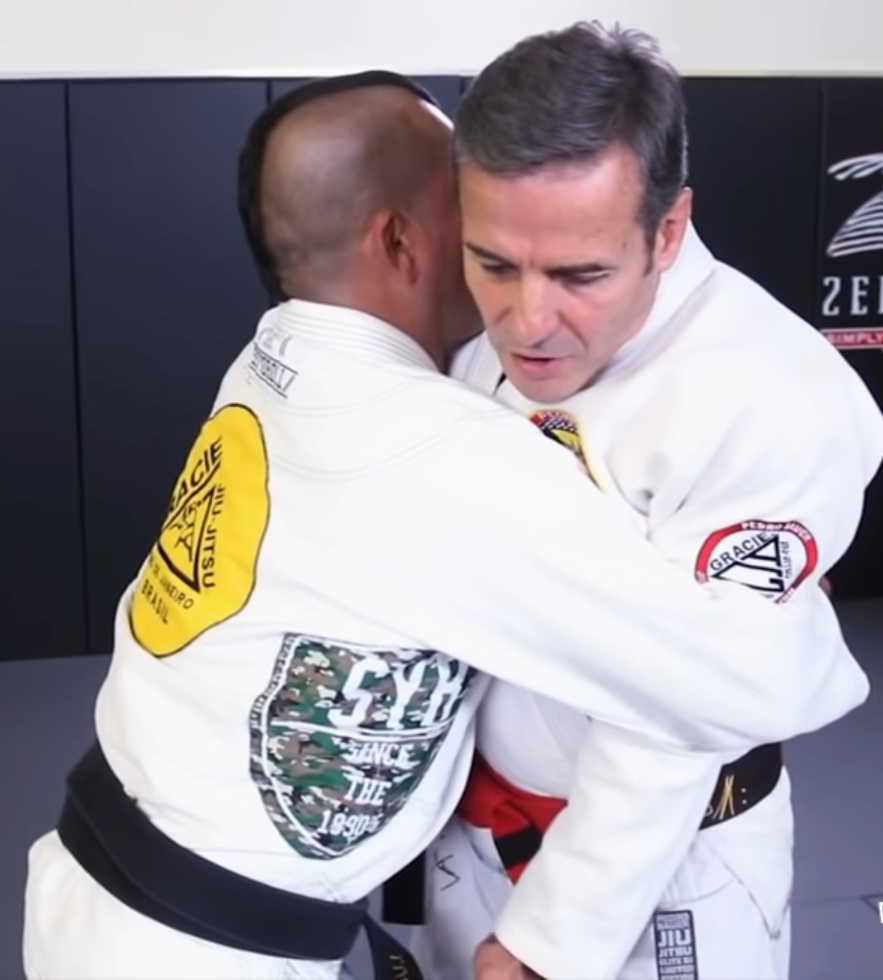
- Rear Body Lock grip – locking hands together around the waist from the back of the opponent (also known as a “Rear Bear hug” position)
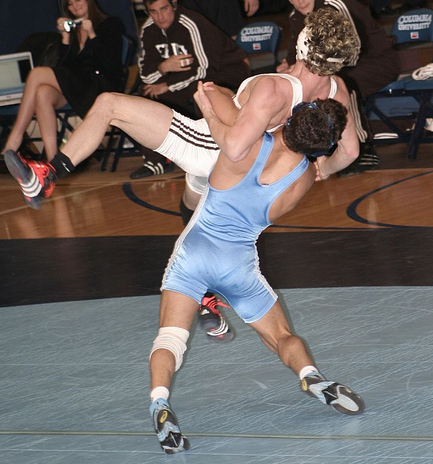
- Reverse Body Lock grip – is a reversed version of the Body Lock grip where one arm reaches over and around the opponent’s back, it was made famous by Alexandre Karelin (also known as the “Karelin lift” or “Karelin grip”)
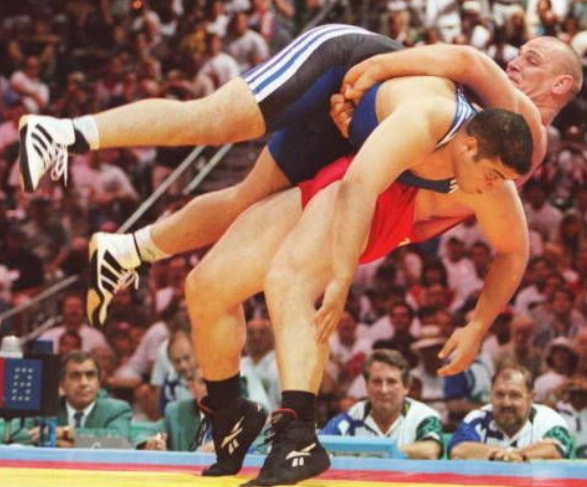
- Obi Tori Gaeshi grip – attacker grabs opponent’s leg and over their shoulder on the same side (this was the original “Khabarelli grip” used frequently in the 1980s-1990s until the banning of leg/pant grabs by IJF competition rules)
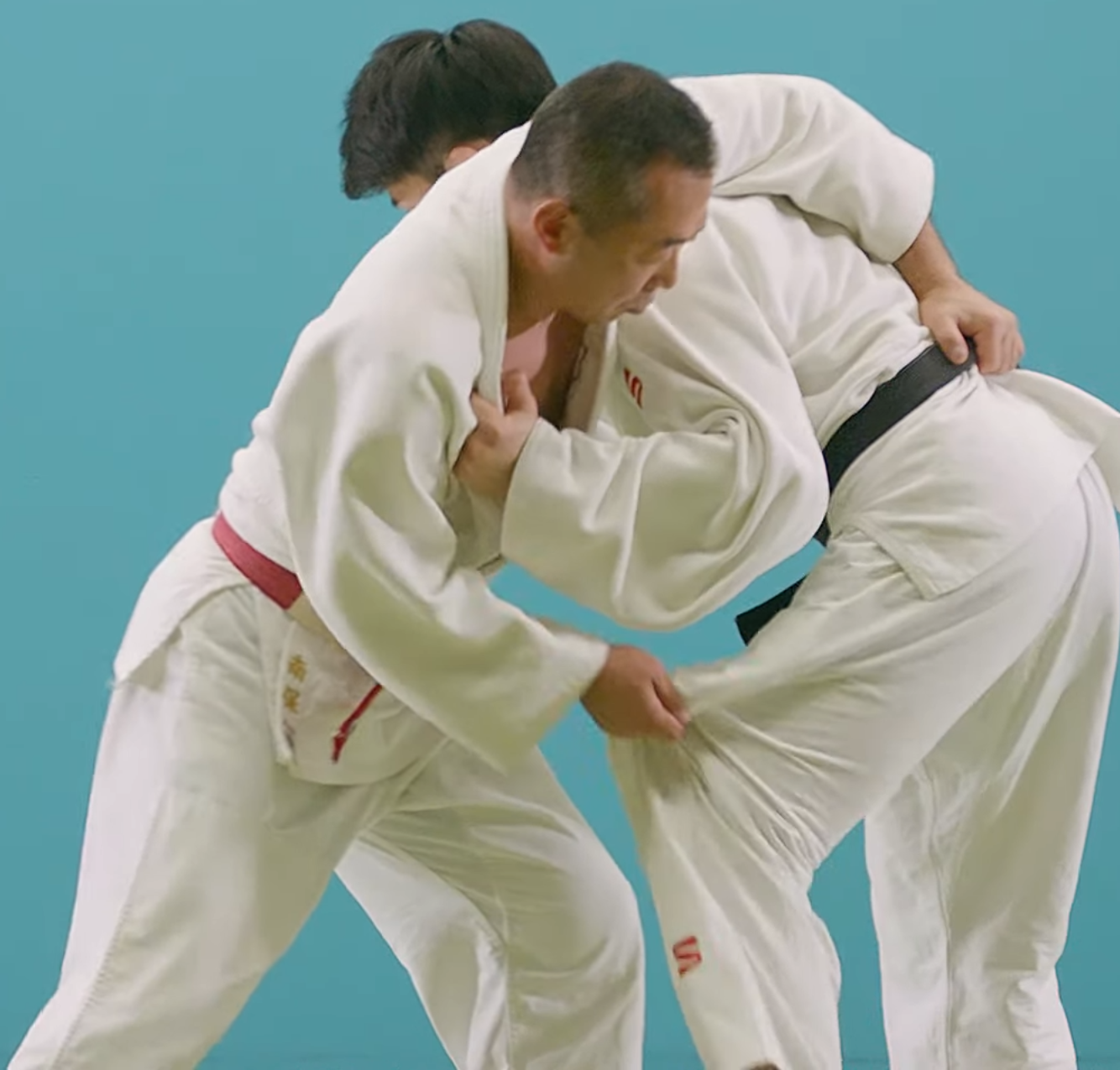
- Double-Leg grip – dropping your center of gravity and keeping the back straight, seizing behind both of the opponent’s legs and/or pinching the pant material
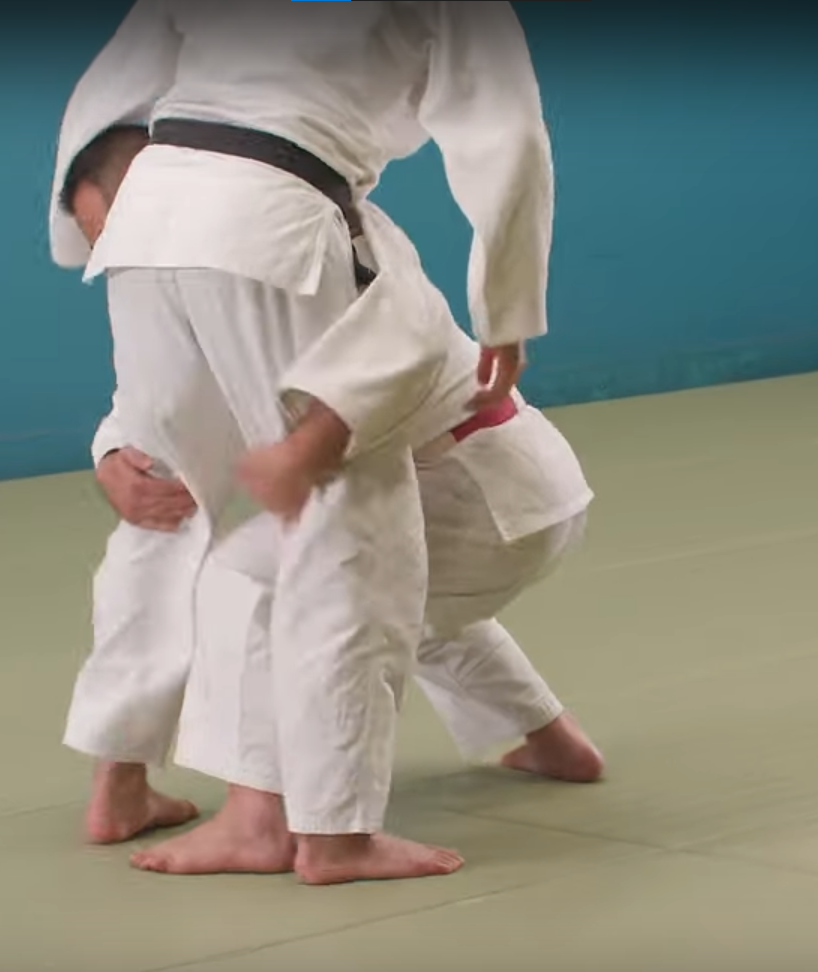
- Single-Leg grip – standard single-leg grip with head inside (from here there are a multitude of takedowns available)
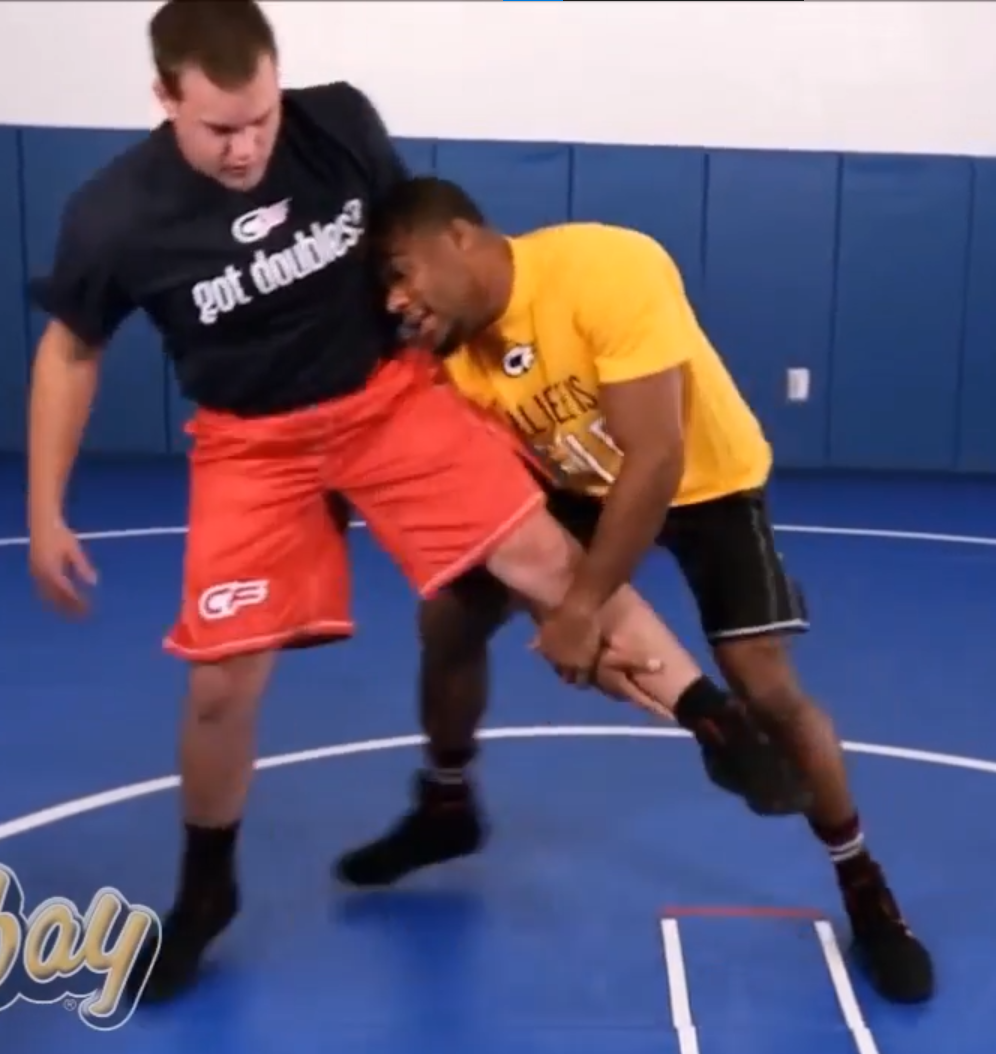
- Single-Leg & Sleeve grip – (this is the setup for “Kuchiki Taoshi” and other similar variations of a single-leg takedown)
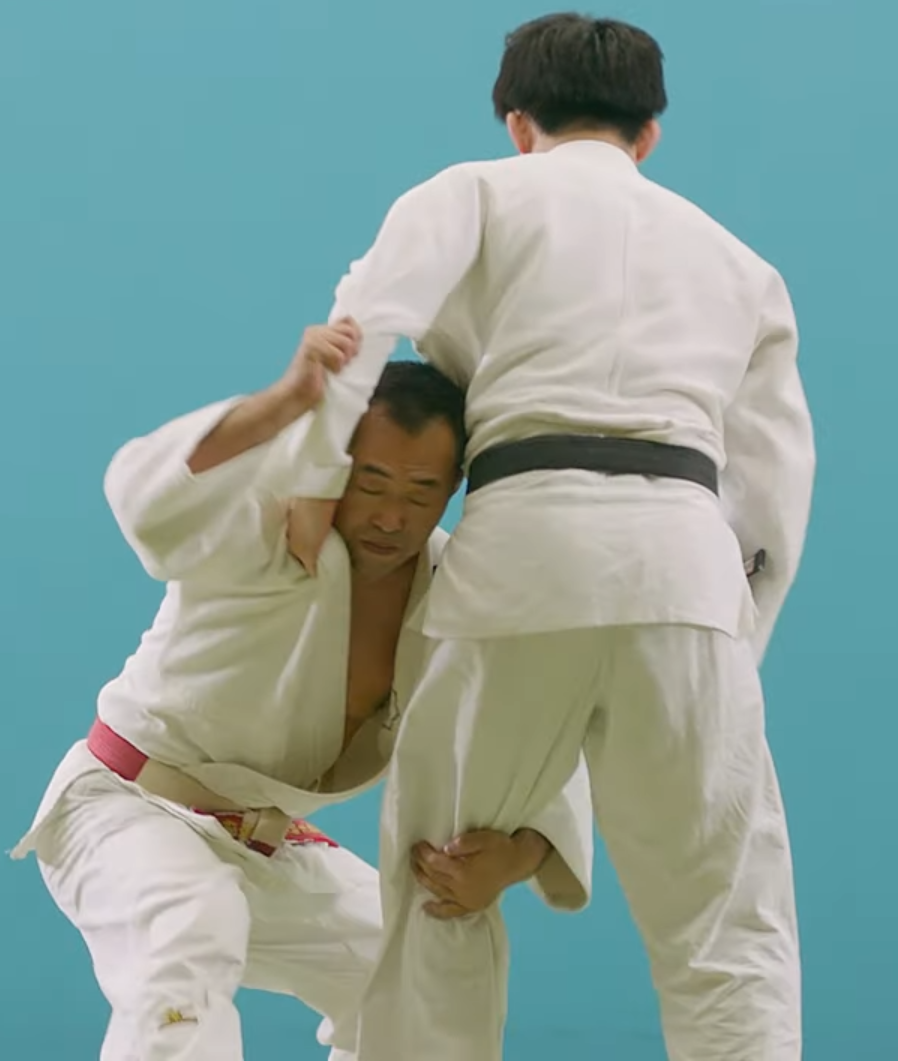
- Ankle (inside) grip – grab the (also commonly referred to as an “ankle pick”, and often used to setup “Kibisu Gaeshi“)
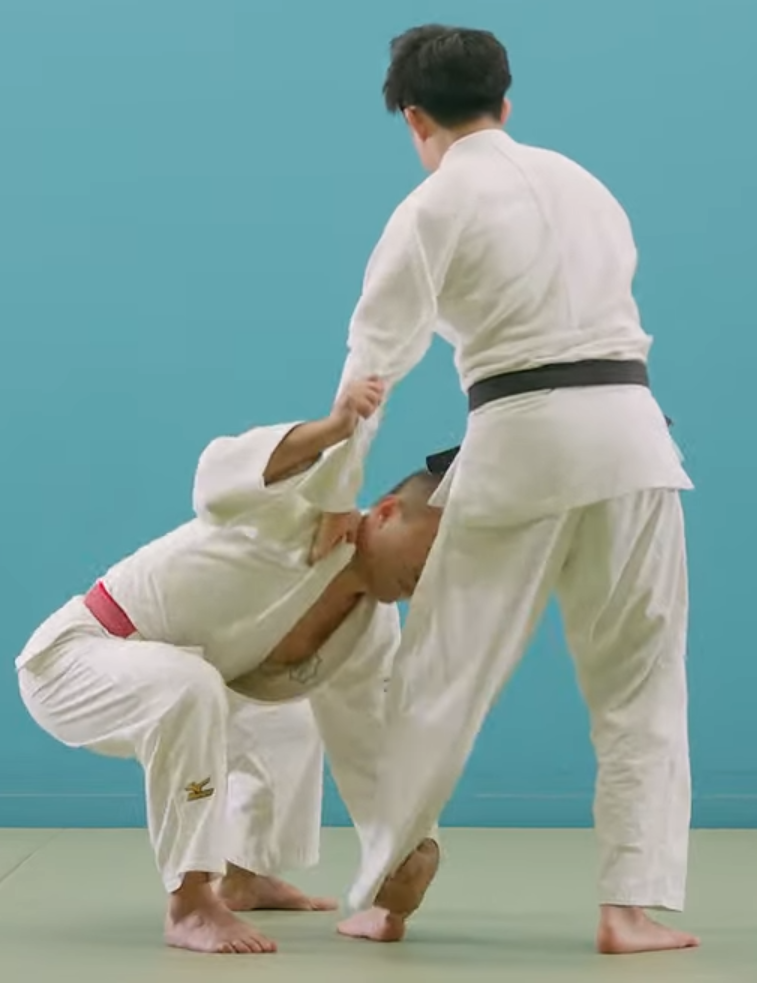
- Ankle (outside) grip – same as the above with other hand (as you can see, the no-gi variation is quite similar, just remove the option to grab pants/clothing material, using a cupping hand behind the ankle instead)
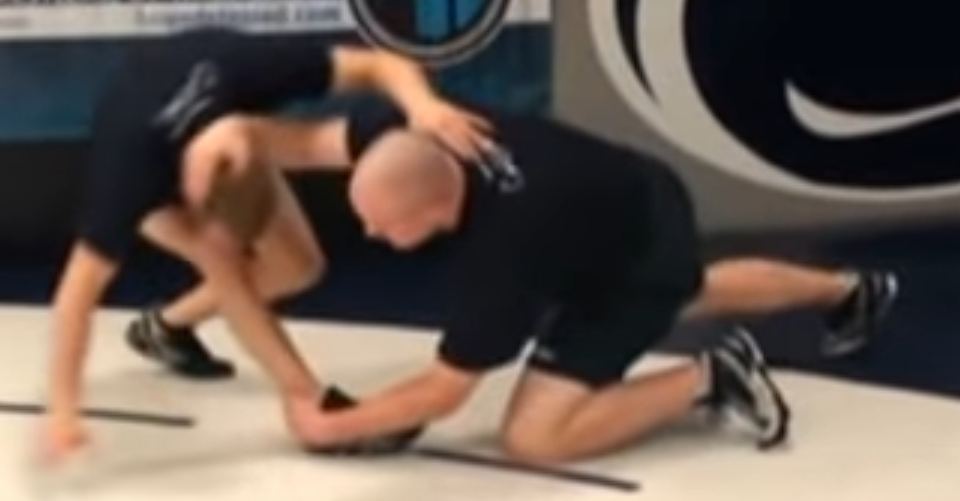
- Ankle (rear) grip – same as the above but with the momentum coming from behind the opponent and hand blocking to the front of their ankle (also known as the “reverse ankle-pick” in Catch Wrestling, shown here the master at this series of grips and takedowns, Kazushi Sakuraba)
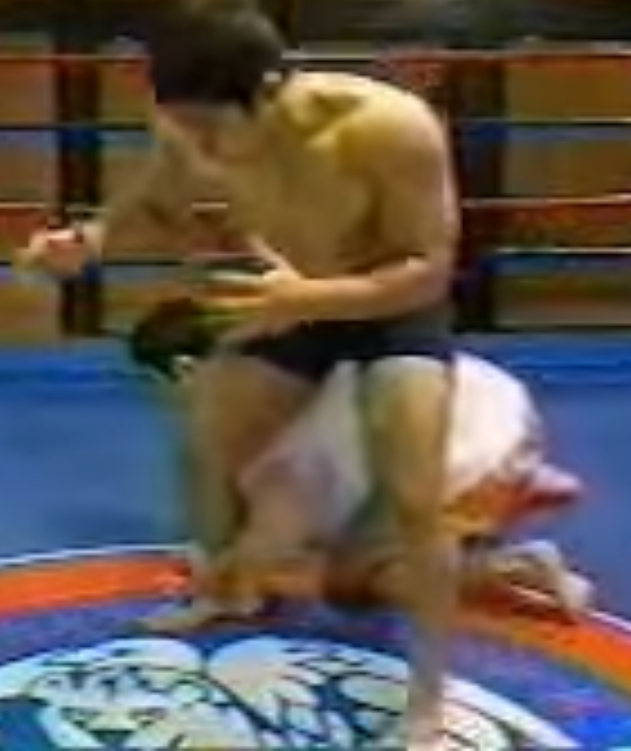
- High Crotch grip – reaching underneath the opponent’s waist and up between their legs from the front (common “traditional Kata Guruma” aka “Fireman’s Carry” setup)
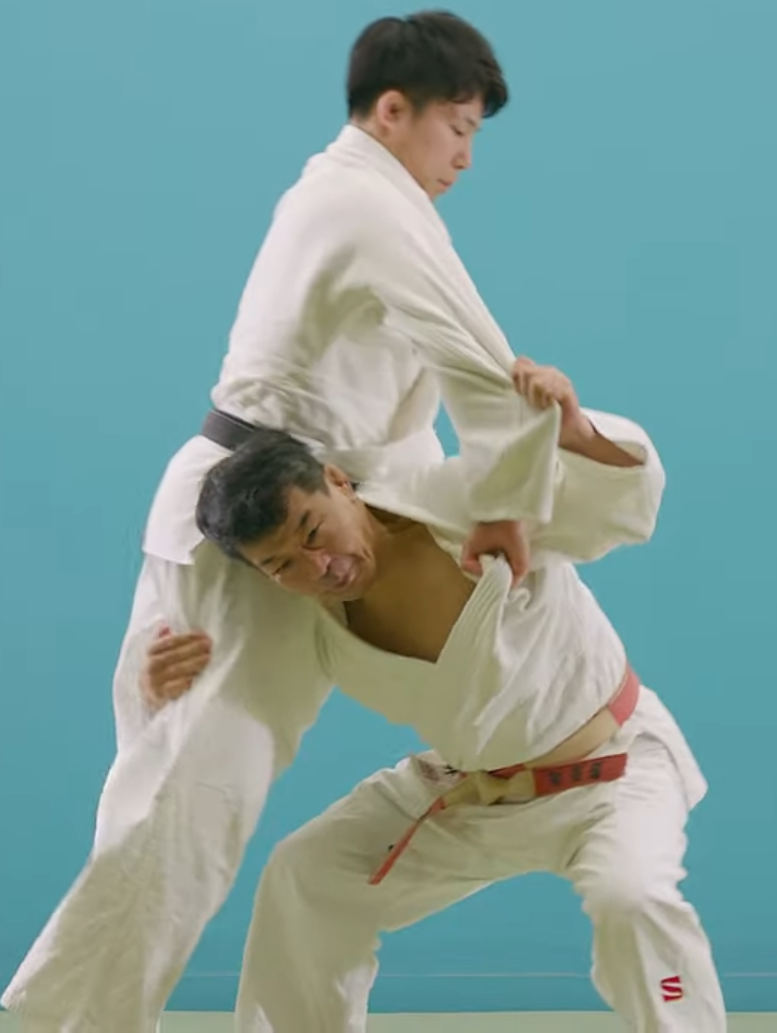
- Reverse High Crotch grip – reaching around the outside of the opponent’s body and up through their legs, or grabbing their gi lapel or pant material from that position (commonly used to setup “Te Guruma“)
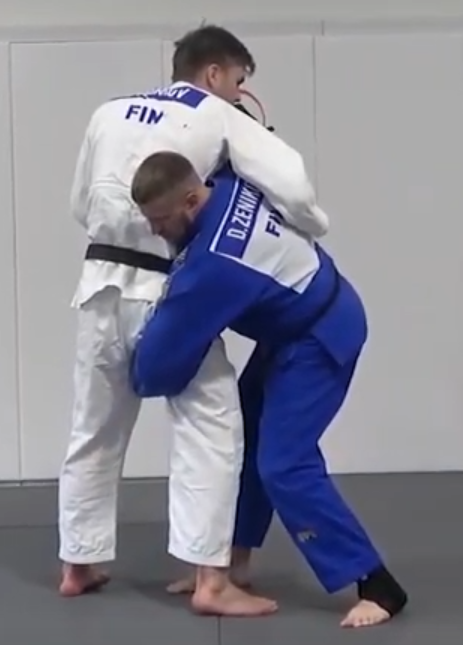
- Cuban Windmill grip – attacker gets firm grip on one side of opponent’s sleeve then turns backwards or sideways to opponent (from the outside inward), and reaches down for either their opponent’s belt or gi jacket material, or even a leg or pant material (although below belt variation is a stronger grip it is now illegal under IJF competition rules)
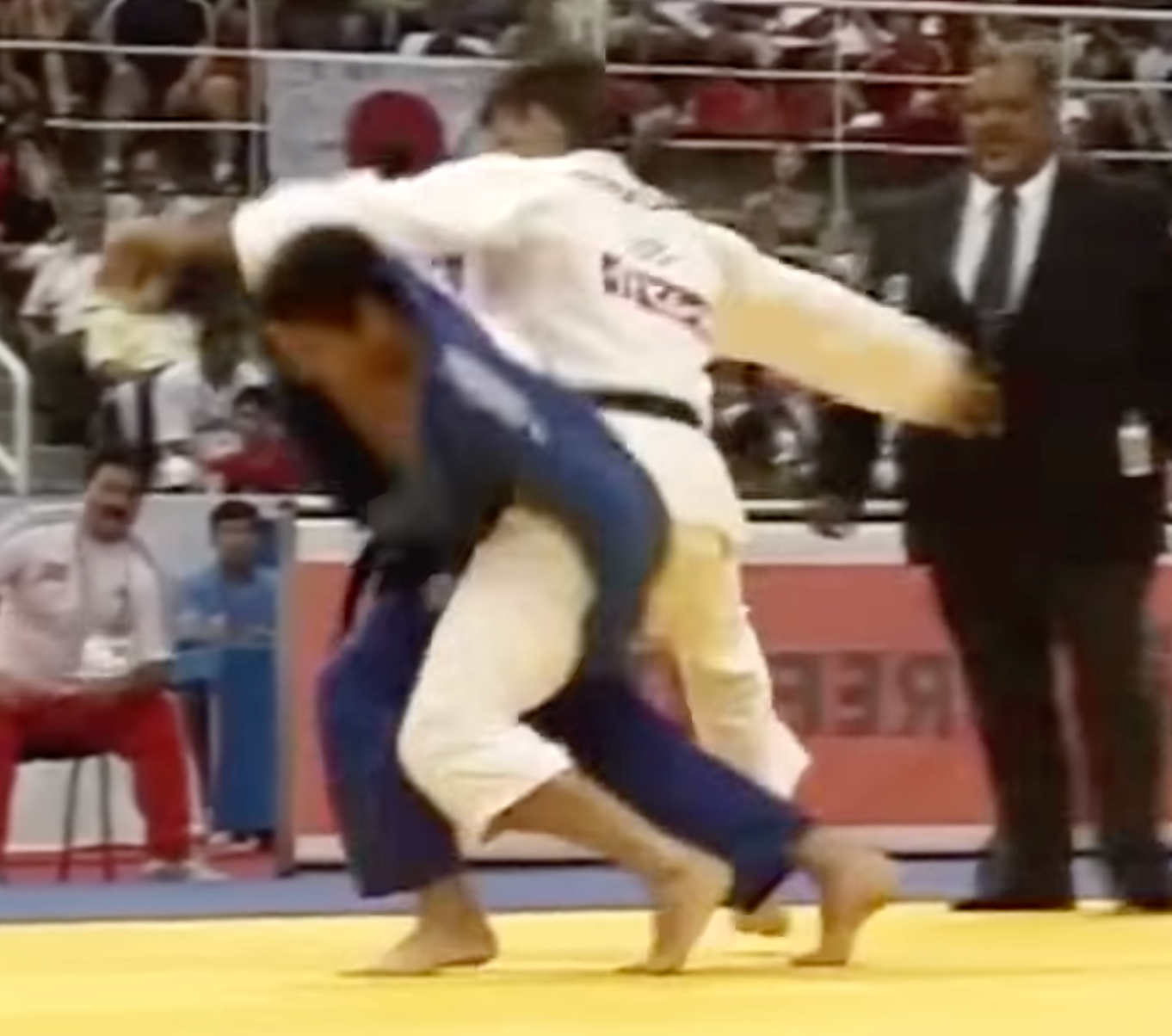
Kimura grip – interlocking your hands and/or hand and wrist with an overhook (also known as the “Kimura trap”)
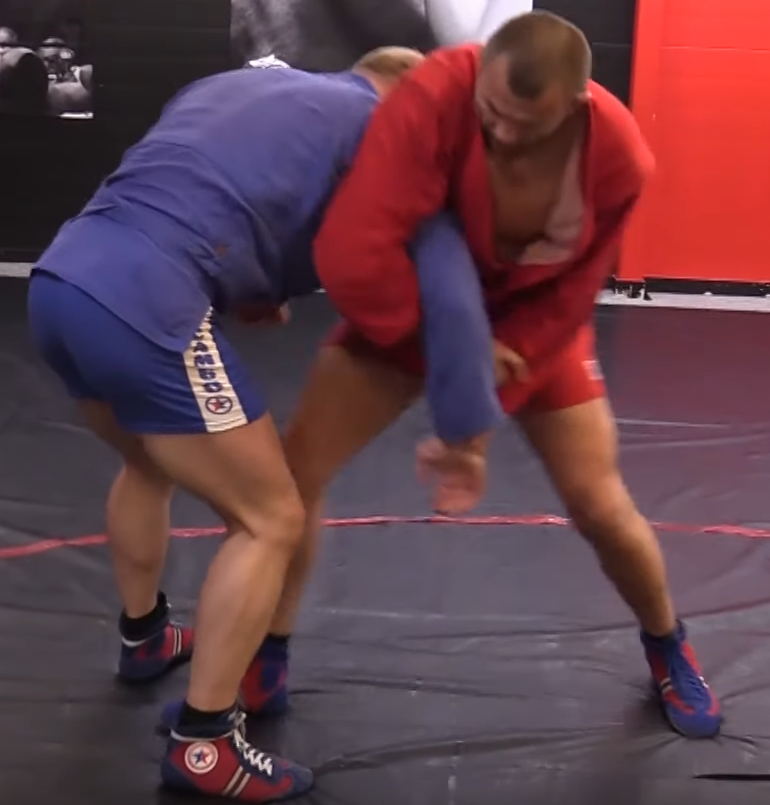
- Reverse Kimura grip – similar to the above but from an outside position, to the side of your opponent and looking in the same direction
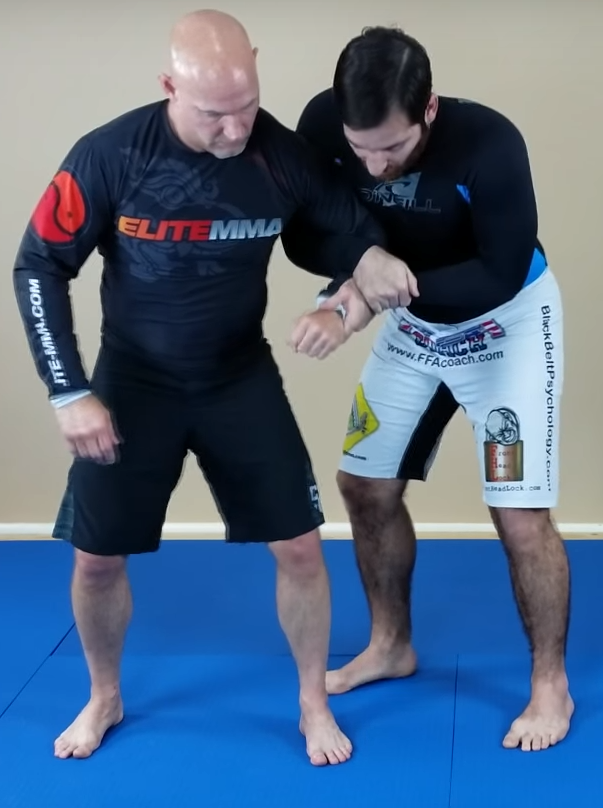
- Neck grip (interlocked fingers) – locking hands together around the head and/or neck
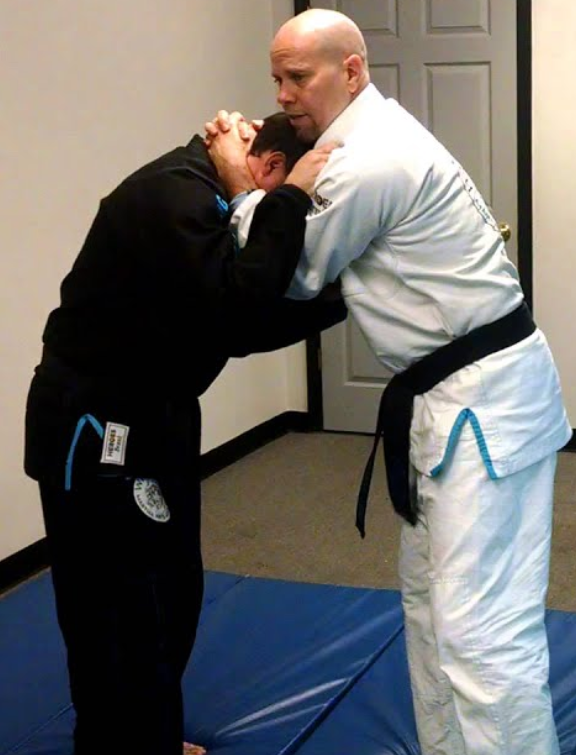
- Overlapped Hands Neck grip – same as above, but without locking hands or fingers together; this is for most a much stronger position than the above variation (also known as “The Plum” in Muay Thai)
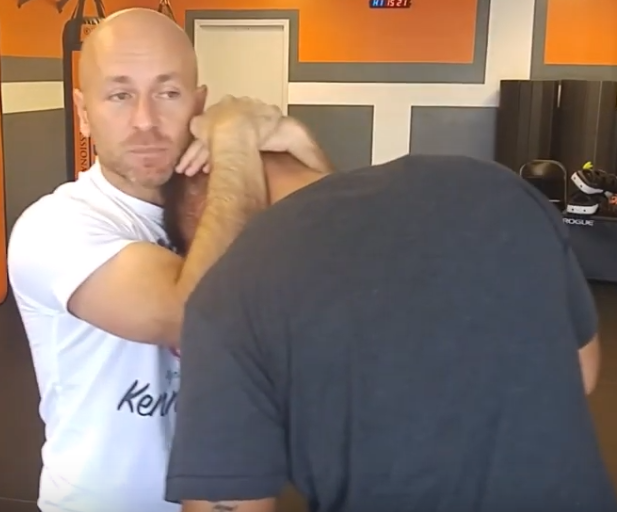
- Modified Plum Gable Neck grip – similar to the above two grips with tighter body control (here shown by Anderson Silva, a master of this position in MMA)
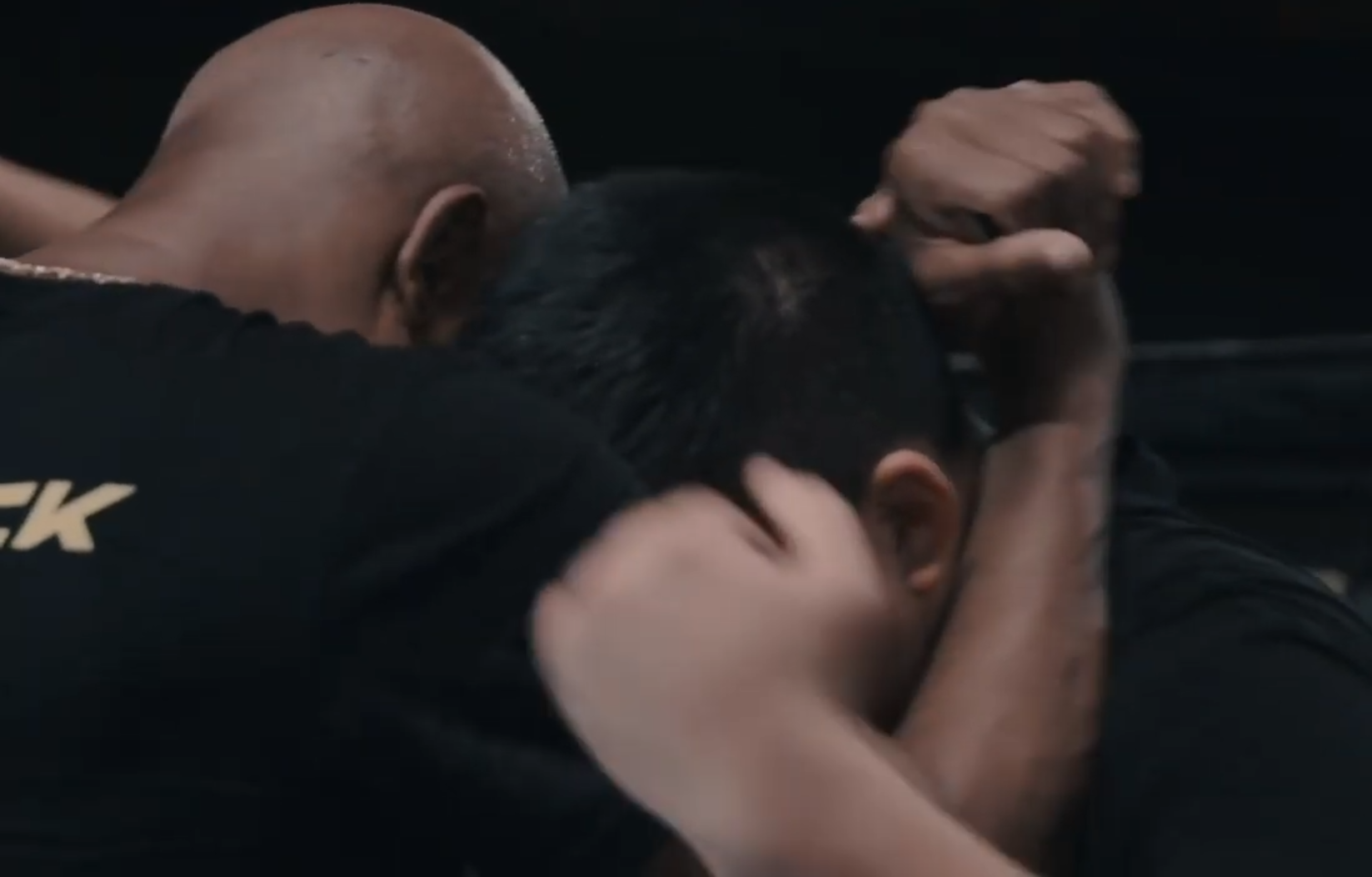
- Over-Under Neck grip – same as above, but locking hands together (typically with a wrestling grip, Gable grip, interlocked fingers, or overlapped/cupped hands); an illegal variation of the “Headlock grip“
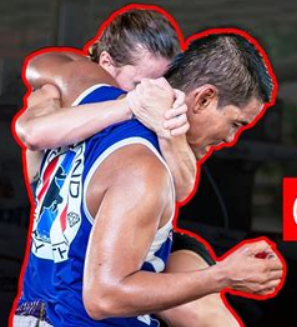
- Shoulder Crunch grip – similar to the above but rather than gripping around/behind the opponent’s head and arm, the grip is made only around their nearest shoulder:
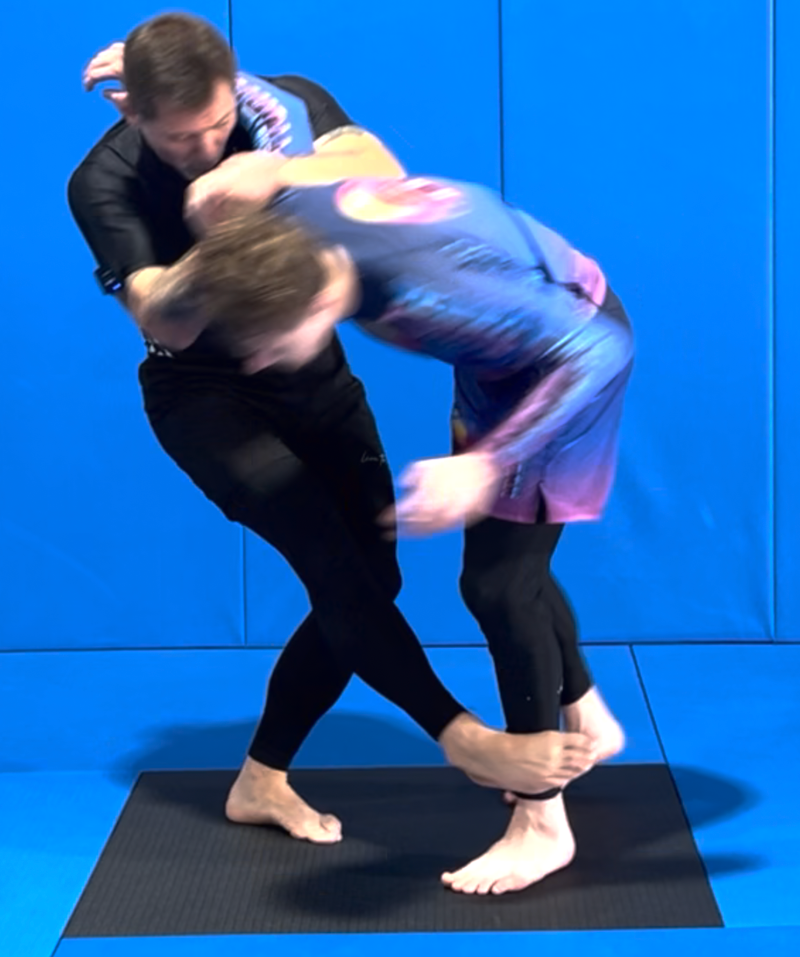
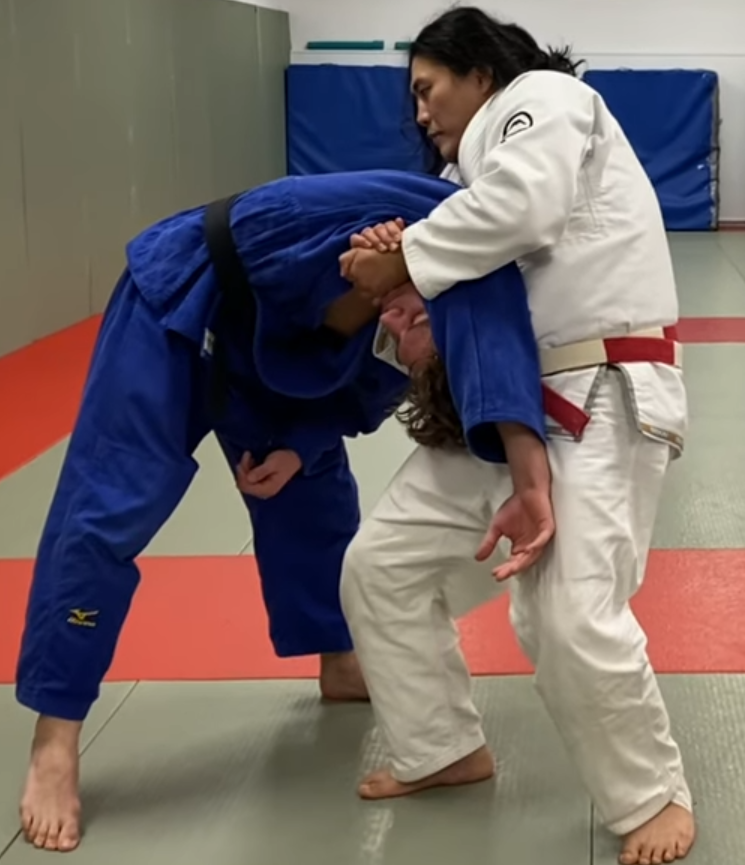
Front Headlock grip – attacker seizes a hold around the head and/or face and/or neck of their opponent and from there executes standing chokes/cranks, or, uses the neck & head as a leverage point to lift their opponent or execute a throw on them; another illegal variation of the “Headlock grip“
Face, Head or Neck Crank/Choke/Lock – Any other variation of a choke, chin-strap, neck-crank, face-lock/compliance hold, or a joint-lock grip is not allowed in Tachi Waza (standing techniques), but some may be permitted during Ne Waza (ground techniques) within IJF rules, for instance use of forearm but not hand to touch the head or face in escaping pins/techniques or setting up pins/techniques
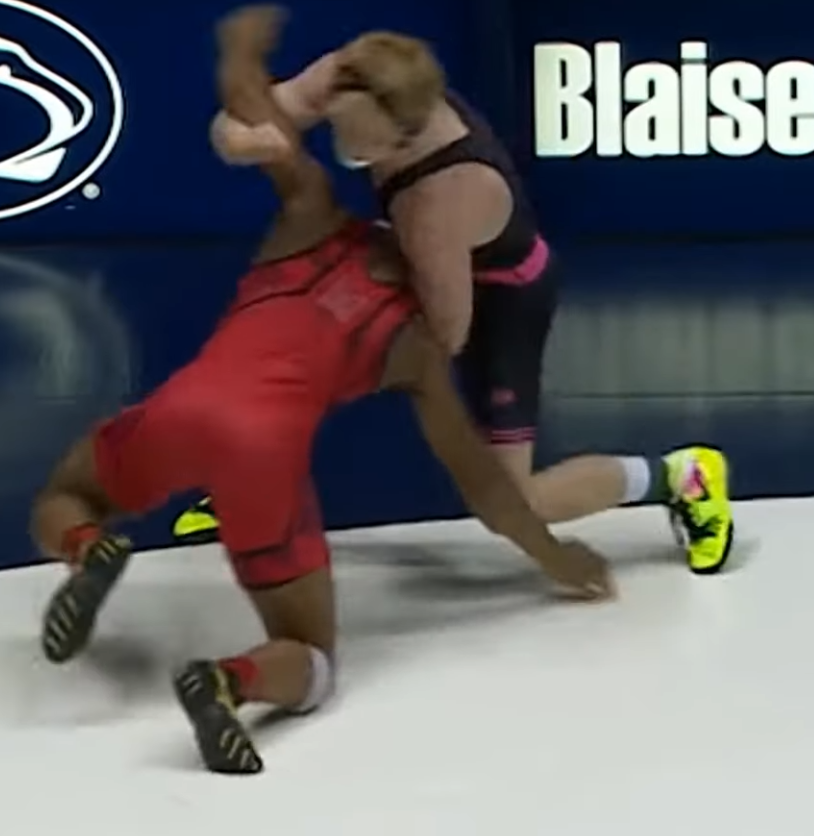
SPECIAL NOTE on IJF rules 2022-2024
With the IJF 2022-2024 rules now out, one important note about contact made between the attacker’s arm/hand and any (non-groin) point below the belt, is that this was previously prohibited but is now partially allowed only in the throwing motion to help complete the momentum required to finish a throw. This means you still can not initiate any attack from a grip below-the-belt (i.e. on pant material or by seizing the leg, ankle or foot), nor use such grips as a Kumi Kata technique; but you may briefly use such contact to help maneuver the opponent over at the very end of the technique.
Also note that controversially enough, “Reverse Seoi Nage” is no longer considered a scoring throw and will instead be given a Shido with multiple infractions leading to Hansoku Make; so great care should be taken with the techniques that follow when taking these grips:
- Two-on-1 collar grip
- Reverse double-collar grip
- Korean lapel grip
- Cuban Windmill grip
It is still unclear if this applies only to the straight-back dropping variations which some see as risky to Uke‘s wrist, shoulder and/or head & neck; or whether it applies to all possible variations (there’s some grey area of what would constitute “Reverse Kata Guruma” which was not mentioned in the new rules, and, an unorthodox entry to regular “Seoi Nage” coming from the outside position). Coaches and Competitors are advised to take this into consideration with regards to this technique, as any variation may now be subject to Referee and/or Judge interpretation on its legality.

 Musa Betsu Kyu Judo club