This post will summarize some of the better low-risk, high-reward throws that can be used in BJJ (gi) and similar grappling competitions.
The chosen “Top 15 successful throws for BJJ & grappling competitions” key criteria (similar to “the best throws for MMA” article so you’ll notice some overlap) are lower likelihood of getting your back taken (i.e. less focus on full-body turning throws), also in most grappling competitions except ADCC-style rules, big slams are probably not allowed, so they must be techniques that can be performed with a high degree of control. That also means you have a good chance to dictate where the match goes (do you go for a specific side-control, mount, north-south, scarfhold, etc).
- De Ashi Barai
- Hiza Guruma
- Kosoto Gake & Kouchi Gake
- Uki Goshi
- Seoi Otoshi
- Drop Morote Seoi Nage
- Drop Reverse Kata Guruma
- Sode Tsurikomi Goshi
- Uki Waza
- Ura Nage
- Kuchiki Taoshi
- Morote Gari
- Sukui Nage
- Hikikomi Gaeshi
- Sumi Gaeshi
1. De Ashi Barai
The first most basic foot sweep taught at any beginner Judo class, De Ashi Harai (forward foot sweep) is also one the most practical for use in a grappling tournament that focuses on submissions but starts out on the feet. Like most throws, a high-level practitioner can throw successfully using just about any grip combination, however the most common is the one shown below:
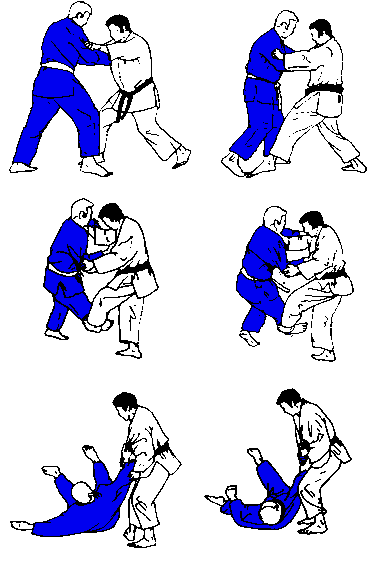
To pull it off you’ll likely need to be closer range to get a proper kuzushi against uke’s likely to be “widely staggered & crouched” BJJ stance during Tachi Waza (“on the feet”). Without a gi you would need to go with an over-under or double-under body lock, or, another strong clinch position (tie-up, collar-tie, cross-tie, head & arm, etc).
2. Hiza Guruma
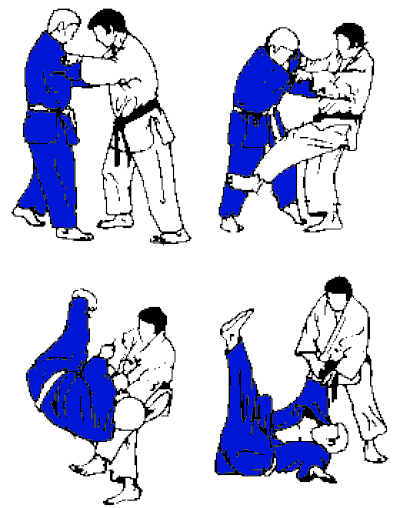
Of the foot sweeps and leg techniques, Hiza Guruma (aka. the “Knee Wheel” foot sweep) is one of the best choices because when done right it lands you with a good controlling top position that would be difficult to recover for uke (opponent being thrown). When facing a tough opponent with great balance that’s able to resist or stop the technique initially, it still puts the tori (person attempting the technique) at a great positional advantage on the feet such that it can be driven-through for a finish or at the very least setup openings for other takedowns.
3. Kosoto Gake / Kouchi Gake
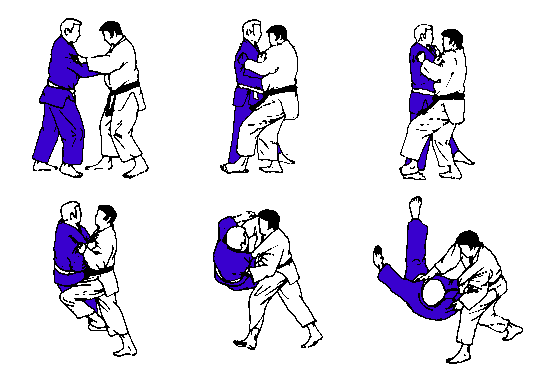
Good options if Hiza Guruma didn’t quite work to takedown uke to the ground, but perhaps off-balanced them, is to finish with either a Kosoto Gake (small reaping using the inside of your lead foot/leg on the outside of either of their legs) or Kouchi Gake (small reaping using the inside of your lead foot/leg on the inside of their leg). The reason for preferring a hooking over the traditional reaping/sweeping motions of Kosoto Gari & Kouchi Gari is that it takes a bit less refined kuzushi and fits a bit better for an uke that would have a tendency to drop their weight straight down or be in crouched more than upright position with lower center of gravity. They can both also be done a bit more easily with a brief engagement rather than reciprocal gi grips of Judo, as well as from no-gi style grips such as a body-lock, double-under, over-under, collar tie, etc.
Fernando Terrere, who’s been a top-level competitor with some of the best takedowns in BJJ infamously does a drop version of this (which he calls “Safada”) in many BJJ matches at the highest levels:
4. Uki Goshi
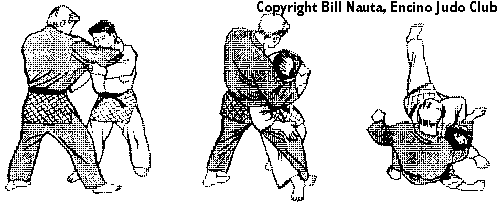
Basically like Judo’s version of hockey’s “hip check“, of the Gokyo’s official hip throws, Uki Goshi (floating hip throw) is probably the least risky option against those very well trained to ruthlessly attack the back at firs sight. This is because you only need to place half your hip into uke’s center of balance for a very brief moment, so there’s little risk of completely giving up your entire back, or letting them drag you down and get both hooks in. It’s also easier to bail out and back out of if it failed, flowing on to the next technique.
5. Seoi Otoshi
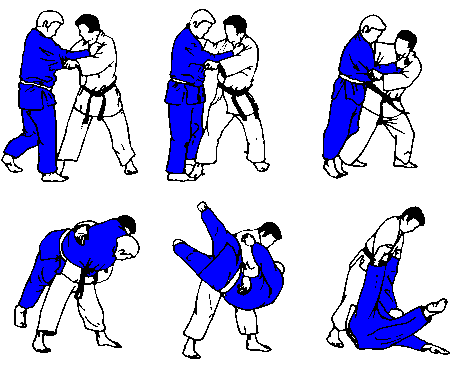
A variation of the traditional Seoi Nage throw most people likely picture when they think of Judo (that or the inaccurate “Judo chop” thanks to Austin Powers, even though that’s an obvious misnomer, see Karate instead). Seoi Otoshi (shoulder drop) has the tori dropping their body weight and pulling uke downwards and over a single shoulder and a single extended, crouched/bent or dropped all the way to ground leg.
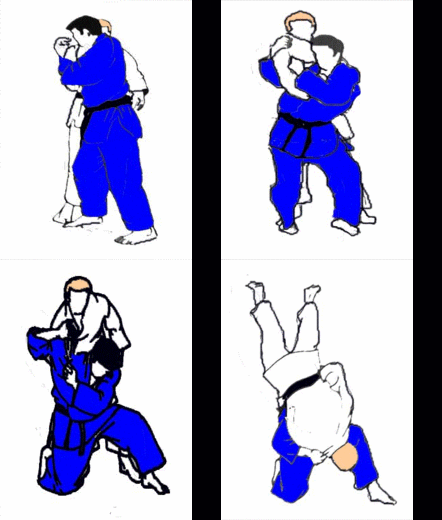
This “preserved technique” of the Kodokan is one of the oldest dating back to traditional (Japanese) Jiu Jitsu performed by samurai on the battlefield. Despite being a turning throw where your back could be partially exposed back, its a quick movement where in the very worst case if it was stuffed or it failed for any reason, you would turn sideways to your opponent in an easy to recover position. In fact, it flows nicely into our next technique if you were to just continue rotating, or, possibly combining it with an old school Judo “hands-to-legs” attack (shown later).
6. Drop Morote Seoi Nage
Morote Seoi Nage (two handed shoulder throw) is traditionally done standing:
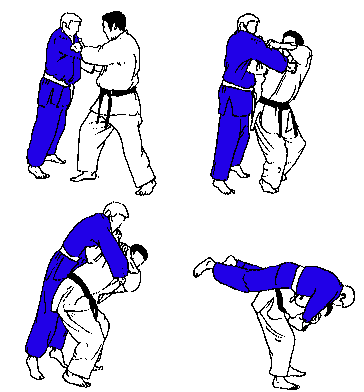
However the drop variation is probably more appropriate for BJJ competitions:
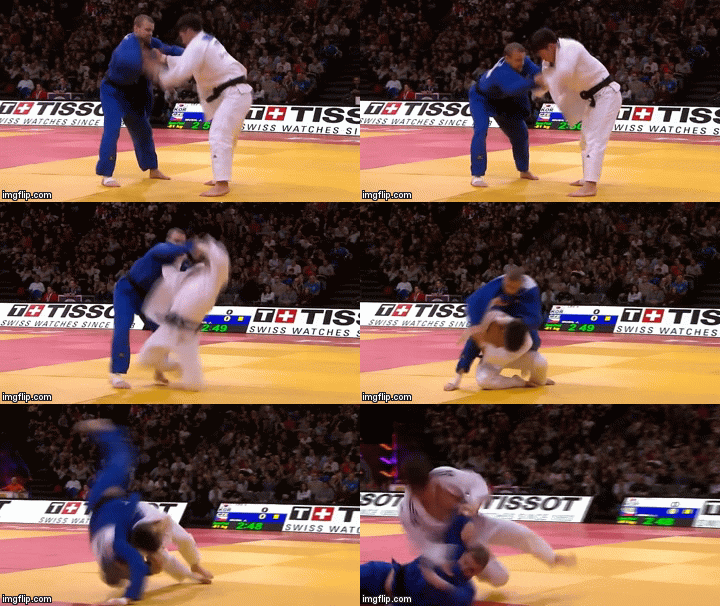
Terrere again, shows us this can be pulled off with minimal risk of a back take or losing position against high-level opponents:
7. Drop Reverse Kata Guruma
As a refresher, keep in mind a traditional Kata Guruma (shoulder wheel) is stepping in with control over uke’s arm on one side and grabbing that same side’s leg with a “high crotch” position, shuffling feet and deeply bending knees to maintain good posture and a straight back to avoid lifting with your back, instead squatting with the legs so that the torso only needs to stabilize uke. The final step is lifting and pulling the controlled arm with the option to throw over your far shoulder (opposite from the high-crotch lead shoulder/arm), however you can also throw forward by ducking your head, drop off backwards, or even do a sacrifice/drop or fall in any direction but this should not be attempted without ample practice on a crash mat first.
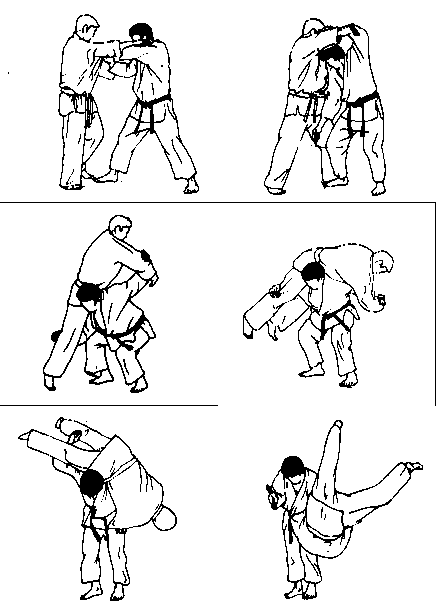
The big difference with the “reverse” Kata Guruma is that the entry is done from the outside of uke’s arm on one side & rotating inwards to look across uke’s body, rather that inside of uke’s arm & rotating to face outwards away from the center of uke’s body. Here’s what it looks like:
There are other subtle differences for the standing variation, such as you may reverse-grab uke’s leg from the back towards the front in a “reverse high crotch”:
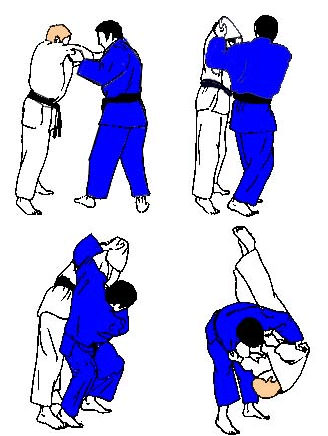
8. Sode Tsuri-komi Goshi
A full rotation hip throw that maintains control of the opponent’s sleeve, preventing an attempt to hop on or otherwise take the back is Sode Tsurikomi Goshi (Sleeve Lifting & Pulling Hip throw). By temporarily taking control of both arms, the opportunity for counter-attack is minimized.
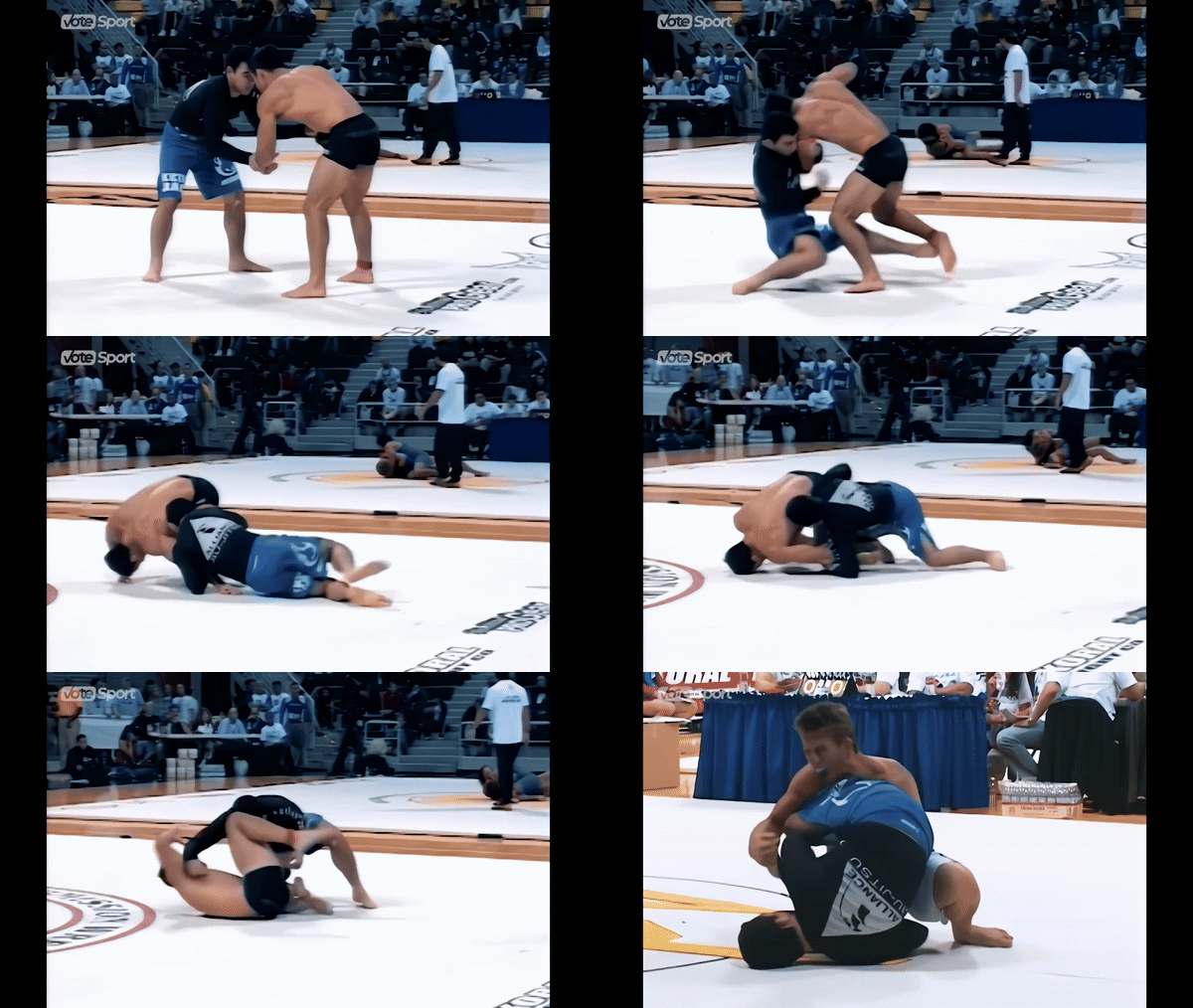
9. Uki Waza
One of the first sacrifice throw most folks learn in Judo, even if Uki Waza (floating technique) fails, it is ends up putting the tori in a similar position to simply pulling guard, however even if uke offers solid resistance you have a good chance to either off-balancing them and taking their back, or following through and completing the throw winding up in a top position.
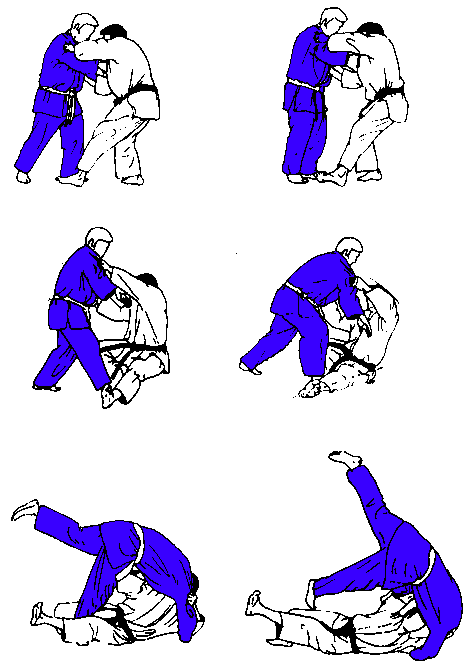
A variation of this executed from an arm drag position is frequently seen in no-gi competitions as well, here’s the great Marcelo Garcia with his innovative take on it:
10. Ura Nage
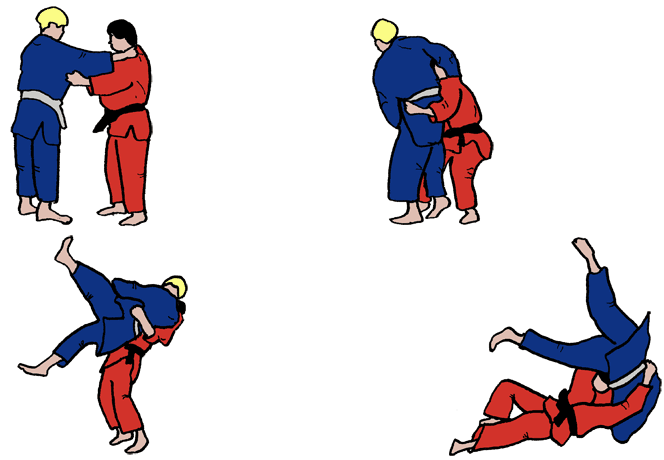
While a full Back Suplex may or may not be allowed, an Ura Nage (rear toss/throw) is a little less catastrophic to someone unprepared to receive it, and you can either drag them down or lift and drop more gently if done correctly, so should fit typical grappling rules fine. Compare the mechanics of Judo’s lighter touch rolling them over or picking them up and placing them down:
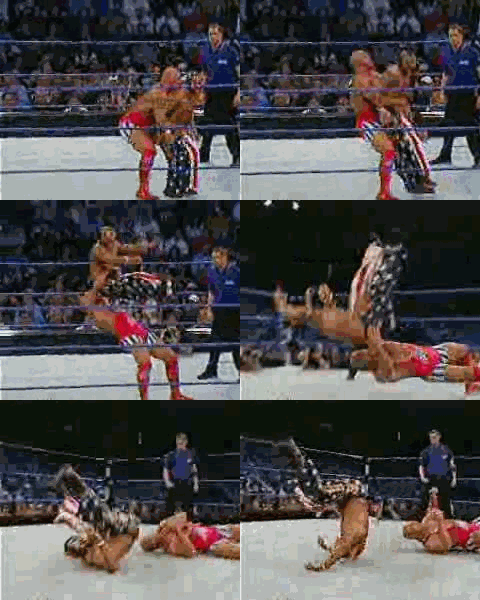
To the heavier and more high-flying (thus arguably riskier for someone to receive, especially if not well trained for it) Greco-Roman Wrestling full back suplex (aka. German Suplex), which launches your opponent without regard for how they land and would surely be considered an excessive force slam:
11. Kibisu Gaeshi
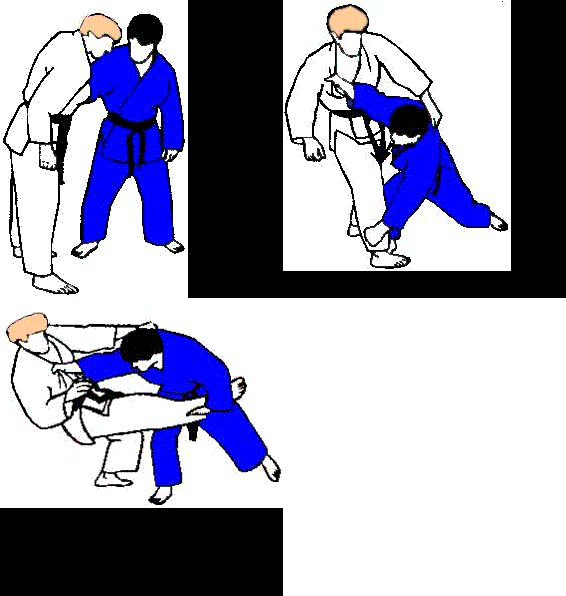
Kibisu Gaeshi (Judo’s take on an ankle pick), done with Judo gi grips on sleeve or collar and the proper kuzushi doesn’t require deeply penetrating uke’s defenses or dropping/shooting like a wrestling-style ankle pick does, and thus keeps you standing over top a downed opponent when done successfully.
12. Morote Gari
Would any list of competition takedowns be complete without the infamous “double leg”. Morote Gari (two-handed leg reap) is Judo’s compromise between a highly technical wrestling double-leg, and, a simple football tackle. In the following animated GIF its shown with the head outside, but traditionally its taught for dealing with self-defense situations with the head inside (aiming for uke’s solar plexus) while moving forward.
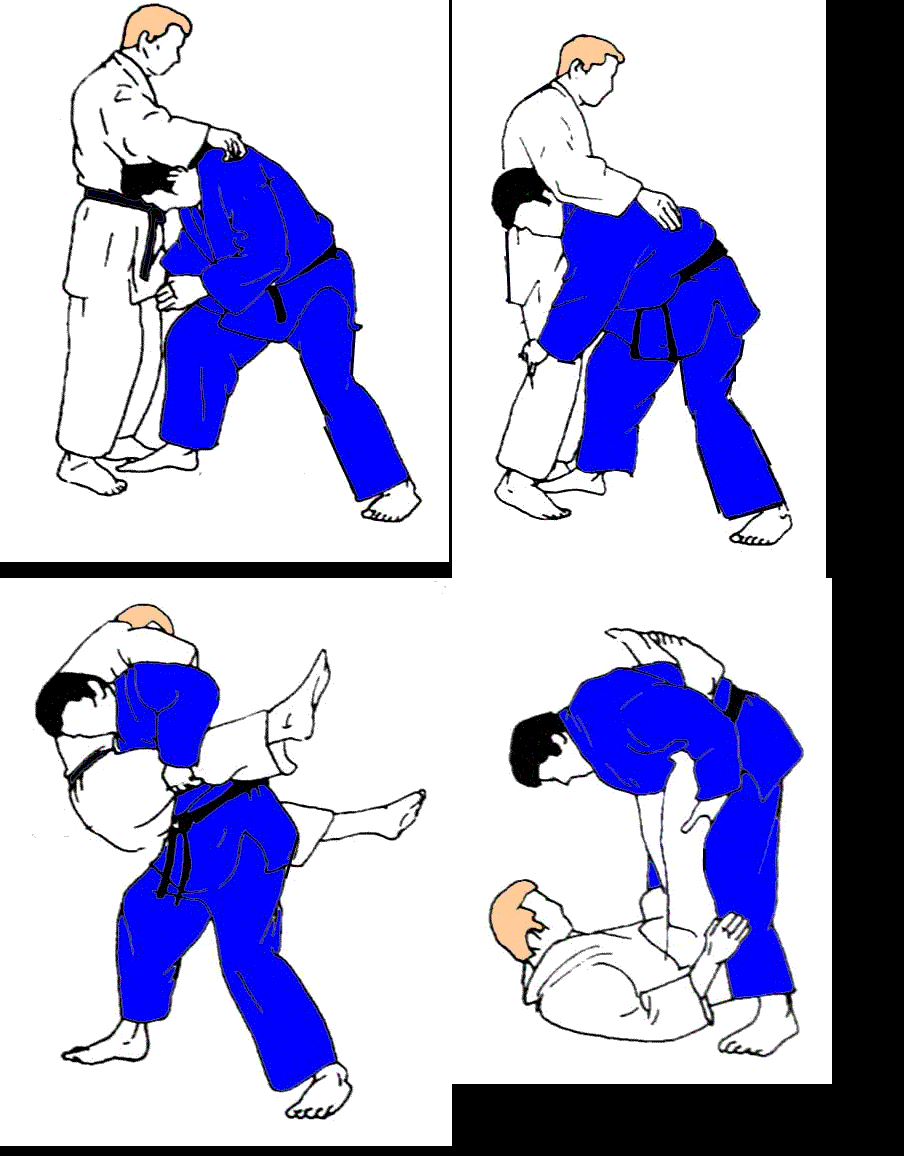
For competition the head can either be inside or outside, but be well aware of the high likelihood your uke would try to defend with a guillotine and/or front headlock grip. This risk can be mitigated with technical expertise, practice, along with controlled explosive power & speed (turning head appropriately and tucking hear behind/above their hip if “turning the corner” from a head outside position, or, “driving through” like GSP if the head is inside):
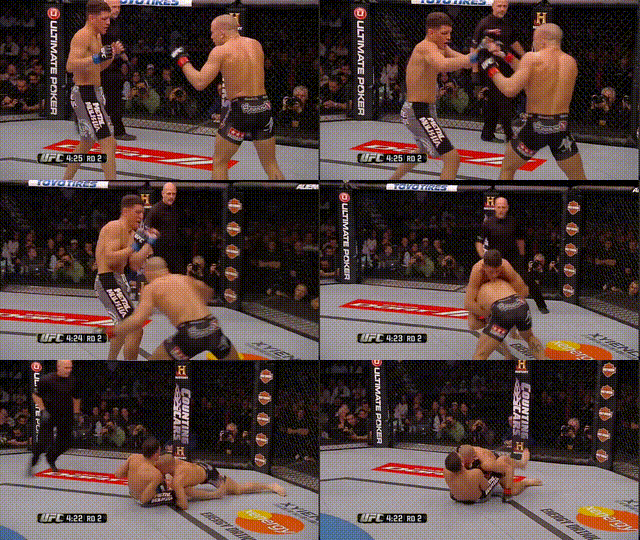
13. Sukui Nage
Also sometimes referred to as a “reverse double-leg”, Sukui Nage (scooping throw) can be applied in a variety of ways, the most basic being stepping behind uke when they try to clinch, grabbing behind both legs (one arm wrapped around from the front), and tilting them back until they lose their balance across your thigh or knee which ideally should be placed across both of their legs. It can be applied by grabbing the pants, or even with both arms in back (or with one hand between the legs from the back). The “IJF legal” version of this has been recategorized as Obi Otoshi where one hand takes a front belt grip and you intentionally fall in a sacrifice motion or at least significantly drop your weight into the throw if you are remaining standing.
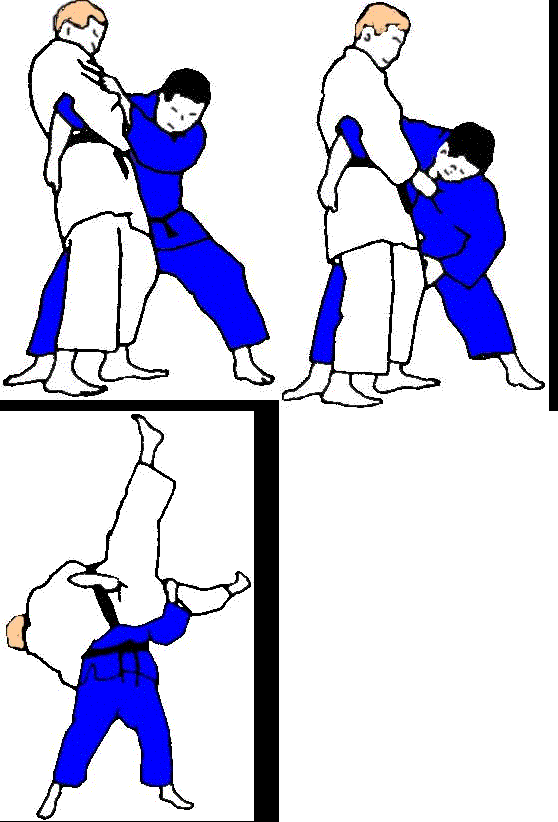
This is one that can result in a high velocity slam so be mindful of your tournament rules, whereas IJF encourages and rewards high amplitude throws done with control (as long as there is clear intent to land uke on their backs never their head or neck), under most IBJJF rulesets and derivatives, slamming is discouraged even if it is perfectly flat, so tori may need to put down uke moderately with even more control, especially if doing an otoshi (dropping) variation.
Bas Rutten put this in his “Bas’ Big Self Defense” series as one of the most important techniques for a reason, here he is using it against Alistair Overeem who at the time had just won the K1 Grand Prix and had been on a tear at heavyweight in the UFC (even though they were just joking around):
14. Hikikomi Gaeshi
A crowd-pleaser as Hikikomi Gaeshi (pulling-in reversal throw) is a very smooth looking takedown when done well, but also has very high chances of the thrower winding up in a top position with zero back exposure. It also has a fairly low chance of hurting your uke, as long as they have basic fall instincts to tuck their head rather than excessively fighting upwards against the roll-over action (if they do, they’d risk smacking their own face and/or head into the ground).

Hikikomi Gaeshi (from an outside “Russian grip”)

Keep in mind the most viable counter they have available is to sprawl their legs back hard and push you away if they see it coming in time, so just be ready to pull guard or even half-guard instead, whichever you prefer as you should have time for either. Pulling guard is also a viable option when using an over-the-back or belt grip instead of driving their head/neck into the mats, if they’re simply resisting you by going to their knees, putting their arms out, and trying to posture-up as mentioned earlier. With this technique, depending on the angle of your attack, even if the throw fails you should have a pathway to the back or an easy closed, single or double butterfly guard. If it succeeds you should have your pick of side control, knee-on-belly, scarfhold, mount, or north-south if you’re quick enough.
15. Sumi Gaeshi
Similar to Hikikomi Gaeshi is the more traditional “Sumi Gaeshi” (corner reversal throw) which is an official sacrifice throw of the gokyo.
The throw is done by dropping your weight directly below uke and placing a leg inside their’s (ideal placement is the curve behind a knee, but it could also be on the back of the calf, ankle or the inner thigh area between their legs just before the groin and NOT in the genital/pelvic region itself as that’d be considered fighting dirty). It’s most common to end up on top in mount, but north-south or side control are also likely if you were doing the throw more for amplitude with uke landing further away from you than in a back rolling motion with tight contact maintained.
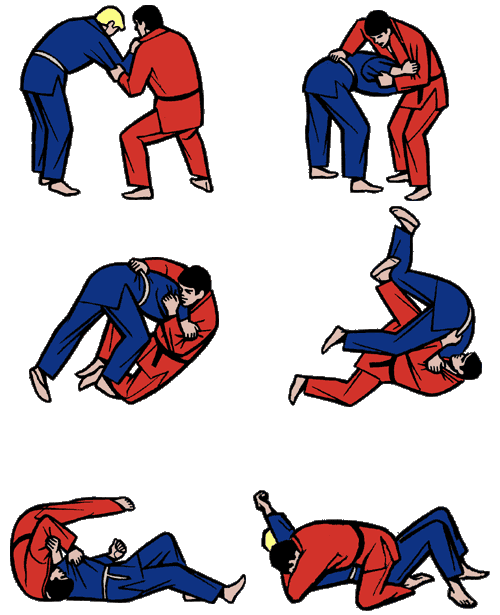
You can see some of the key differences highlighted by the Kodokan themselves in the following video:
The primary differences between the two throws are:
- Sumi Gaeshi throws uke in a linear direction (lifting/tossing motion)
- Hikikomi Gaeshi throws uke in a spiral direction (winding/rotational motion)
- Sumi Gaeshi has tori using the instep of their foot & inside part of their shin on their attacking leg to make contact with uke
- Hikikomi Gaeshi has tori using the outer part of their foot & outer part of their shin on their attacking leg to make contact with uke
As a special bonus, here’s a clip of Masahiko Kimura himself (after which the “Gyaku Ude Garami” was forever named the “Kimura” in BJJ circles from his use of the technique in to control his match with Helio Gracie) showing how Hikikomi Gaeshi or Sumi Gaeshi can both be performed using a Kimura grip:
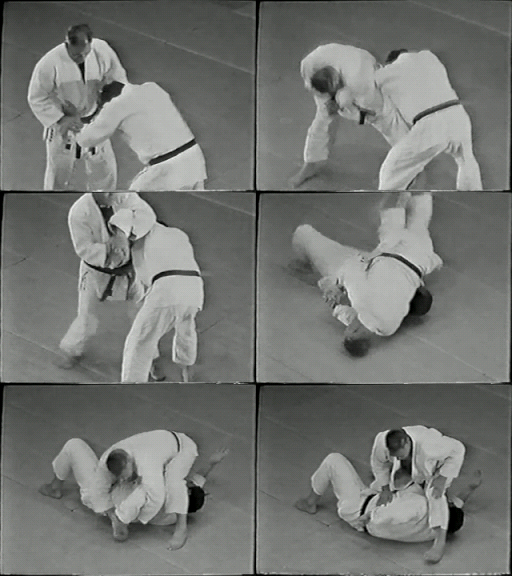
Although not allowed from a standing position under IJF rules it would be acceptable for ne waza when both fighters have hit the ground, and in IBJJF rules both standing and grounded applications of the kimura grip would be allowed.
This grip sets up equally well for a straight arm lock (juji gatame & variations). For a real-world example, in K-1’s Heros championship bout an out-strengthed & comparatively under-sized judoka Yoshihiro Akiyama famously dispatched then feared dutch kickboxer turned MMA fighter Melvin Manhoef at what could be argued the peak of his physical form if not career in combat sports:

 Musa Betsu Kyu Judo club