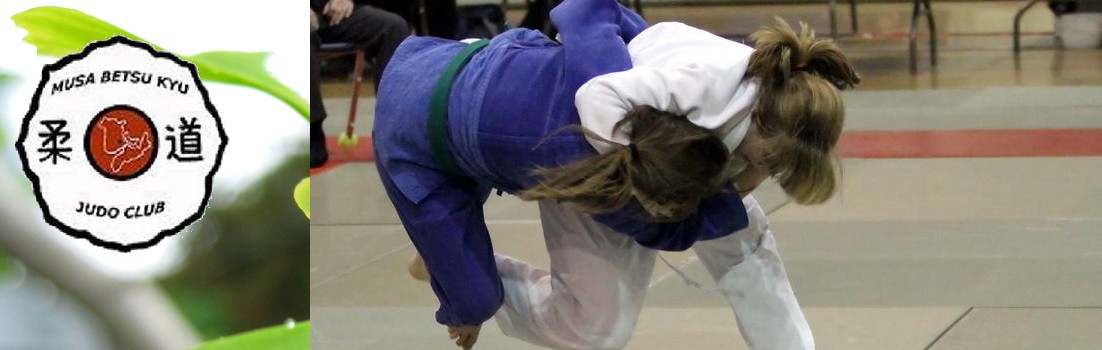
“Randori” (乱取り) literally translated as “free exercise” was conceived by Jigoro Kano for the Kodokan as a method of practicing hard while minimizing the risk of sustaining injuries. Kano defined the purpose of his randori method as “enticing interest in students through free-form technique application focused on safety, physical strength development and balance development”. To simplify the concept, it is basically sparring, where two competitors at a time are trying to implement legal Judo techniques with varying levels of resistance and exertion on either side, according to the rules of a regular competitive match. It is one of the most effective training mechanisms for preparing for each of the sport, martial art & self-defense sides of Judo.
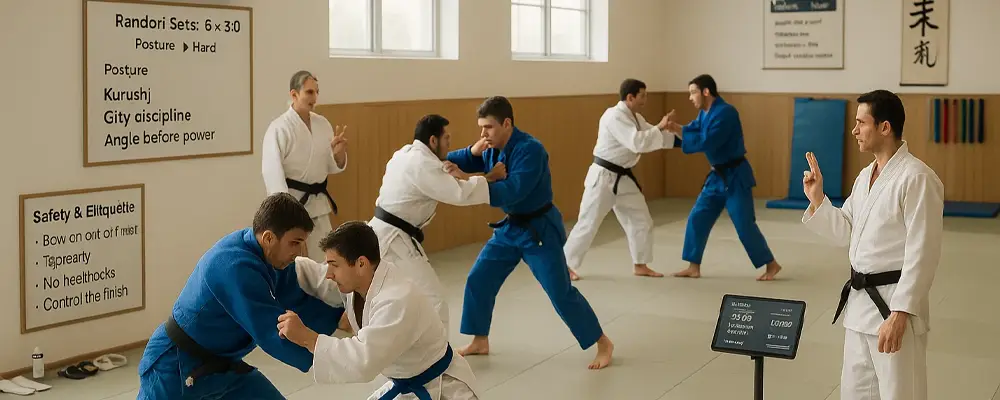
There are many different ways to do randori though, and it should not always be two people going at one another fighting as hard as possible (in fact it should rarely be). Here are the top 25 most common, from lower to higher exertion & intensity levels:
- Kuzushi game – This is a heavily restricted type of randori – you’re trying to get your partner on the ground, but you are not allowed to use any throws. No foot sweeps, no shoulder throws, no hip toss, no trips or takedowns of any kind at all. Also, no grip fighting is allowed, you have to stick with a very standard sleeve and lapel grip – not even a high collar behind the neck type grip is allowed. So, what can you do? You can push, you can pull, you can spin your partner around, you can twist them, pull them up and down, and any combination of those moves. Despite all these restrictions, the kuzushi game can be a lot of fun, and very challenging. (Observant judoka will note that uki otoshi and sumi otoshi are allowed under these rules). It’s very useful in novice classes to develop the all important “feel” of judo while having a very low barrier to entry – even day one novices can grab a jacket and push someone.
- Kumi Kata – Fighting for more advantageous gripping positions without any actual throws or takedowns. The intensity can vary widely on this one, but at the higher levels we allow completely off-balancing without a formal throw being applied.
- Grip fighting & entries only – The players fight for a superior grip and make an entry for a throw but do not complete the throw. The person who gets the better grip and uses it to make an entry for a throw has “won” the encounter – both players should then release their grip and restart from a neutral position.
- Grips – This is where the coach tells you what grip you must fight with, whereas throws are typically allowed you cannot change grips which makes it a bit more challenging. Options include top grip, Georgian grip, Russian tie, double sleeve, double lapel etc. This is a great way to develop your ability to throw from different grips, especially expanding your horizons to grips you don’t commonly use.
- Blindfold – One person must do randori blindfolded. Or with their eyes closed. This assists in developing feel which is crucial for Judoka.
- Mondo (ask questions) – Often in randori you get thrown and you don’t know why. So a session specifically designed for troubleshooting and asking questions can help develop your game quite a bit, revisiting positions and finding out what happened. (NOTE: questions should be saved for after other randori types, but in this one we can stop mid-randori, rehearse specific positions, or re-create prior matches).
- Taking turns – Also known as “throw for throw”. During this round of randori, players alternate doing throws with movement and setups. For example Player A will throw first, so Player B will cooperate and let Player A pull or push them anywhere on the mat, until they are thrown. After each throw the roles switch, so then Player B will throw and Player A will take the fall. There should be no real defense, but the uke in each situation should strive to move realistically as if they were a resisting partner, and recognize when the throw is initiated so that they can allow the other player to complete their throw. Movement and setups are key to make this an actual round of randori rather than a round of nagekomi (throwing practice).
- French – This is randori where there is one person is the attacker and the other one the defender, until a throw is achieved by the attacker, at which point competitors alternate roles for the duration of the round. Great for beginners to practice their breakfalls and also great for people to develop their attacking and defensive skills.
- Offense/Defense – Here we stack two full rounds of randori. During the first round, one partner does only offense and the other does only defense. During the next round, the roles are reversed. In this type of randori it’s very important to coach the player on defense on the proper way to defend throws without violating any rules of contest judo, and keeping things safe for themselves and their partners. A heavily bent over posture and stiff arms may prevent the other player from throwing, but at that point you’re not really doing judo. Keeping arms relaxed like chains and utilizing footwork as the primary method of defense is preferred.
- Opposite Stance – In this style of randori if you’re a lefty your must fight righty and if you’re a righty you must fight lefty.
- Waza-ari Chase – This style of randori is simulating a tournament fight where you are down on Points and need a score – so attack fast. This is done well with a short time say 1-2 mins max.
- Technique Elimination – In this style one you throw with a technique you can no longer use that technique for the rest of the session. So if you throw with osoto gari, that throw gets eliminated and you can’t use it ever again, if you do you must do burpees.
- Secret Techniques – In this style of randori the coach tells each participant 3-5 techniques you are allowed to attack with. And your opponent has to guess what they are at the end of randori. This is a great way to develop opponent awareness.
- Standard weeknight sparring – This is a sort of middle ground, where both players are allowed to use almost any throw they can think of, as well as grip fighting and mid level defense. They’re not taking turns or cooperating, just trying to throw. But the intensity is still at mid level – there is time to stop and talk about a move, people are usually smiling and having a good time. Moderate your intensity to an appropriate level based on the size and experience of your partner, and there may be certain limitations in place from the sensei (i.e. specific techniques such as all sacrifice throws for those under a certain belt color, or, specifically riskier techniques can’t be used such as tani otoshi & drop tai toshi because of the risk to the knees).
- Edge Awareness – Fight close to the edge in order to develop your “edge fighting judo.” Whichever judoka steps out get a pre-assigned (or possibly escalating/declining number of) pushups or burpees.
- Situational – This is one of the hardest styles of randori. Start with both athletes locked in with an osoto gari or ouchi gari. Or start each player in particular grips so they need to fight from there.
- Motodachi – Place a certain amount of judoka out the front and they must do every round of randori with no rest. This is very popular in Japan.
- Tachiwaza focused on Newaza transition – This is pretty simple. Simply allow 20-30 seconds on newaza fighting during randori each throw or partial throw, as opposed to only doing tachiwaza and calling “matte” when it hits the ground.
- Split – Do 2 minutes tachi-waza, 1 minute ne-waza and finish the round with 2 minutes tachi-waza. This just changes up the focus a little bit, and allows a broader variety of techniques to be practices in a short period of time (5 min rounds). Vice versa it could be 2 minutes ne-waza, 1 minute tachi-waza, 2 minutes ne-waza.
- Marathon – 6-10 minute rounds of randori. Lowering the intensity significantly, but increase the game play and strategy. Typically this is how an hour or longer worth of consecutive randori is organized, unless one of the special types are being worked on.
- Shark Tank– see the 100+ Judo Games for more details, but this is done as either tachi-waza or ne-waza (or allowing both in a single match), where all students (or the maximum number of pairs that can safely fit into the mat space) are engaged in a medium-to-high intensity match, and at the end of the round everyone switches their partner or rotates one spot to the left or right, until everyone has trained randori with everyone else in the class.
- Ladder – Judoka(s) who are training for an event either go up or down the classmate ladder for the whole class (based on any one of or a combination of belt/size/skills); competing with each class mate for a set time or until a throw happens, at which point they switch to sparring the next class mate until none remain.
- King of the Hill – All judoka line up against the wall. Two pairs, or however many will fit on your mat, start off using standard weeknight randori guidelines. The first person to get thrown has to bow out and go back to the wall. The thrower stays in and faces a fresh opponent. The throw can be ippon or waza-ari, as long as it would score in a standard contest. As long as you win, you stay in. But the longer you stay in, the more tired you get. So someone who stays in as king of the hill for several rounds will eventually get thrown, we assume, if only due to fatigue.
- Competition Scenario – Just as the name implies, we are getting ready for competition so the intensity is high. Specific scenarios will be setup and then “hajime” (begin) is called and you need to work your way out of a competitive disadvantage (whether that’s an inferior grip, specific body positioning you’re weaker in, stuck in a hold on the ground, etc). It is typically done to simulate real scenarios that were encountered in past tournaments or matches, or to recreate a specific potential opponent’s techniques (i.e. “watching tape” and building then applying a strategy for them). Someone with referee experience may even be watching and weigh in about penalties and potential scores. To truly be ready for competition, transition to ne-waza must also be part of this randori.
- Competitive Match – The intensity is very high, the time is set to the same amount of time as a regular match (currently four minutes for adults, three minutes for teens and veterans age 30 plus). This is only typically done during a training camp or to help classmates get ready for a specific tournament, it is basically full-speed match level intensity and a specific number and timing of rounds should be set beforehand, ideally with Judges & Referee (but at least a dedicated referee per match).
REFERENCES
- Kosuke Nagaki – Randori And The Unification Of Jujutsu Disciplines By The Kodokan: https://judoinfo.com/randori1/
- Neil Ohlenkamp – Randori Rules: https://judoinfo.com/randori/
- Seven Types of randori: http://510judo.com/2023/12/14/seven-types-of-randori/
- 13 different ways to do randori to keep training fun: https://www.youtube.com/watch?v=ndLY1vaxpdM
- The Role of Randori in Judo Training – Applying Techniques in Realistic Situations: https://thesportsreviewer.com/the-role-of-randori-in-judo-training-applying-techniques-in-realistic-situations/
- Judo Concepts – How to randori with beginners: https://kljudo.com/judo-concepts-lesson-16-how-to-randori-with-beginners/
- Introducing “randori” to beginners: https://www.youtube.com/watch?v=F6y4exlq47I
- Are you making these common mistakes when you randori in Judo?: https://www.lvshaolin.com/are-you-making-these-common-mistakes-when-you-randori-in-judo/
- US Judo Olympic Coach: Beginners should wait TWO Years before they do Live (Stand up competitive level) Rolls: https://bjjdoc.com/2024/08/20/us-judo-olympic-coach-beginners-should-wait-two-years-before-they-do-live-rolls/
- Why we have beginners do randori straight away: https://kljudo.com/why-we-have-beginners-do-randori-straight-away/
- Randori with rules: https://www.youtube.com/watch?v=C1Nx5QjODl0
- Chadi VS Japanese black belts: https://www.youtube.com/watch?v=Z3mGjMTZpzg
- Kodokan regular weeknight randori example: https://www.youtube.com/watch?v=_bxUinlwYt4
- Kodokan 100kg+ masters’ level randori example: https://www.youtube.com/watch?v=zGoil22N_HE
- Kodokan – International class randori example: https://www.youtube.com/watch?v=UiSAqgUdB44
- Kodokan Grand Slam Training Camp – randori example: https://www.youtube.com/watch?v=WOuRYRWudMw
- Kodokan Women’s Grand Slam Training Camp – randori example: https://www.youtube.com/watch?v=_2z7ngbsjz8
- Japanese Judo Team Training 2022 – randori example: https://www.youtube.com/watch?v=6t3fTUPSxvQ
- What “All-out randori” looks like in Japan: https://www.youtube.com/watch?v=JCFO2BeL1oU
- Korean Judo Academy – randori example: https://www.youtube.com/watch?v=9svI1e5ORCA
- Mongolian Judo – National Championships Randori example: https://www.youtube.com/watch?v=UfngyJwm5pg
- Russian Sambo – randori example: https://www.youtube.com/watch?v=whRA54evl-o
- Irish Judo – randori example: https://www.youtube.com/watch?v=V7rUBKgDjbY
- UK Judo – randori example: https://www.youtube.com/watch?v=r9nhviJj6K0
- US Judo – randori example: https://www.youtube.com/watch?v=aH6CNe-U6gw
- Canada Olympic Judo Centre – randori example: https://www.youtube.com/watch?v=6MgWkpN6mjY
- Shohei Ono .vs. Teddy Riner randori example (huge size difference and both at a high-level): https://www.youtube.com/watch?v=AnH1q8r-Fyw

 Musa Betsu Kyu Judo club